Why Industries Prefer Butterfly Valves for Large Lines
Why Industries Prefer Butterfly Valves for Large Lines
When pipeline diameters exceed DN300 (12 inches), the valve selection equation changes dramatically. Weight, cost, installation complexity, and actuator sizing become exponential factors. In this large-line regime, butterfly valves consistently outperform gate, globe, and ball valves across nearly every metric.
From municipal water transmission mains to power plant cooling intakes and petrochemical transfer lines, industries overwhelmingly specify butterfly valves for large-diameter applications. But why? And what makes them superior to traditional alternatives?
At Kinko, we engineer butterfly valves up to DN1200 (48 inches) specifically for large-line service. This guide explains the engineering and economic advantages that drive industry preference.
The Fundamental Challenge of Large Lines
A pipeline's cross-sectional area increases with the square of its diameter. A DN600 (24") line has four times the flow area of a DN300 (12") line. This scaling creates three major challenges for valve specification:
-
Weight: A large gate valve can weigh several tons, requiring structural reinforcement.
-
Actuation Force: The force required to lift a massive gate or rotate a heavy ball increases dramatically.
-
Cost: Material volume drives exponential price increases for large valves.
Butterfly valves address all three challenges through their fundamentally efficient design.
Key Reasons for Industry Preference
1. Dramatically Lower Weight and Material Usage
A butterfly valve's disc weighs a fraction of a gate or ball valve's obturator. Compare typical weights for DN600 (24") valves:
| Valve Type | Approximate Weight (DN600) | Installation Requirement |
|---|---|---|
| Gate Valve (cast iron) | 1,800 - 2,500 kg | Crane + structural supports |
| Ball Valve (full bore) | 2,500 - 4,000 kg | Heavy lifting equipment |
| Butterfly Valve (wafer) | 150 - 250 kg | Two-person lift or small hoist |
The butterfly valve is 10-15x lighter than an equivalent gate or ball valve. This translates to lower shipping costs, simpler installation, and reduced pipe support requirements.
2. Exponential Cost Savings at Large Diameters
Valve pricing is non-linear with diameter. The cost differential between butterfly and alternative valves widens dramatically as size increases.
| Diameter | Ball Valve Cost Index | Gate Valve Cost Index | Kinko Butterfly Cost Index |
|---|---|---|---|
| DN100 (4") | 1.0 | 0.8 | 0.4 |
| DN300 (12") | 3.5 | 2.0 | 0.6 |
| DN600 (24") | 12.0 | 5.0 | 1.0 |
| DN1000 (40") | N/A (rare) | 15.0 | 2.5 |
At DN600, a Kinko butterfly valve typically costs 80% less than a full-bore ball valve and 50-70% less than a gate valve of equivalent pressure rating.
3. Compact Face-to-Face Dimensions Save Space
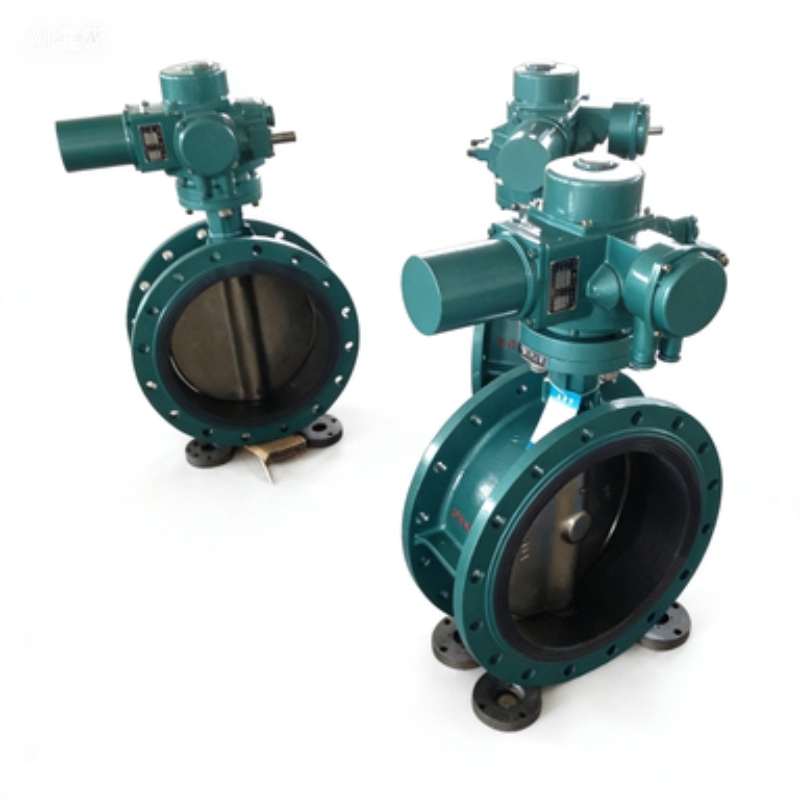
Butterfly valves have the shortest face-to-face length of any industrial valve type per ISO 5752. In large lines, this space savings is substantial.
| Diameter | Gate Valve Length | Ball Valve Length | Butterfly Valve Length (Wafer) |
|---|---|---|---|
| DN300 | 500 mm | 400 mm | 78 mm |
| DN600 | 800 mm | 700 mm | 102 mm |
| DN1000 | 1,200 mm | 1,100 mm | 150 mm |
A butterfly valve requires 5-10x less pipeline length than a gate valve. For large piping systems, this reduces overall plant footprint and allows tighter equipment spacing.
4. Practical Automation at Large Sizes
Actuating a large gate valve requires a multi-turn electric actuator with high torque to lift the gate against pressure. Actuating a large ball valve requires a quarter-turn actuator with massive torque due to the ball's surface area.
A butterfly valve's quarter-turn motion and low torque requirement enable:
-
Smaller actuators (50-70% lower torque rating than ball valves)
-
Pneumatic actuation even at DN600 (impractical for gate valves)
-
Battery-operated fail-safe systems for emergency shutdown
-
Manual operation without gear reducers (for lines up to DN200)
5. Field-Serviceable Without Line Removal
Large gate and ball valves typically require removal from the pipeline for seat or seal replacement—a multi-day operation involving cranes and system shutdown.
Butterfly valves, particularly lug and wafer designs, can be serviced in-line. The disc, seat, and stem bearings are accessible by removing the actuator and disassembling the valve between flanges. For Kinko valves, a complete seat replacement takes less than two hours.
Industry-by-Industry Adoption
| Industry | Typical Large Line Size | Preferred Valve | Why Butterfly? |
|---|---|---|---|
| Municipal Water | DN300 - DN2000 | Lug or wafer butterfly | Cost, weight, low pressure drop |
| Power Generation (Cooling) | DN400 - DN1200 | Double flanged butterfly | Large diameter feasibility, automation |
| Wastewater Treatment | DN300 - DN1000 | Wafer butterfly | Corrosion resistance, frequent cycling |
| Pulp & Paper | DN300 - DN800 | Lug butterfly (SS316) | Abrasion resistance, in-line service |
| Petrochemical Transfer | DN300 - DN600 | High-performance butterfly | Fire safety, bi-directional shutoff |
| HVAC District Cooling | DN300 - DN800 | Wafer butterfly | Compact footprint, low torque |
| Desalination | DN300 - DN1000 | Lug butterfly (Al-Bronze) | Seawater corrosion resistance |
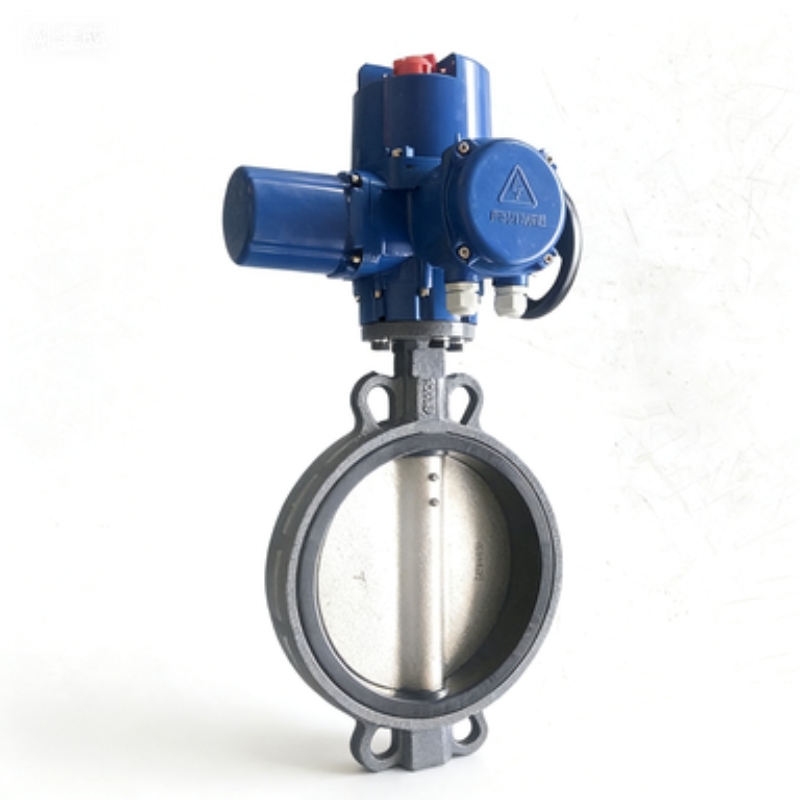
Kinko Large-Line Butterfly Valve Series
Our Kinko LL Series (Large Line) is engineered specifically for diameters from DN300 to DN1200, balancing low torque, durability, and automation readiness.
| Parameter | Kinko LL-100 (Wafer) | Kinko LL-200 (Lug) | Kinko LL-300 (Double Flanged) |
|---|---|---|---|
| Size Range | DN300 - DN600 | DN300 - DN800 | DN350 - DN1200 |
| Max Pressure | 10 bar (DN>300) / 16 bar (DN300) | 10 bar (DN>500) / 16 bar (DN300-500) | 10 bar (all sizes) |
| Body Material | Ductile Iron GGG40 | Ductile Iron GGG40 | Cast Steel / Ductile Iron |
| Disc Material Options | DI coated / SS316 | SS316 / Al-Bronze / Duplex | SS316 / Duplex |
| Seat Material | EPDM / NBR / Viton | EPDM / PTFE | EPDM / Viton |
| Disc Design | Streamlined low-profile | Streamlined with anti-cavitation edge | Hydrodynamic airfoil |
| Top Flange (ISO 5211) | F14 / F16 | F14 / F16 / F25 | F16 / F25 |
| Automation | Electric or pneumatic | Electric or pneumatic (direct) | Electric or hydraulic |
| Standard Face-to-Face | ISO 5752 Series 20 | ISO 5752 Series 20 | ISO 5752 Series 13 |
Procurement Checklist for Large-Line Butterfly Valves
When sourcing butterfly valves for large-diameter lines, verify:
-
Face-to-face dimension per ISO 5752 (confirm compatibility with existing flanges)
-
Pressure rating derated for diameter (many large valves have lower max pressure than smaller siblings)
-
Disc material compatibility with fluid (especially for seawater or chemicals)
-
Seat material temperature range (EPDM vs. Viton vs. PTFE)
-
ISO 5211 top flange matches your actuator (F14, F16, or F25 for large lines)
-
Lug or double-flanged body for end-of-line or vacuum service (wafer is not suitable)
-
Shipping and handling plan (large valves require specialized packaging)
Conclusion
For large-diameter pipelines, the economic and practical case for butterfly valves is overwhelming. Their dramatic weight reduction, cost advantages (50-80% vs. alternatives), compact footprint, and automation practicality make them the default choice for engineers and procurement professionals worldwide.
Kinko offers a complete range of large-line butterfly valves from DN300 to DN1200, available in wafer, lug, and double-flanged configurations. Every valve features ISO 5211 mounting for seamless actuator integration and is backed by our application engineering team for torque and flow analysis.
Request a quote for your large-line project or contact our large-diameter valve specialists for sizing assistance.
Frequently Asked Questions (FAQ)
Q: What is the maximum diameter butterfly valve Kinko offers?
A: Kinko manufactures butterfly valves up to DN1200 (48 inches) as standard. Larger diameters (up to DN2000 / 80 inches) are available on special order for water and wastewater applications.
Q: Can a wafer-type butterfly valve be used on a large line without downstream flanges?
A: No. Wafer-type valves rely on compression between two flanges. For end-of-line service or systems requiring isolation during maintenance, specify lug-type or double-flanged bodies.
Q: How do I manually operate a large butterfly valve if the actuator fails?
A: Kinko large-line valves include a manual override handwheel on the gear operator (for valves DN200 and above). Direct manual operation without a gear operator is impractical above DN150 due to dynamic torque.
Q: Are large butterfly valves suitable for steam service?
A: Yes, but only with metal seats or high-temperature PTFE. Standard EPDM or NBR seats are limited to <120°C. For saturated steam up to 200°C, specify our Kinko high-performance (double offset) series with graphite or PTFE seats.
Q: How long does a large butterfly valve last in municipal water service?
A: With proper material selection (ductile iron body, SS316 disc, EPDM seat), a Kinko large-line butterfly valve typically exceeds 20-30 years of service life in potable water applications.
Ivan (Mobile:+86-18968769287)
WhatsApp:+86-13579991606Wechat:+Website:www.kinko-flow.com
ZHEJIANG KINKO FLUID EQUIPMENT CO.,LTD
