What Makes an Electric Control Valve Ideal for Process Automation?
1. What Is an Electric Control Valve?
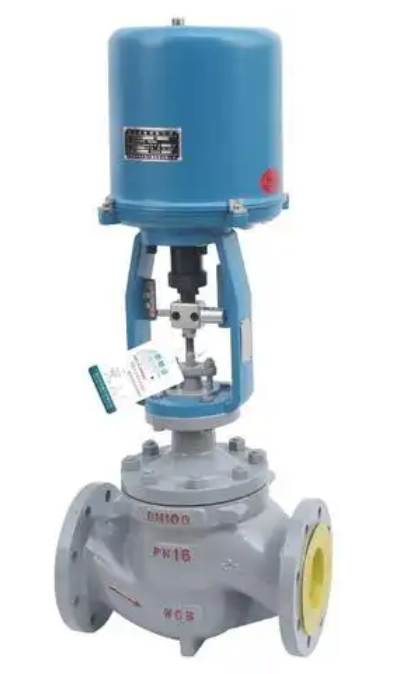
An electric control valve combines a globe, butterfly, or ball valve body with an electric actuator (motorized) that modulates the valve stem position based on a 4-20mA, 0-10V, or digital control signal. Unlike pneumatic actuators that require instrument air, electric actuators use a simple power supply (24V DC, 110V AC, or 230V AC) and an internal motor-gearbox assembly to drive the valve.
Core components:
-
Valve body (globe/butterfly/ball)
-
Electric actuator (motor + gear train + position feedback)
-
Positioner/controller (integrated or external PID)
-
Manual override (handwheel for emergency operation)
2. Why Electric? – 7 Key Advantages for Modern Process Automation
Advantage #1: No Instrument Air Required
The single biggest differentiator: electric valves operate anywhere with a power outlet.
-
No air compressor, dryer, filter, regulator, or tubing needed.
-
Eliminates the cost of instrument air piping (typically $50~$150 per meter in new plants).
-
Ideal for remote sites, offshore platforms, and retrofitting existing manual valves where air lines are unavailable.
| Utility Requirement | Pneumatic Valve | Electric Valve |
|---|---|---|
| Instrument air supply | Mandatory (4~8 bar) | None |
| Power supply | Optional (for solenoid/I/P) | Mandatory (24V DC / 110V / 230V AC) |
| Air quality treatment (F.R.L) | Required | Not applicable |
| Annual energy cost (per valve) | ~$200~$500 (compressor load) | ~$20~$80 (electricity only) |
Advantage #2: Precise, Drift-Free Positioning
Electric actuators use brushless DC motors with encoders or potentiometer feedback to achieve positioning accuracy that matches or exceeds smart pneumatic positioners.
-
Accuracy: ±0.5% ~ ±1.0% of full stroke (comparable to premium I/P + positioner)
-
No drift: Unlike pneumatic systems, electric actuators do not suffer from supply pressure fluctuations, temperature-induced air density changes, or leaky tubing.
-
Repeatability: <0.2% of span—critical for blending, pH control, and custody transfer applications.
Advantage #3: Fail-Safe Options Without a Backup Air Tank
Pneumatic valves require a volume tank + check valve + solenoid to achieve fail-safe (spring-return or storage tank) in case of air failure. Electric valves achieve fail-safe via:
-
Spring-return actuator: Internal spring drives valve to fail-open or fail-closed on power loss (no external tank).
-
Battery backup (UPS): Maintains positioning for a defined time during power outage.
-
Capacitor bank: Provides one final stroke to a safe position.
Result: Smaller footprint, lower installed cost, and fewer components to maintain.
Advantage #4: Low Maintenance & Long Service Life
Electric actuators have few wearing parts:
-
Motor bearings (sealed, lubricated for life)
-
Gear train (grease-filled, no field lubrication required)
-
Position feedback (non-contact Hall-effect or magnetic encoder)
Typical maintenance: Visual inspection every 6~12 months. No seal replacement, no filter element changes, no pilot valve cleaning.
| Maintenance Item | Pneumatic Actuator | Electric Actuator |
|---|---|---|
| Seal replacement | Every 2~3 years | Never (no dynamic seals) |
| F.R.L element change | Every 6~12 months | None |
| Positioner calibration | Annual | Every 2~3 years |
| Average annual maintenance cost | ~15~20% of purchase price | ~5~8% of purchase price |
Advantage #5: Integrated Diagnostics & Digital Communication
Modern electric control valves come with built-in diagnostic intelligence:
-
Cycle counter: Tracks valve strokes for predictive maintenance.
-
Torque/current monitoring: Detects seat wear, jamming, or packing friction increase.
-
Partial stroke testing (PST): Required for SIL-rated safety loops—electric actuators can perform PST without process interruption.
-
Communication protocols: Standard support for HART, Profibus PA, Modbus RTU, EtherNet/IP, and Foundation Fieldbus.
Data advantage: All diagnostics are available via the control network—no need to walk to the valve with a handheld communicator.
Advantage #6: Energy Efficiency
Pneumatic systems are inherently inefficient: converting electrical energy to compressed air loses 70~80% of energy at the compressor. Then, positioners bleed air continuously.
Electric actuators consume power only during movement. At steady-state (holding position), power draw drops to near-zero (holding brake engaged).
Example calculation (per 100 valves, 1 year):
| System | Energy Consumption | CO₂ Footprint |
|---|---|---|
| Pneumatic (with continuous bleed) | ~18,000 kWh/year | ~7.5 tons/year |
| Electric (modulating, 10% movement) | ~2,500 kWh/year | ~1.0 tons/year |
| Savings with electric | ~86% lower | ~87% lower |
Advantage #7: Clean & Quiet Operation
-
No air exhaust noise: Pneumatic valves at high cycling rates can exceed 85 dB(A) —requiring ear protection and silencers.
-
Zero oil mist: No lubricator required, so no oil aerosol contaminates the environment—critical for food, pharmaceutical, and cleanroom applications.
-
No condensation: Air-line moisture and rust particles are eliminated, reducing corrosion risk inside the actuator.
3. Technical Comparison: Electric vs. Pneumatic vs. Hydraulic Control Valves
| Parameter | Electric | Pneumatic | Hydraulic |
|---|---|---|---|
| Power source | 24V DC / 110V AC / 230V AC | Instrument air (4~8 bar) | Hydraulic oil (50~200 bar) |
| Positioning accuracy | ±0.5% | ±0.5~1.0% (with smart pos.) | ±0.5~1.0% |
| Stroking speed | Slow~Medium (1~10 sec/mm) | Fast (<1 sec) | Very Fast (<0.5 sec) |
| Fail-safe option | Spring-return / Battery | Spring-return / Volume tank | Accumulator |
| Maintenance frequency | Low | Medium | High (oil leaks, filtration) |
| Ambient temp. range | -40°C ~ +85°C | -40°C ~ +85°C | -20°C ~ +80°C |
| Energy efficiency | High (~85% motor efficiency) | Low (~20% overall system efficiency) | Medium (~50%) |
| Noise level | Silent (<45 dB) | High (>85 dB at exhaust) | Medium (pump noise) |
| Best application | Remote, clean, digital-control processes | High-speed, heavy-thrust, explosive areas | Heavy-duty, high-force (>50,000 N) |
| Relative installed cost (valve + actuator) | Medium | Low (if air available) | High |
4. When Should You Choose Electric Over Pneumatic?
| Application Condition | Recommendation |
|---|---|
| No instrument air supply on-site | Electric (mandatory) |
| Remote location (wellhead, pipeline, offshore) | Electric (solar/battery power possible) |
| Food, pharma, or cleanroom environment | Electric (no oil mist/exhaust) |
| Strict energy efficiency or ESG requirements | Electric (lower CO₂ footprint) |
| Integration with DCS via Modbus/Profibus | Electric (native digital comms) |
| High cycling rate (>1000 strokes/day) | Electric (no air bleed, lower wear) |
| Explosive atmosphere (Zone 1/Zone 2) | Both (Ex-rated versions available) |
| Very high thrust requirement (>20,000 N) | Hydraulic or large pneumatic |
| Budget-constrained with existing air supply | Pneumatic (lower upfront cost) |
5. Key Technical Specifications – Typical Electric Control Valve
| Parameter | Typical Range / Options |
|---|---|
| Voltage supply | 24V DC (standard), 110V AC, 230V AC (optional) |
| Input signal | 4-20mA, 0-10V, 0-5V, dry contact, or digital bus |
| Output feedback | 4-20mA (position feedback), dry contacts (end-of-stroke) |
| Actuator type | Quarter-turn (90°) or multi-turn (linear) |
| Valve types | Globe, butterfly, ball, plug, diaphragm |
| Torque output | 10 Nm ~ 2,000 Nm (quarter-turn) |
| Thrust output | 1 kN ~ 50 kN (linear) |
| Positioning accuracy | ±0.5% ~ ±1.0% full stroke |
| Repeatability | <0.2% of span |
| Dead band (adjustable) | 0.5% ~ 5.0% of span |
| Enclosure rating | IP67 / IP68 / NEMA 4X (optional Ex-proof) |
| Ambient temperature | -40°C ~ +85°C |
| Communication protocols | HART, Profibus PA, Modbus RTU, EtherNet/IP, Foundation Fieldbus |
| Manual override | Handwheel (standard on most models) |
| Ex certification | ATEX / IECEx / CSA for Zone 1, Zone 2, Class I Div 1/2 |
6. Common Applications Across Industries
| Industry | Typical Electric Valve Use |
|---|---|
| Water & Wastewater | Flow control in distribution networks, chemical dosing |
| Oil & Gas | Wellhead choke control, pipeline pressure regulation |
| Power Generation | Cooling water bypass, steam attemperation |
| Chemical & Petrochemical | Reactor feed control, blending loops |
| Food & Beverage | CIP temperature control, filling station flow regulation |
| Pharmaceutical | Pure water loop flow control, sterile transfer |
| HVAC | Chilled/heated water flow balancing |
| Mining & Minerals | Slurry density control, flotation cell air flow |
7. Selection Checklist – Electric Control Valve Procurement
Before specifying an electric control valve, confirm:
-
□
Valve type: Globe (throttling) or rotary (ball/butterfly for on/off or moderate throttling)?
-
□
Required torque/thrust: Calculate from process differential pressure and valve Cv.
-
□
Stroking time: Speed required for process response (e.g., <3 seconds for safety loops).
-
□
Fail-safe action: Fail-open, fail-closed, or stay-put on power loss?
-
□
Communication: Is bus communication required, or is 4-20mA sufficient?
-
□
Ex-rating: Does the area require ATEX/IECEx flameproof or intrinsically safe?
-
□
Enclosure IP rating: Outdoor/indoor; washdown or submerged (IP68)?
-
□
Power availability: 24V DC (common for fieldbus) or 230V AC (for standalone)?
Ivan (Mobile:+86-18968769287)
WhatsApp:+86-13579991606
Wechat:+86-18968769287
Website:www.kinko-flow.com
ZHEJIANG KINKO FLUID EQUIPMENT CO.,LTD
