Reliable Actuator Solutions for Industrial Process Control
Why Actuator Reliability Drives Process Control Success
Process control loops depend on every component performing predictably. The actuator is often the most mechanically stressed element in the loop.
| Reliability Factor | Impact on Process Control |
|---|---|
| Position accuracy | Directly affects flow regulation and product quality |
| Cycle life | Determines maintenance intervals and total cost of ownership |
| Sealing integrity | Prevents fugitive emissions and environmental violations |
| Fail-safe behavior | Ensures safe shutdown during power or signal loss |
| Environmental tolerance | Allows operation in extreme temperatures, humidity, or corrosive atmospheres |
A reliable actuator does not just open and close a valve. It provides repeatable positioning, consistent torque output, and predictable failure modes.
Electric vs. Pneumatic Actuators: Selection Guide
Kinko manufactures both electric and pneumatic actuator families. The right choice depends on your facility's utilities, control architecture, and safety requirements.
| Parameter | Electric Actuator | Pneumatic Actuator |
|---|---|---|
| Power source | AC or DC power (24V, 110V, 220V, 380V) | Compressed air (40–120 PSI) |
| Control signal | 4-20 mA, 0-10V, Modbus, Profibus | 3/2 or 5/2 solenoid valve signal |
| Position feedback | Built-in potentiometer or encoder | Limit switches or positioner |
| Fail-safe | Spring-return or battery backup | Spring-return (standard option) |
| Duty cycle | S4 or S5 intermittent (modulating) | Continuous (if air supply is constant) |
| Typical torque range | 10 Nm to 10,000+ Nm | 5 Nm to 20,000+ Nm |
| Hazardous area rating | Ex d, Ex e, Ex nA available | Ex d, Ex ia available |
| Best application | Remote sites, clean rooms, precise modulation | Explosive atmospheres, high cycle rates, low cost per torque |
Kinko recommendation: For modulating service requiring precise positioning (e.g., chemical injection, pH control), choose electric actuators. For high-speed on/off duty in explosive environments (e.g., oil refineries), choose pneumatic actuators with spring-return fail-safe.
Technical Specifications: Kinko Actuator Range
Below are representative specifications for Kinko's core actuator product lines. Actual values vary by model—consult Kinko datasheets for exact numbers.
| Actuator Type | Torque Range (Nm) | Supply Voltage / Air Pressure | Enclosure Rating | Control Type | Typical Valve Compatibility |
|---|---|---|---|---|---|
| Electric quarter-turn | 10 – 500 | 110/220V AC, 24V DC | IP67 | On/off or modulating (4-20mA) | Butterfly valves up to DN200 |
| Electric quarter-turn (high torque) | 600 – 5,000 | 220/380V AC, 24V DC | IP68 (optional) | Modulating with positioner | Ball valves, plug valves |
| Pneumatic double-acting | 8 – 2,000 | 40 – 120 PSI | IP66 (aluminum housing) | On/off with solenoid | Butterfly valves, ball valves |
| Pneumatic spring-return | 6 – 1,500 (spring torque) | 40 – 120 PSI | IP66 | Fail-safe closed/open | Emergency shutdown (ESD) valves |
| Electric hazardous area | 50 – 2,000 | 110/220V AC | IP66 / Ex d IIB T4 | Modulating or on/off | Oil & gas isolation valves |
Note: All Kinko actuators meet ISO 5211 mounting dimensions (F03, F05, F07, F10, F12, F14, F16) for direct bolt-on compatibility with major valve brands.
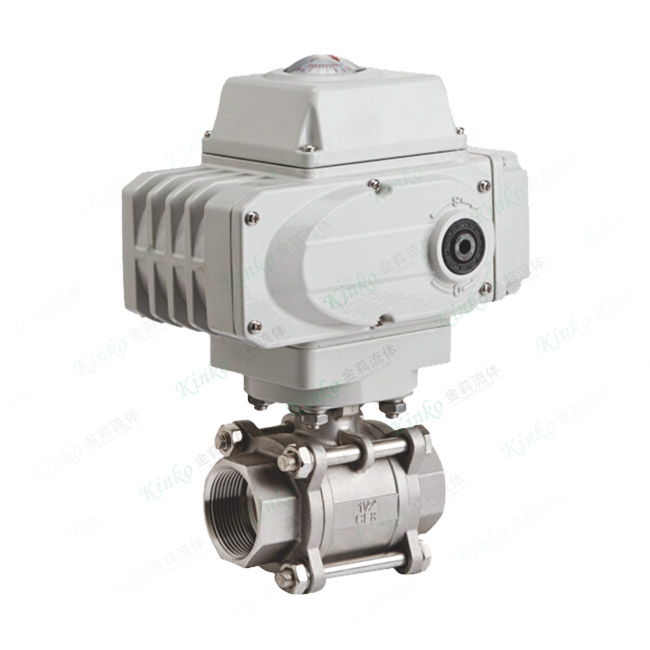
Five Common Industrial Process Control Challenges (And Kinko Solutions)
Challenge 1: Sticky or High-Friction Valves
Over time, process media (slurry, polymers, corrosive fluids) increases valve breakaway torque.
Kinko solution: Select actuators with a torque safety factor of 1.5x to 2.0x measured running torque. Kinko high-torque electric actuators provide up to 5,000 Nm for stubborn valves.
Challenge 2: Loss of Power or Air Supply
A sudden utility failure must not create unsafe conditions.
Kinko solution: For electric actuators, add battery backup or supercapacitor modules. For pneumatic actuators, specify spring-return. Both ensure the valve moves to a predefined safe position.
Challenge 3: Harsh Outdoor Environments
Rain, salt spray, dust, and extreme temperatures degrade standard actuators within months.
Kinko solution: Specify IP68 (temporary submersion) or NEMA 6P enclosures. Kinko offers stainless steel actuator bodies for offshore and chemical plant applications.
Challenge 4: Precise Modulating Control
Simple on/off actuators cause hunting and overshoot in proportional control loops.
Kinko solution: Use Kinko modulating electric actuators with built-in PID controllers and 4-20 mA feedback. Position accuracy reaches ±0.5% to ±1.0% of full scale.
Challenge 5: Explosive Atmospheres (Zone 1, Zone 2)
Standard electrical actuators cannot be used in hazardous areas without explosion-proof certification.
Kinko solution: Kinko hazardous area electric actuators carry ATEX, IECEx, or CSA certification for gas groups IIA, IIB, and IIB3+H2. Pneumatic actuators are inherently safe for most explosive environments when properly bonded.
Installation Best Practices for Long-Term Reliability
To maximize actuator life in process control applications, follow these Kinko-recommended guidelines:
| Step | Action |
|---|---|
| 1. Mounting | Use ISO 5211 brackets and couplings. Never force alignment. |
| 2. Torque setting | Program electric actuator torque switches at 80% of stall torque. |
| 3. Air preparation (pneumatic) | Install filter-regulator-lubricator (FRL) within 3 meters of actuator. |
| 4. Signal wiring (electric) | Use shielded twisted pair cables for 4-20 mA. Ground one end only. |
| 5. Limit switch adjustment | Set travel limits with 2-3 degrees of overtravel margin. |
| 6. Fail-safe test | Simulate power loss within 24 hours of installation. |
| 7. Documentation | Record torque, cycle time, and position feedback baseline values. |
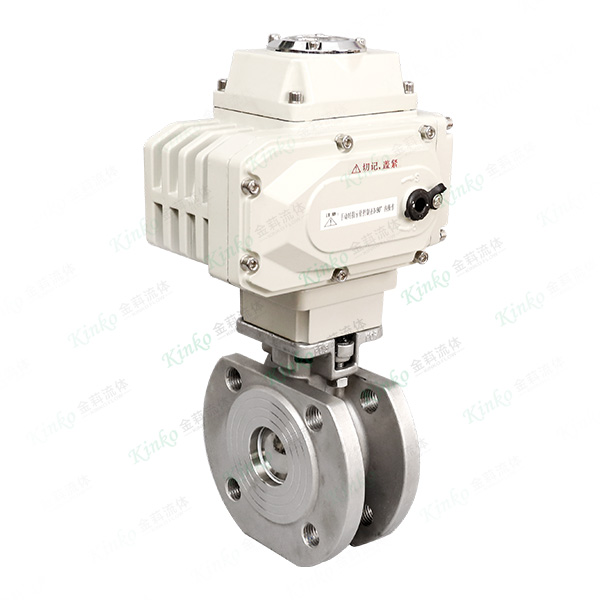
Why Kinko for Industrial Process Control Actuation?
Kinko focuses exclusively on valve actuation for industrial processes. Our advantages include:
-
ISO 9001 certified manufacturing with full traceability
-
Standardized ISO 5211 mounting across all models—no custom brackets needed
-
Global voltage compatibility (110V, 220V, 380V, 415V, 50/60 Hz)
-
Fast customization for special voltages, shafts, enclosures, and coatings
-
Technical support available for pre-sales sizing and post-sales troubleshooting
Conclusion
Reliable actuator solutions are the backbone of industrial process control. Whether your application requires explosion-proof electric actuation, fail-safe pneumatic spring-return, or high-torque modulating control, Kinko delivers consistent, documented performance.
Not sure which actuator fits your process? Contact Kinko with your valve type, torque requirement, and control signal. We will respond with a datasheet and a sizing recommendation.
FAQ: Kinko Actuators for Process Control
Q: Can Kinko electric actuators be used for continuous modulation?
A: Yes. Kinko modulating electric actuators are rated for S4 or S5 duty. For very high cycle rates (over 1,200 starts per hour), consult Kinko engineering for a duty cycle calculation.
Q: Do Kinko pneumatic actuators require lubricated air?
A: For maximum life, use a lubricator set to 1-2 drops per minute of ISO VG 32 oil. Short-term dry air operation is acceptable but reduces seal life.
Q: What is the standard warranty on Kinko actuators?
A: Kinko offers an 18-month warranty from date of shipment or 12 months from commissioning, whichever occurs first.
Q: Can I receive a sample actuator for testing?
A: Yes. Contact Kinko sales to request a sample unit for pilot testing or certification validation.
Ivan (Mobile:+86-18968769287)
WhatsApp:+86-13579991606
Wechat:+86-18968769287
Website: www.kinko-flow.com
ZHEJIANG KINKO FLUID EQUIPMENT CO.,LTD
