Pneumatic vs Manual Angle Seat Valves: Full Comparison
Quick Overview: Pneumatic vs Manual Angle Seat Valves
| Comparison Factor | Pneumatic Angle Seat Valve | Manual Angle Seat Valve |
|---|---|---|
| Actuation method | Compressed air (4–8 bar) | Handwheel or lever |
| Operation speed | 0.1–1.0 seconds (full stroke) | 2–10 seconds (operator dependent) |
| Cycle frequency | Up to 60+ cycles per minute | Limited by human endurance |
| Automation ready | Yes (PLC, DCS, timer control) | No (requires human presence) |
| Fail-safe | Yes (spring-return NC or NO) | No (remains in last position) |
| Remote operation | Yes (solenoid valve signal) | No (local operation only) |
| Initial cost | Higher (valve + actuator + solenoid) | Lower (valve only) |
| Operating cost | Compressed air consumption | Labor cost for each operation |
| Maintenance complexity | Moderate (seals, pilot valve, filter) | Low (packing, handwheel mechanism) |
| Typical cycle life | 1–3 million cycles | 50k–200k cycles (packing wear) |
| Best application | Automated processes, high cycle rates, hazardous areas | Infrequent operation, field maintenance, budget projects |
Detailed Comparison: 10 Key Factors
1. Actuation Speed
| Pneumatic | Manual |
|---|---|
| 0.1–1.0 seconds depending on actuator size and pilot flow | 2–10 seconds or more; operator dependent |
| Consistent cycle-to-cycle | Variable based on operator strength and urgency |
| Can be slowed with flow control silencers | Cannot be accelerated beyond human capability |
Verdict: Pneumatic wins for processes requiring fast, repeatable response (e.g., machine timing, steam injection).
2. Cycle Frequency & Duty Cycle
| Pneumatic | Manual |
|---|---|
| Designed for continuous high-cycle operation | Designed for infrequent operation |
| 30–60+ cycles per minute achievable | 5–10 cycles per minute maximum sustained |
| No operator fatigue | Operator fatigue leads to inconsistent operation |
Verdict: For any application requiring more than 10 cycles per hour, pneumatic is the only practical choice.
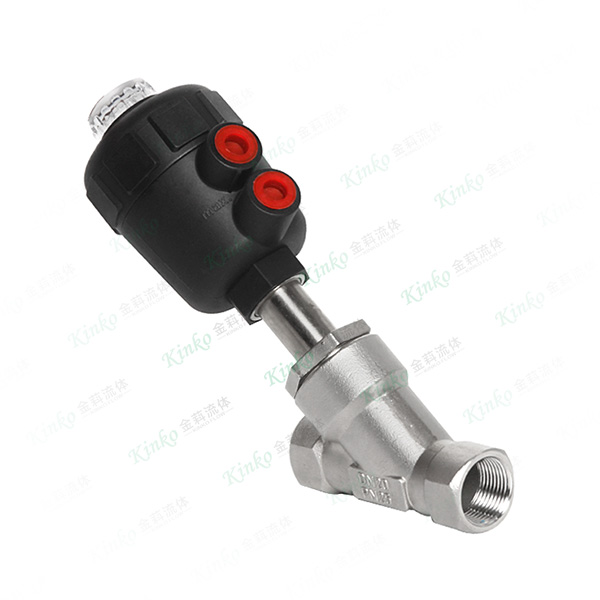
3. Automation & Control Integration
| Pneumatic | Manual |
|---|---|
| Easily controlled by PLC, timer, pressure switch, or thermostat | Cannot be automated without retrofitting a pneumatic actuator |
| Can be integrated into DCS or SCADA systems | Manual only—no electronic feedback |
| Optional limit switches provide position confirmation | No position feedback without adding sensors |
Verdict: Pneumatic is essential for automated processes, remote facilities, or unmanned operation.
4. Fail-Safe Behavior
| Pneumatic | Manual |
|---|---|
| Normally closed (NC) or normally open (NO) spring-return standard | Valve stays in last position when operator leaves |
| On loss of air pressure, valve moves to safe position | No automatic response to power failure or emergency |
| Double-acting (no spring) requires air to both open and close | Handwheel remains wherever last turned |
Verdict: For safety-critical applications (burner systems, chemical dosing, tank overfill prevention), pneumatic with spring-return is required.
5. Remote Operation Capability
| Pneumatic | Manual |
|---|---|
| Solenoid valve can be located 100+ meters from actuator | Operator must stand at valve location |
| Can be operated from a control room | No remote operation possible |
| Multiple valves can be sequenced automatically | Each valve requires individual operator attention |
Verdict: For valves located in hard-to-reach, hazardous, or multiple locations, pneumatic is vastly superior.
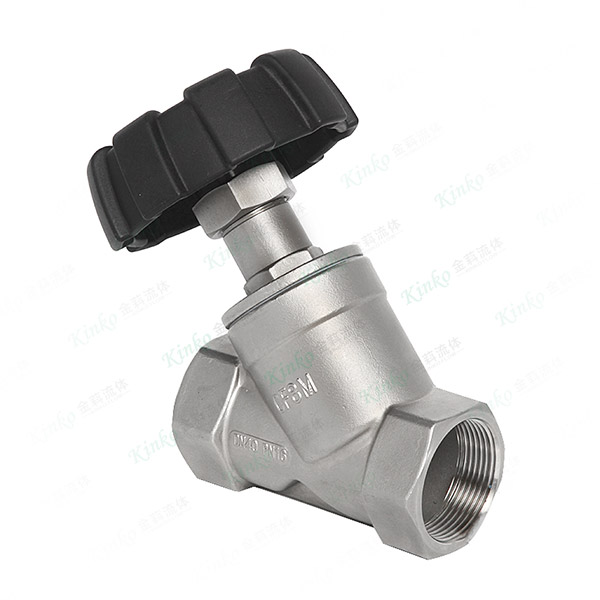
6. Initial Purchase Cost
| Pneumatic | Manual |
|---|---|
| Higher upfront investment | Lower upfront investment |
| Components: valve body + actuator + solenoid valve + fittings + tubing | Components: valve body + handwheel or lever |
| Typical cost ratio: 2x to 4x manual valve | Lower capital expenditure (CAPEX) |
Example estimate (DN25 stainless steel angle seat valve):
| Configuration | Approximate Relative Cost |
|---|---|
| Manual (handwheel) | 1.0x (baseline) |
| Manual (lever) | 0.8x – 1.0x |
| Pneumatic (NC, small actuator) | 2.0x – 2.5x |
| Pneumatic (NC, large actuator, position indicator) | 3.0x – 4.0x |
Verdict: Manual valves have lower CAPEX. Pneumatic valves have higher CAPEX but enable automation.
7. Operating Cost
| Pneumatic | Manual |
|---|---|
| Consumes compressed air (energy cost) | No energy consumption per cycle |
| Small leak in pilot valve or fittings increases cost | Labor cost for each valve operation |
| Annual air consumption: typically $20–$200 per valve depending on cycle rate | Operator wage cost: $0.50–$5.00 per operation depending on location and travel time |
Important: For high cycle rates, pneumatic operating cost is very low per cycle. For very low cycle rates (e.g., once per day), manual operating cost may be lower.
Verdict: Pneumatic is more cost-effective for high cycle rates. Manual may be cheaper for infrequent operation if labor is already on site.
8. Maintenance Requirements
| Pneumatic | Manual |
|---|---|
| More components to maintain | Simpler construction |
| Seal replacement every 500k–1M cycles | Packing adjustment occasionally |
| Pilot solenoid valve coil and seals | Handwheel mechanism rarely fails |
| Air filter element replacement | No actuator maintenance |
| Requires clean, dry, lubricated air | No air preparation needed |
Verdict: Manual valves have lower maintenance burden. Pneumatic valves require a maintenance program for air preparation and component replacement.
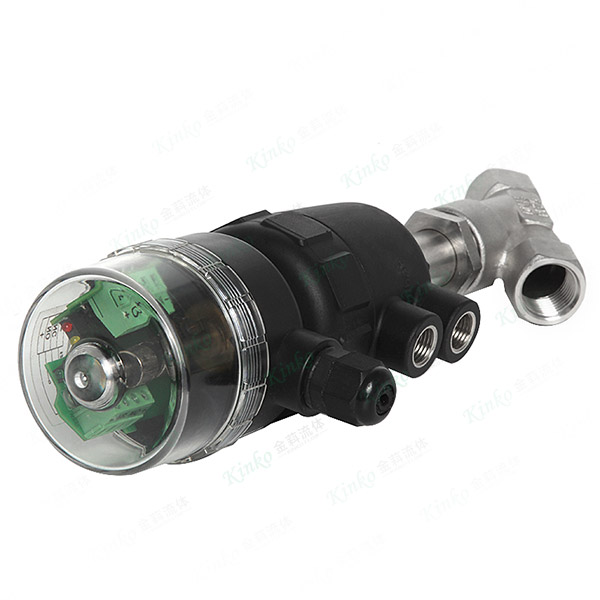
9. Installation Complexity
| Pneumatic | Manual |
|---|---|
| Requires compressed air supply at valve location | Only requires pipe fitting |
| Requires tubing, fittings, solenoid valve | No additional utilities |
| May require electrical wiring for solenoid (if not air-piloted) | No electrical work |
| Air preparation unit (FRL) recommended upstream | No air system needed |
Verdict: Manual valves are simpler and faster to install. Pneumatic requires infrastructure investment.
10. Application Suitability
| Application Scenario | Recommended Actuation |
|---|---|
| High-cycle steam injection (100+ cycles/hour) | Pneumatic |
| Emergency drain valve (must close on air loss) | Pneumatic (spring-return NC) |
| Remote tank farm (no operator nearby) | Pneumatic |
| Clean-in-place (CIP) cycle automated | Pneumatic |
| Sample point opened once per shift | Either (manual is acceptable) |
| Budget-restricted water line | Manual |
| Field maintenance isolation valve | Manual (often preferred for safety lockout) |
| Hazardous area (explosive atmosphere) | Pneumatic (no electrical spark risk) |
| Food & beverage production line | Pneumatic (automated timing) |
Technical Comparison Table: Side by Side
| Parameter | Pneumatic Angle Seat Valve | Manual Angle Seat Valve |
|---|---|---|
| Actuation force source | Compressed air (4–8 bar / 60–120 PSI) | Human hand |
| Stroke time (open or close) | 0.1–1.0 seconds (adjustable) | 2–10 seconds (variable) |
| Maximum cycles per minute | 60+ | 10–20 (sustained) |
| Cycle life expectancy | 1–3 million cycles | 50,000–200,000 cycles |
| Fail-safe position on utility loss | Yes (spring-return) | No (last position) |
| Remote control capability | Yes (solenoid valve) | No |
| Position feedback available | Yes (limit switches) | No (visual only) |
| Initial cost (relative) | 2.0x – 4.0x | 1.0x |
| Annual operating cost | Low per cycle (air + energy) | Labor cost per cycle |
| Air quality requirement | Clean, dry, lubricated (ISO 8573-1) | None |
| Suitable for hazardous area | Yes (no electrical spark if using air pilot) | Yes (no electrical components) |
| Common body sizes | DN15 – DN80 | DN15 – DN80 |
| Seal material options | PTFE, FKM, EPDM, NBR | PTFE, FKM, EPDM, NBR |
| Body material options | SS304, SS316, Brass | SS304, SS316, Brass |
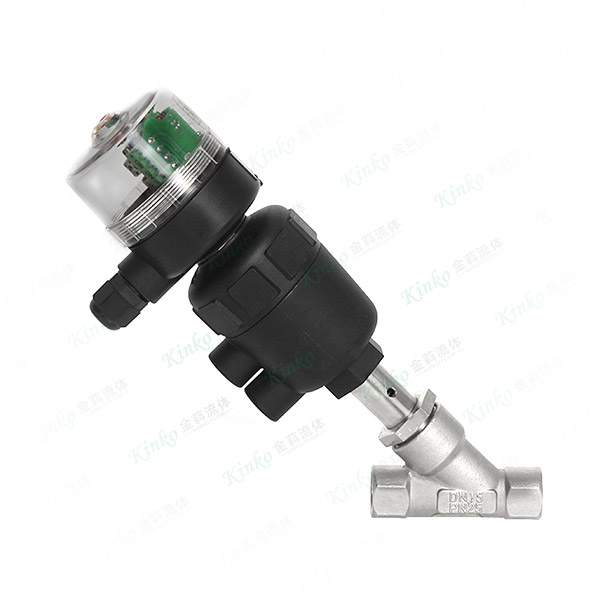
Decision Matrix: Which One Should You Choose?
Use this decision flow to select between pneumatic and manual angle seat valves from Kinko.
| Question | Yes | No |
|---|---|---|
| Does the valve need to cycle more than 10 times per hour? | → Pneumatic | → Go to next question |
| Does the valve need to respond automatically to a PLC, thermostat, or pressure switch? | → Pneumatic | → Go to next question |
| Must the valve move to a safe position on loss of power or air? | → Pneumatic (spring-return) | → Go to next question |
| Is the valve located in a remote or hazardous area where operator access is limited? | → Pneumatic | → Go to next question |
| Is the initial budget extremely tight, and automation is not required? | → Manual | → Go to next question |
| Will the valve be used only for maintenance isolation or infrequent sampling? | → Manual (handwheel) | → Pneumatic |
Hybrid Possibility: Manual Override on Pneumatic Valves
For applications requiring both automation and occasional manual operation, Kinko offers pneumatic angle seat valves with manual override.
-
Manual override type: Handwheel or push-pull knob
-
Function: Allows valve to be opened or closed manually when air supply is unavailable or during maintenance
-
Typical use: Commissioning, emergency operation, or lockout/tagout procedures
This hybrid solution provides the best of both worlds: automated control for normal operation and manual backup for exceptional circumstances.
FAQ: Pneumatic vs Manual Angle Seat Valves
Q: Can I convert a manual angle seat valve to pneumatic later?
A: Yes, in most cases. Kinko offers retrofit actuator kits. However, the valve body must have the correct stem extension and bracket mounting pattern. Check with Kinko before purchasing a manual valve if future automation is possible.
Q: Which has longer seal life—pneumatic or manual?
A: Pneumatic, when properly maintained. Pneumatic actuators provide consistent, straight lifting force. Manual handwheels can apply side loads if operated roughly, accelerating seal wear.
Q: Are manual angle seat valves suitable for steam?
A: Yes. Kinko manual angle seat valves with PTFE seals handle saturated steam up to 180°C. However, the handwheel can become hot—use insulated handles or gloves.
Q: Do pneumatic angle seat valves consume air continuously?
A: No. For spring-return (NC or NO) configurations, air is consumed only during the stroke. Once the valve reaches its end position, no air is consumed. Double-acting valves consume air during both strokes.
Q: What happens if a pneumatic angle seat valve loses air pressure?
A: A spring-return NC valve closes. A spring-return NO valve opens. A double-acting valve remains in its last position until air is restored.
Ivan (Mobile:+86-18968769287)
WhatsApp:+86-13579991606
Wechat:+86-18968769287
Website:www.kinko-flow.com
ZHEJIANG KINKO FLUID EQUIPMENT CO.,LTD
