Is an F.R.L Unit Essential for Your Pneumatic Valve System?
1. What Is an F.R.L Unit?
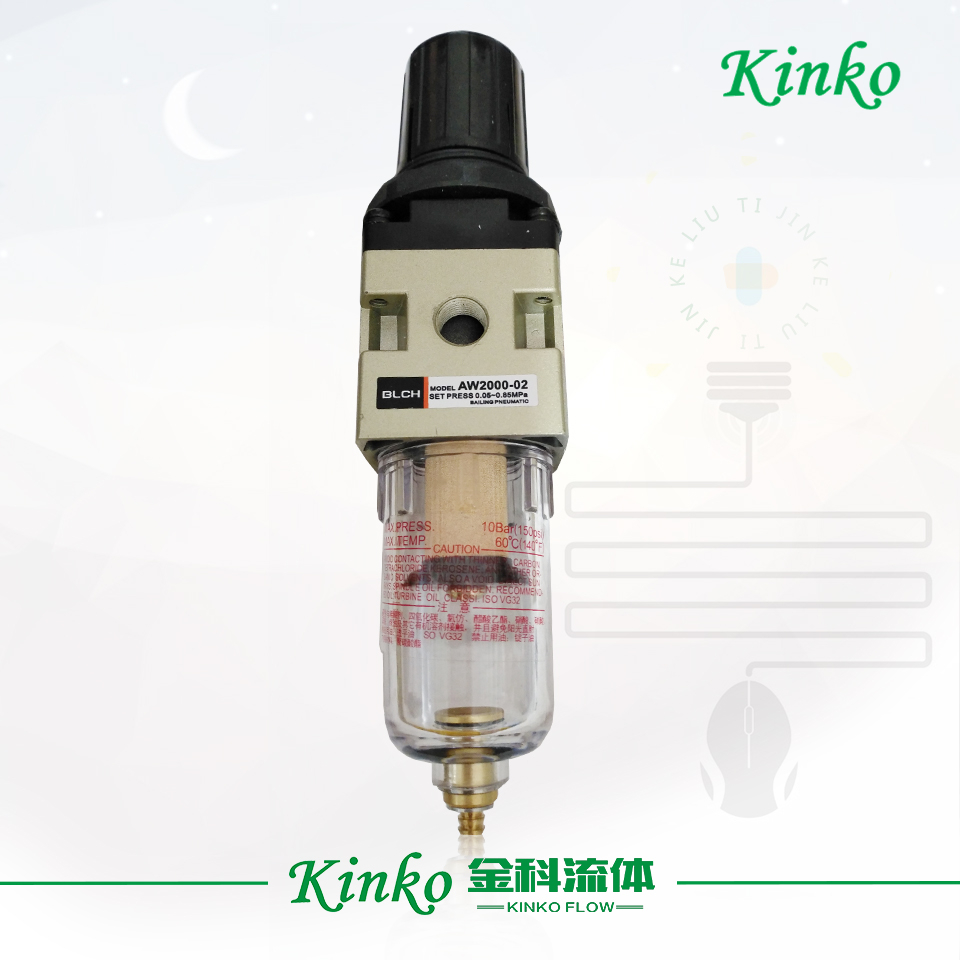
An F.R.L Unit—comprising a Filter, Regulator, and Lubricator—is the standard air preparation assembly installed upstream of pneumatic valves, actuators, and positioners. It conditions compressed air from the plant's main header before it enters sensitive control equipment.
-
Filter: Removes particulates, moisture, and oil aerosols.
-
Regulator: Maintains a stable, adjustable downstream pressure.
-
Lubricator: Adds a controlled mist of oil to lubricate moving internal parts.
The short answer: For any pneumatic valve system operating with instrumentation air (per ISO 8573-1), an F.R.L unit is not optional—it's mandatory for long-term reliability.
2. Function #1: Filtration – Protecting Internal Components
Compressed air from plant headers is rarely "clean." It contains:
-
Rust particles from steel pipes
-
Water condensate from inadequate drying
-
Residual compressor lubricant aerosols
Without a 5-micron (or finer) filter, these contaminants directly enter:
-
Positioner pilot valves (clogging tiny orifices)
-
Actuator cylinder bores (scratching seals)
-
Solenoid valve spools (causing stiction)
Consequence without filter: Valve response slows, positioner calibration drifts, and seal life shortens by up to 70%.
| Contaminant Size | Effect on Pneumatic Components |
|---|---|
| >5 microns | Visible dirt; clogs orifices and spool clearances |
| 1~5 microns | Abrasive wear on seals and cylinder walls |
| <1 micron (oil mist) | Causes rubber seal swelling and degradation |
3. Function #2: Pressure Regulation – Ensuring Stable Actuator Torque
Actuator output torque is directly proportional to supply pressure. Plant air headers often fluctuate between 5.5~8 bar depending on compressor cycling and demand spikes.
A precision regulator (within the F.R.L) stabilizes pressure to within ±0.1 bar of the setpoint, ensuring:
-
Consistent valve stroking speed
-
Repeatable shutoff torque
-
Accurate positioner calibration (since positioner calibration assumes fixed supply pressure)
Example: A double-acting actuator rated at 6 bar will under-torque at 5 bar (risk of failing to close against pressure) and over-speed at 8 bar (risk of mechanical shock to valve internals). The regulator eliminates both risks.
4. Function #3: Lubrication – Extending Seal and Spool Life
Pneumatic actuators and spool valves rely on a thin oil film to reduce friction between moving surfaces. While some modern valves use "dry" (non-lubricated) designs with PTFE-impregnated seals, most industrial actuators (rack-and-pinion, scotch-yoke) still require lubricated air for maximum cycle life.
The lubricator in an F.R.L unit:
-
Injects a fine oil mist (typically ISO VG 32 or 46) at a controlled drip rate (e.g., 1 drop per 10-20 strokes)
-
Extends seal life by 2~3× compared to dry air operation
-
Prevents galling on metal-to-metal sliding surfaces
Note: If your valve positioner or solenoid valve explicitly states "non-lubricated air only" (common for some compact ISO 15407 manifolds), you can skip the lubricator—but a filter-regulator (F.R) is still mandatory.
5. The Cost of Skipping an F.R.L Unit
Many cost-conscious buyers omit the F.R.L to save upfront capital. Here is the real cost breakdown over a 5-year lifecycle:
| Cost Item | With F.R.L Unit | Without F.R.L Unit |
|---|---|---|
| Actuator seal replacement | Once (planned) | 3~4 times (unplanned downtime) |
| Positioner replacement | Rarely | Frequent (clogged pilot nozzles) |
| Solenoid valve replacement | Minimal | Common (spool wear) |
| Production loss from unplanned downtime | Low | High (repeated valve failures) |
| 5-year total maintenance cost | Baseline | 2.5× ~ 4× higher |
6. Technical Specification Table – Typical F.R.L Unit
| Parameter | Recommended Value / Feature |
|---|---|
| Port size | 1/4" NPT, 3/8" NPT, or 1/2" NPT (matching valve manifold) |
| Filtration rating | 5 micron (standard) / 0.01 micron (coalescing, for oil-removal) |
| Pressure regulation range | 0.5 ~ 8.5 bar (adjustable) |
| Regulator sensitivity | ≤ ±0.1 bar |
| Lubricator oil capacity | 25 ~ 100 ml (transparent bowl for level check) |
| Lubricator drip rate | Adjustable (1~20 drops/min) |
| Bowl material | Polycarbonate (standard) or metal (for high-temp/chemical environments) |
| Drain type | Manual or automatic float drain |
| Max. inlet pressure | 10 bar (standard) / 16 bar (high-pressure option) |
| Ambient temp. range | -10°C ~ +60°C (standard) / -40°C (low-temp option) |
| Mounting | Bracket included (panel or pipe mounting) |
7. Installation Best Practices for F.R.L Units
To maximize performance and lifespan:
-
Orientation: Install with bowl downward (vertical) for proper condensate collection and drainage.
-
Sequence: Always follow Filter → Regulator → Lubricator (the acronym F.R.L is the order).
-
Distance: Place the F.R.L unit within 3~5 meters of the valve/actuator to minimize pressure drop in the hose.
-
Drainage: Use an automatic drain for high-humidity environments to prevent water re-entrainment.
-
Oil selection: Use only ISO VG 32 light turbine oil (never use motor oil or WD-40, which can degrade seals).
8. When Can You Use Just an F.R (Without Lubricator)?
Three common scenarios where the "L" is omitted:
-
Clean-room or food-grade applications (oil mist is prohibited)
-
Valves with "lubricated-for-life" PTFE seals (check manufacturer's datasheet)
-
High-cycle solenoid manifolds that specify dry air only
In these cases, a Filter-Regulator (F.R.) is still absolutely essential—you just skip the lubricator bowl.
Ivan (Mobile:+86-18968769287)
WhatsApp:+86-13579991606
Wechat:+86-18968769287
Website: www.kinko-flow.com
ZHEJIANG KINKO FLUID EQUIPMENT CO.,LTD
