Importance of Limit Switches in Valve Automation
1. The Core Function: Certainty
| Without Limit Switch | With Limit Switch |
|---|---|
| Operator assumes valve position | PLC knows exact position |
| Manual verification required | Remote monitoring 24/7 |
| No interlock capability | Full interlock logic possible |
| Stuck valve goes unnoticed | Alarm triggers immediately |
| Batch errors from partial stroke | Precise sequence control |
Bottom line: Limit switches convert an actuated valve from a "blind" device to a reporting device.
2. Safety Functions Enabled by Limit Switches
| Safety Application | How Limit Switch Helps |
|---|---|
| Pump protection | Confirm valve is open before pump starts – prevents deadheading |
| Tank overfill prevention | Close inlet valve only when tank reaches high level |
| Mixer interlock | Prevent mixer start unless discharge valve is closed |
| Line isolation | Verify both upstream and downstream valves are closed before maintenance |
| Purge sequence | Confirm vent valve open before purge gas injection |
| Fire safety | Send closed confirmation to fire panel for emergency isolation |
Real incident avoidance: A chemical plant avoided a 500,000 USD spill when a limit switch detected a valve that failed to close – triggering an alarm before the next batch cycle.
3. Operational Reliability Benefits
| Benefit | Explanation |
|---|---|
| Cycle counting | Track valve cycles for predictive maintenance |
| Response time monitoring | Detect slowing valves (stiction, seat swelling) |
| Partial stroke detection | Alarm if valve does not reach full travel |
| Sequence verification | Confirm step A complete before step B begins |
| Remote troubleshooting | Diagnose valve issues without sending technician |
| Audit trail | Log every valve movement with timestamp |
4. Limit Switches vs. Positioners (When to Use Which)
| Feature | Limit Switch Box | Valve Positioner |
|---|---|---|
| Output signal | Discrete (open/closed) | Continuous (4-20mA) |
| Control capability | None (feedback only) | Closed-loop positioning |
| Cost | Low ($50–200) | High ($300–1500) |
| Best for | On/off applications | Modulating control |
| Partial stroke feedback | No (unless extra switches) | Yes (any position) |
| Setup complexity | Simple (cam adjustment) | Complex (calibration) |
| Application | Recommended |
|---|---|
| Simple on/off tank fill | Limit switch box |
| Batch dosing with variable flow | Positioner + limit switch |
| Emergency shutdown (ESD) | Limit switch box (redundant) |
| Continuous pH control | Positioner |
| Pump start interlock | Limit switch box |
Rule of thumb: If you need only open/closed feedback, use a limit switch box. If you need to hold intermediate positions, use a positioner.
5. Failure Scenarios Prevented by Limit Switches
| Scenario | Without Limit Switch | With Limit Switch |
|---|---|---|
| Actuator loses air pressure | Unknown valve position | Alarm: "Valve failed to move" |
| Disc jams on debris | Pump runs against closed valve | Sequence stops before pump start |
| Stem coupler loosens | Valve disc stops rotating | Limit switch cam stops turning → alarm |
| Solenoid valve fails to shift | Process continues incorrectly | PLC sees no position change → abort |
| Manual override left engaged | Actuator moves but disc doesn't | Dual feedback mismatch alarm |
6. Redundant Limit Switch Configurations for Critical Service
For SIL-rated (Safety Integrity Level) applications, redundant limit switches are required.
| Configuration | Description | Typical Use |
|---|---|---|
| 1oo1 (one out of one) | Single switch per position | Non-critical, general purpose |
| 1oo2 (one out of two) | Two switches, either triggers action | SIL 1 applications |
| 2oo2 (two out of two) | Both switches must agree | SIL 2 high integrity |
| 2oo3 (two out of three) | Majority voting | SIL 3 safety systems |
Example – SIL 2 ESD valve:
| Position | Switch A | Switch B | PLC Action |
|---|---|---|---|
| Open | Closed | Closed | "Open confirmed" |
| Closed | Open | Open | "Closed confirmed" |
| Mismatch | Closed | Open | Alarm – valve in transit or fault |
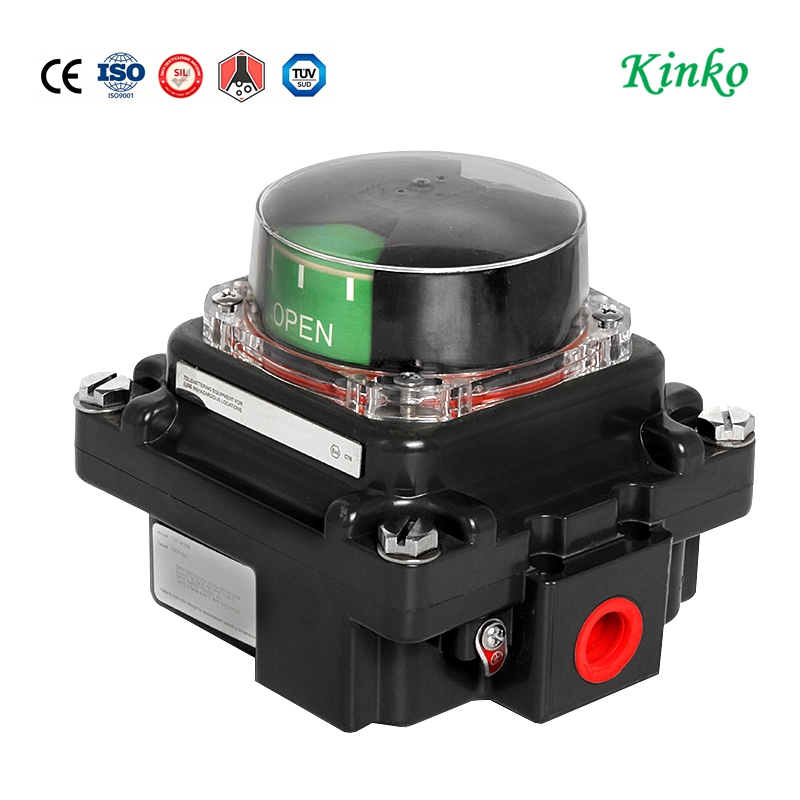
7. Limit Switches in Interlock Logic (PLC Ladder Example)
Scenario: Pump start requires discharge valve OPEN confirmed.
| Rung | Logic | Description |
|---|---|---|
| 1 | Start_PB (N.O.) AND Valve_Open_LS (N.O.) | Pump start allowed only if valve open |
| 2 | NOT Valve_Open_LS (N.C.) → Alarm | If pump running and valve not open, alarm |
Without limit switch: Pump starts regardless of valve position → potential deadhead, pump damage, seal failure.
8. Common Industry Standards for Limit Switches in Automation
| Standard | Requirement |
|---|---|
| IEC 60947-5-1 | Low voltage switchgear – control circuit devices |
| NAMUR VDI/VDE 3845 | Mounting interface for limit switch boxes on actuators |
| ATEX 2014/34/EU | Explosive atmospheres – limit switch certification |
| IEC 61508 / 61511 | Functional safety – SIL-rated limit switches |
| ISO 13849 | Safety of machinery – limit switch performance levels |
9. Cost of Not Having Limit Switches
| Consequence | Estimated Cost Impact |
|---|---|
| Pump deadhead (1 hour downtime) | $5,000–50,000 (lost production + seal replacement) |
| Tank overfill (small spill) | $10,000–100,000 (cleanup + fines) |
| Batch ruined (mid-position unknown) | $2,000–20,000 per batch |
| Technician dispatched for false alarm | $500–1,500 per visit |
| Valve stuck closed – process shutdown | $10,000–200,000 per day |
A $150 limit switch box prevents most of these events.
10. Signs Your Valve Automation Needs Limit Switches
| Current Situation | Recommendation |
|---|---|
| Operators manually walk down to check valves | Add limit switches + remote display |
| Frequent pump seal failures | Interlock pump start with valve open feedback |
| Batch inconsistency issues | Verify valve position before each step |
| No alarm when valve fails to move | Add position feedback to PLC |
| Maintenance based on calendar only | Use limit switches for cycle counting |
11. Selecting Limit Switches for Critical Applications
| Criticality Level | Recommended Configuration |
|---|---|
| Low (comfort monitoring) | Single mechanical switch, plastic enclosure |
| Medium (process interlock) | 2x mechanical switches, aluminum enclosure |
| High (safety interlock) | 2x proximity switches, redundant feedback to PLC |
| Critical (SIL rated) | 1oo2 or 2oo2 configuration, certified limit switches |
| ESD (Emergency Shutdown) | Mechanical switches (fail-safe), ATEX if needed |
12. KINKO Recommendation Matrix
| Application | Limit Switch Box Model | Why |
|---|---|---|
| Water treatment – open/close indication | KLS-100 (plastic, 2x mech) | Low cost, non-critical |
| Pump interlock – chemical plant | KLS-200 (aluminum, 2x mech) | Reliable, IP67 |
| High cycle – packaging line | KLS-300 (aluminum, 2x proximity) | No contact wear |
| Offshore platform – ESD valve | KLS-400 (SS316, ATEX, 2x mech) | Corrosion + explosion proof |
| Food processing – washdown | KLS-500 (SS316, IP69K, proximity) | High pressure washdown |
Summary: The True Importance of Limit Switches
| Aspect | Why Limit Switches Matter |
|---|---|
| Safety | Prevent equipment damage and hazardous events |
| Reliability | Confirm valve position before process steps |
| Maintenance | Cycle counting enables predictive maintenance |
| Remote operation | Eliminate manual walk-downs |
| Audit trail | Log every valve movement |
| Cost | $150 device prevents $50,000 failures |
Need to upgrade your valve automation with reliable position feedback? KINKO offers limit switch boxes pre-mounted and tested on actuated butterfly valves – ready for PLC connection.
Ivan (Mobile:+86-18968769287)
WhatsApp:+86-13579991606
Wechat:+86-18968769287
Website:www.kinko-flow.com
ZHEJIANG KINKO FLUID EQUIPMENT CO.,LTD
