How to Size an Actuator for Ball Valves & Butterfly Valves
1. The Golden Rule of Actuator Sizing
Before diving into calculations, remember this fundamental principle:
Actuator Output Torque > Valve Torque Requirements
Specifically:
-
For Pneumatic Actuators (JAT-SR): The actuator's torque output at the lowest available supply pressure must exceed the valve's maximum breakaway torque.
-
For Electric Actuators (KK/JAT Series): The actuator's rated torque must exceed the valve's maximum torque across the entire stroke, with special attention to seating/unseating peaks.
2. Understanding Valve Torque Profiles
Ball valves and butterfly valves have very different torque characteristics. You cannot size them the same way.
Ball Valve Torque Characteristics
Ball valves exhibit their highest torque requirement at the breakaway point (starting to open) and the seating point (final closing). This is due to the friction between the ball and the seats.
-
Breakaway Torque: Highest point. Required to overcome static friction and unseat the ball.
-
Running Torque: Lower. Once the ball is moving, friction decreases.
-
End-of-Stroke Torque: High again. As the ball re-seats, resistance increases.
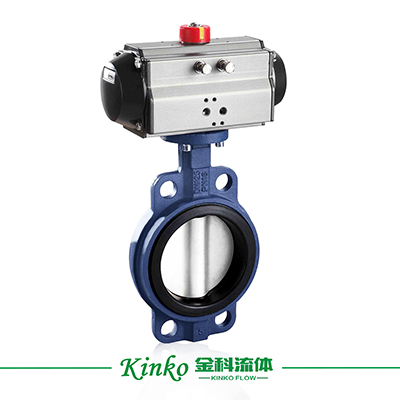
Butterfly Valve Torque Characteristics
Butterfly valves have a different profile. The torque peaks at an intermediate opening angle (typically around 70-80 degrees open) due to hydrodynamic forces from the fluid flow.
-
Breakaway Torque: Moderate. Overcoming seat friction.
-
Peak Torque: Occurs at mid-stroke due to fluid dynamic torque.
-
Seating Torque: Lower than ball valves, but still requires consideration.
| Valve Type | Breakaway Torque | Running Torque | End Stroke Torque |
|---|---|---|---|
| Ball Valve | Very High | Low | High |
| Butterfly Valve | Moderate | Peak at 70-80° | Moderate |
3. Step-by-Step Actuator Sizing Process
Follow these five steps to ensure you select the correct actuator every time.
Step 1: Obtain Valve Torque Data
The most reliable method is to get the breakaway torque value from the valve manufacturer. This should be provided in Nm (Newton-meters) or lbf-in (pound-force inches). If you cannot get this data, you must estimate based on valve size, pressure rating, and type—but always add a generous safety factor.
Step 2: Apply Safety Factors
Valve torque is not static. It changes based on:
-
Pressure Variations: Maximum differential pressure across the valve.
-
Temperature: Seals expand or contract, changing friction.
-
Media: Sticky or viscous fluids increase torque.
-
Cycle Frequency: Frequent cycling can wear seats, changing torque over time.
-
Age: Older valves often require more torque due to seat wear or debris buildup.
Recommended Safety Factors (Industry Standard):
| Valve Type | Safety Factor (Pneumatic) | Safety Factor (Electric) |
|---|---|---|
| Ball Valve | 1.5x to 2.0x | 1.25x to 1.5x |
| Butterfly Valve | 1.3x to 1.5x | 1.1x to 1.3x |
*Example: If a ball valve requires 500 Nm to break away, you need a pneumatic actuator delivering at least 750-1000 Nm.*
Step 3: Account for Supply Pressure (Pneumatic Only)
Pneumatic actuators (like the KINKO JAT-SR Series) are highly sensitive to air supply pressure. Their torque output is directly proportional to the pressure supplied.
If your facility operates at 5.5 bar, but the actuator catalog lists torque at 6 bar, you must derate the actuator's output. Always size based on the minimum available pressure, not the maximum.
Step 4: Consider Valve Stroke Time
Faster operation requires more torque. If you need the valve to cycle in under 2 seconds, you will need a larger actuator (or higher pressure for pneumatics) than a valve cycling in 30 seconds. For electric actuators (KK Series), this means checking the "action time" specification.
Step 5: Verify Connection Standards
Ensure the actuator's mounting flange matches the valve's top flange. Common standards include:
-
ISO 5211: The international standard for quarter-turn valve mounting (most common for KINKO actuators).
-
Namur: For accessory mounting (solenoid valves, limit switches).
4. Sizing Examples: Ball Valve vs. Butterfly Valve
Let us walk through two practical examples using KINKO products.
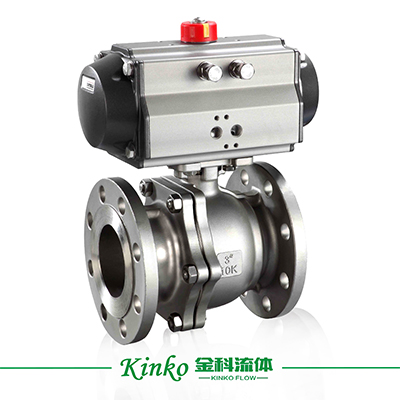
Example A: Sizing for a Ball Valve
Scenario: You need to automate an 8" ball valve rated at PN16 (16 bar). The valve manufacturer states a maximum breakaway torque of 1,200 Nm. You are using a pneumatic actuator with a plant air supply of 5.5 bar.
Calculation:
-
Base Torque: 1,200 Nm
-
Safety Factor (Ball Valve, Pneumatic): 1.5x
-
Required Actuator Torque: 1,200 Nm × 1.5 = 1,800 Nm
-
Pressure Adjustment: The JAT-SR catalog rates actuators at 6 bar. Your supply is 5.5 bar (92% of rated pressure). You need an actuator rated for approximately 1,800 Nm / 0.92 = 1,956 Nm at 6 bar.
-
Selection: Choose a KINKO JAT-SR Double Acting model with a torque output of ≥ 2,000 Nm at 6 bar.
Example B: Sizing for a Butterfly Valve
Scenario: You need to automate a 12" butterfly valve for a water treatment plant. The maximum torque (at 70° open) is 350 Nm. You prefer an electric actuator for precise control.
Calculation:
-
Base Torque: 350 Nm
-
Safety Factor (Butterfly Valve, Electric): 1.2x
-
Required Actuator Torque: 350 Nm × 1.2 = 420 Nm
-
Selection: Choose a KINKO KK Series electric rotary actuator. The KK-60 model offers 600 Nm, which comfortably exceeds the 420 Nm requirement while providing room for future margin.
5. KINKO Actuator Selection Reference
Use this quick reference table to match your calculated torque to a KINKO model.
For Electric Actuators (Rotary - KK Series)
| Model | Output Torque | Best For |
|---|---|---|
| KK-20 | 200 Nm | Small ball valves (2"-3"), small butterfly valves (4"-6") |
| KK-40 | 400 Nm | Medium ball valves (4"), medium butterfly valves (8") |
| KK-60 | 600 Nm | Large butterfly valves (10"-12"), medium ball valves (6") |
| KK-80 | 800 Nm | Large ball valves (8"), high-pressure applications |
| KK-100 | 1000 Nm+ | Heavy-duty industrial valves |
For Pneumatic Actuators (Rack & Pinion - JAT-SR Series)
| Model Type | Torque Range (DA) | Torque Range (SR) | Best For |
|---|---|---|---|
| JAT-SR 52 | 15-50 Nm | 10-40 Nm | Miniature valves, instrumentation |
| JAT-SR 63 | 50-150 Nm | 40-120 Nm | Small ball/butterfly valves (2"-4") |
| JAT-SR 75 | 150-300 Nm | 120-250 Nm | Medium valves (4"-6") |
| JAT-SR 83 | 300-600 Nm | 250-500 Nm | Large valves (6"-8") |
| JAT-SR 92 | 600-1200 Nm | 500-1000 Nm | Large valves (8"-10") |
| JAT-SR 105 | 1200-2000 Nm | 1000-1600 Nm | Heavy industrial (10"-12") |
| JAT-SR 125 | 2000-4000 Nm+ | 1600-3200 Nm+ | Very large valves (12"-16") |
Note: DA = Double Acting, SR = Spring Return. Torque varies by supply pressure.
6. Common Sizing Mistakes to Avoid
Mistake #1: Ignoring the Valve Manufacturer's Data
Never rely solely on "standard" torque charts from the internet. Valve torque varies significantly by brand, seat material, and pressure class. Always request the specific torque curve from your valve supplier.
Mistake #2: Using the Wrong Safety Factor
Applying the same safety factor to ball valves and butterfly valves is a common error. As shown above, ball valves require higher safety margins due to their high breakaway torque.
Mistake #3: Forgetting About Spring End Torque (Pneumatic SR)
When sizing a Spring Return actuator (like JAT-SR), you must check the spring end torque. At the very end of the spring stroke, the spring is almost fully decompressed and provides the least force. This "spring end" value must still be higher than the valve's seating/unseating torque.
Mistake #4: Overlooking Environmental Conditions
High temperatures can reduce electric motor efficiency. Low temperatures can thicken grease and increase breakaway torque. If your actuator operates in extreme conditions, consult KINKO engineering for derating factors.
Conclusion
Correctly sizing an actuator for ball valves and butterfly valves requires understanding the valve's unique torque profile, applying appropriate safety factors, and matching the results to a reliable actuator line.
KINKO offers a complete range of solutions:
-
For precise, smart control: Choose the KK Series (Electric Rotary) or JAT Series (Electric Linear) .
-
For reliable, powerful pneumatic actuation: Choose the JAT-SR Series (Rack & Pinion) .
By following this guide, you can ensure optimal performance, longest service life, and the perfect valve-actuator match for your application.
Need assistance with your specific valve?
Contact KINKO technical support with your valve model and operating conditions, and we will provide a certified sizing recommendation.
Ivan (Mobile:+86-18968769287)
WhatsApp:+86-13579991606
Wechat:+86-18968769287
Website:www.kinko-flow.com
ZHEJIANG KINKO FLUID EQUIPMENT CO.,LTD
