How Pneumatic Actuators Improve Response Speed in Valves
1. Why Response Speed Matters
| Application | Why Speed is Critical | Typical Required Stroke Time |
|---|---|---|
| Emergency shutdown (ESD) | Prevent overpressure, fire, or toxic release | <2 seconds (often <1 second) |
| Surge protection | Stop reverse flow before pump damage | <1 second |
| Compressor blow-down | Rapidly depressurize for safety | <3 seconds |
| Filter backwash | Minimize water hammer and process interruption | 2–5 seconds |
| Fast batch filling | Accurate fill volume with tight cycle time | 1–3 seconds |
| High-speed packaging | Synchronize with packaging line | <0.5 seconds |
Key point: A valve that strokes too slowly can cause as much damage as a valve that fails completely.
2. Why Pneumatic Actuators Are Faster Than Alternatives
| Actuator Type | Typical Stroke Time (90° quarter-turn) | Why |
|---|---|---|
| Pneumatic (rack and pinion) | 0.5–3 seconds | Compressed air flows quickly into cylinder. No mechanical brakes or complex gearing. |
| Pneumatic (scotch yoke) | 1–4 seconds | Higher torque but slightly slower due to larger cylinder volume. |
| Electric (standard) | 5–30 seconds | Motor and gear reduction limit speed. Starting torque is lower. |
| Electric (high-speed) | 2–5 seconds | Requires special motor, brake, and control. More expensive. |
| Electro-hydraulic | 2–8 seconds | Pump flow rate limits speed. Faster than electric, slower than pneumatic. |
Conclusion: For the fastest stroking times, pneumatic actuators are the clear choice.
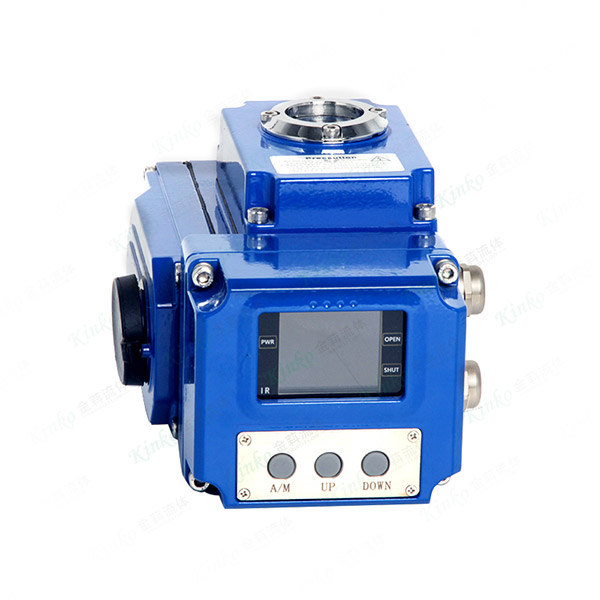
3. How Pneumatic Actuators Achieve High Speed
Direct Force Application
Unlike electric actuators that convert rotary motor motion to linear or rotary output through gear reductions, pneumatic actuators apply air pressure directly to a piston or vane. There is no gearing to slow down the motion.
Result: Full torque is available instantly from the start of stroke.
High Power-to-Weight Ratio
Compressed air stores significant energy. A small pneumatic actuator can produce very high speed and torque relative to its size and weight.
Comparison: A 100 Nm pneumatic actuator might weigh 5 kg. A 100 Nm electric actuator with similar speed capability could weigh 15–20 kg.
Simple Control Circuit
Pneumatic actuators require only a solenoid valve to start and stop motion. No complex motor controllers, soft starters, or variable frequency drives are needed.
Standard fast-actuation circuit:
-
Solenoid valve (direct mount or close-coupled)
-
Quick exhaust valves at actuator ports
-
Large diameter tubing (6mm minimum, often 10–12mm)
No Backlash or Brake Delay
Electric actuators use electromagnetic brakes to hold position. Releasing the brake adds 50–200 milliseconds of delay. Pneumatic actuators have no brake—the solenoid valve simply opens, and air flows immediately.
4. Key Components That Influence Speed
| Component | Impact on Speed | Recommendation for Fast Response |
|---|---|---|
| Solenoid valve | Most critical. Small Cv = slow stroke. | Use high-flow (Cv >1.0) 5/2 or 3/2 valve. Direct mount to actuator. |
| Tubing size | Restricts air flow. 4mm tube is too slow. | Use 8mm or 10mm ID tubing. Keep length under 3 meters. |
| Quick exhaust valve | Removes exhaust air without traveling back through solenoid. | Install at actuator ports for <1 second stroking. |
| Air supply pressure | Higher pressure = faster stroking (within limits). | Use 6–8 bar (87–116 psi). Regulate close to actuator. |
| Actuator volume | Larger cylinders take longer to fill and exhaust. | Right-size actuator. Do not oversize unnecessarily. |
| Spring return | Spring opposes air opening (or closing). | Use double-acting for fastest speed. Spring-return is slower. |
5. Typical Stroke Times by Configuration
Test conditions: 90° quarter-turn butterfly valve, 6 bar air supply, 1m tubing, direct mount solenoid.
| Actuator Type | Valve Size | Stroke Time (Open to Close) |
|---|---|---|
| Double-acting, standard solenoid | DN80 (3") | 0.8–1.2 seconds |
| Double-acting, quick exhaust valves | DN80 (3") | 0.4–0.7 seconds |
| Spring-return (fail close), standard | DN80 (3") | 1.0–1.8 seconds (closing slower) |
| Double-acting, standard | DN200 (8") | 1.5–2.5 seconds |
| Double-acting, quick exhaust + large tubing | DN200 (8") | 0.8–1.5 seconds |
| High-flow scotch yoke, double-acting | DN400 (16") | 2–4 seconds |
Note: For stroke times under 0.5 seconds, special high-flow components and very short tubing are required.
6. Trade-offs: Speed vs. Other Factors
| Factor | Fast Speed Requirement | Trade-off |
|---|---|---|
| Valve life | Fast closing causes water hammer and seat impact | May reduce valve seat life. Use soft seats or speed control for non-emergency strokes. |
| Air consumption | Fast stroking uses more air per cycle | Larger compressor or receiver tank needed. |
| Component cost | High-flow solenoid valves, quick exhausts, large tubing | Adds 30–100% to actuator package cost. |
| Control precision | Fast actuators are harder to position mid-stroke | Not suitable for modulating duty. Use on/off only. |
| Noise | Quick exhaust valves are loud (80–100 dB) | May require silencers or hearing protection. |
Recommendation: Use full speed only for emergency or fast cycling. For normal operation, install speed control fittings to slow stroke and reduce wear.
7. Speed Control Methods for Pneumatic Actuators
Sometimes you need fast emergency response but slow normal operation. This is achieved with dual-speed control.
| Method | How It Works | Best For |
|---|---|---|
| Exhaust flow control | Adjustable fitting restricts exhaust air speed | Slowing normal strokes while keeping emergency speed |
| Two-speed solenoid circuit | Separate pilot valve enables high flow during ESD | ESD valves that also modulate |
| Quick exhaust with bypass | Quick exhaust active only during emergency signal | Safety valves with slow normal operation |
8. Common Mistakes That Slow Down Pneumatic Actuators
| Mistake | Consequence | Fix |
|---|---|---|
| Long, small-diameter tubing | Pressure drop, slow stroking | Use short, large-diameter tubing |
| Undersized solenoid valve (Cv <0.5) | Restricts air flow | Use Cv >1.0 for fast stroking |
| No quick exhaust valves | Exhaust air travels back through solenoid (slower) | Add quick exhaust at actuator ports |
| Low air supply pressure (4 bar or less) | Slow motion, incomplete stroke | Increase to 6–8 bar |
| Spring-return used when double-acting would work | Spring opposes motion | Use double-acting if fail-safe not required |
| Oversized actuator | Large cylinder volume takes time to fill | Right-size torque to valve |
9. Selection Table by Required Stroke Time
| Required Stroke Time (90°) | Recommended Actuator Type | Additional Components |
|---|---|---|
| <0.5 seconds | Double-acting pneumatic (small valve) | High-flow solenoid, quick exhaust, 10mm tubing, close-coupled |
| 0.5–1 second | Double-acting pneumatic | Standard high-flow solenoid, quick exhaust optional |
| 1–2 seconds | Double-acting or spring-return | Standard solenoid, 6–8mm tubing |
| 2–5 seconds | Double-acting or electric (high-speed) | Standard components |
| >5 seconds | Electric standard | Standard motor starter |
Ivan (Mobile:+86-18968769287)
WhatsApp:+86-13579991606
Wechat:+86-18968769287
Website:www.kinko-flow.com
ZHEJIANG KINKO FLUID EQUIPMENT CO.,LTD
