Differences Between Standard and Custom Valve Actuators
1. Defining Standard vs. Custom
| Aspect | Standard Actuator | Custom / Modified Actuator |
|---|---|---|
| Definition | Off-the-shelf product with fixed specifications | Engineered or modified to meet non-standard requirements |
| Lead time | In stock or 1–4 weeks | 6–20 weeks (depending on complexity) |
| Cost | Lower (economies of scale) | Higher (engineering, tooling, testing) |
| Spare parts | Readily available | May require special stock or lead time |
| Documentation | Standard manual | Custom drawings, test reports, certifications |
| Minimum order quantity | 1 piece | Often 1–5 pieces minimum |
Key point: "Custom" ranges from simple modifications (e.g., special paint) to fully bespoke designs (e.g., unique mounting interface, special materials, custom control logic).
2. When Standard Actuators Are Sufficient
Most industrial applications do not require custom actuators. Standard units work well when:
-
Ambient temperature is between -20°C and +70°C
-
Standard enclosure rating (IP65, IP67, IP68) is acceptable
-
Standard voltages (24V DC, 110V AC, 230V AC, 400V AC)
-
Standard control signals (on/off, 4–20 mA modulating)
-
Standard mounting interface (ISO 5211, F05/F07/F10, etc.)
-
Non-hazardous or standard hazardous area (Ex d IIB T4)
-
Standard paint (epoxy polyester)
Recommendation: Always start with standard. Only move to custom when a clear technical gap exists.
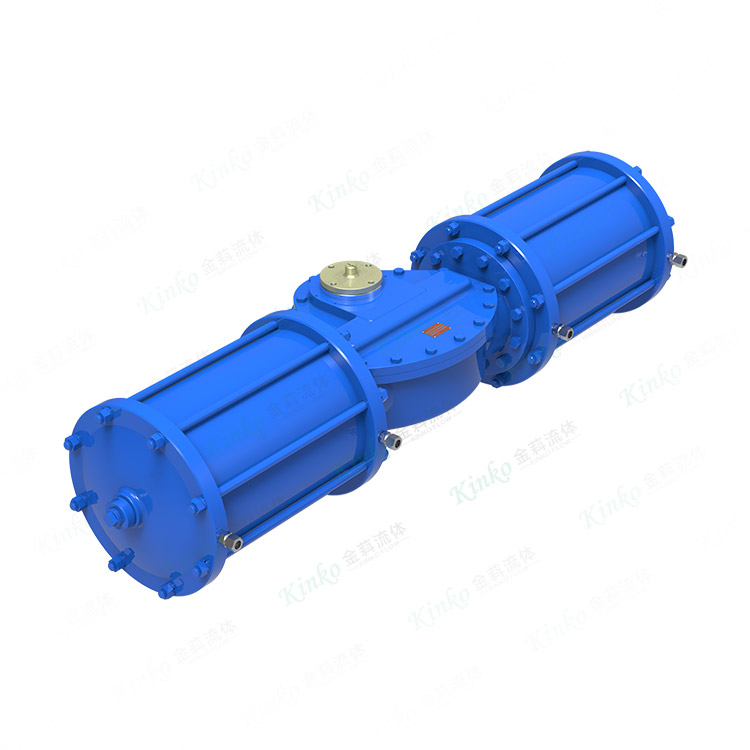
3. Common Reasons for Custom Actuators
| Requirement | Why Standard May Not Work | Typical Custom Solution |
|---|---|---|
| Extreme temperature | Standard seals and grease fail below -30°C or above +80°C | Low-temp or high-temp seals, special grease, heaters |
| Non-standard voltage | 12V DC, 48V DC, 600V AC, or variable frequency drive | Custom motor winding or VFD interface |
| Special mounting | Valve does not match ISO 5211 or standard mounting pattern | Custom mounting bracket and drive adapter |
| Corrosive environment | Standard coating fails (offshore, chemical, wastewater) | 316SS housing, heavy epoxy coating, duplex steel |
| High cycle life | Standard actuator rated for 10k–50k cycles | Reinforced gears, larger bearings, special lubrication |
| Fail-safe speed | Standard spring-return too slow | Custom spring pack, dual springs, hydraulic override |
| Explosion-proof zone | Standard Ex d IIB T4 not sufficient for Zone 0 or IIC gases | Ex d IIC T6 or Ex ia (intrinsic safety) |
| Subsea or underwater | IP68 not tested for depth or long-term submersion | Subsea-rated housing, pressure compensation |
| Special control interface | Profibus, Modbus, Foundation Fieldbus not standard on low-cost units | Integrated fieldbus board or gateway |
| Manual override position | Standard handwheel location inaccessible | Remote manual override, chainwheel, or extended stem |
| OEM branding or color | Standard paint and logo | Custom color, laser-engraved logo, special nameplate |
4. Levels of Customization
Custom actuators fall into three categories. Cost and lead time increase with each level.
Level 1: Configuration (Lowest cost, fastest)
Factory-modified standard actuator with bolt-on options.
Examples:
-
Standard actuator + special grease
-
Standard actuator + different paint color
-
Standard actuator + extended shaft
-
Standard actuator + pre-wired cable (custom length)
Lead time: Standard + 1–2 weeks
Cost premium: 10–30%
Level 2: Modification (Medium cost, medium lead time)
Standard actuator platform with significant mechanical or electrical changes.
Examples:
-
High-temp seals + PFPE grease + heat shield
-
316SS housing instead of aluminum
-
Custom output torque curve (different gearing)
-
Non-standard motor voltage
-
Integrated fieldbus board
Lead time: 6–12 weeks
Cost premium: 30–100%
Level 3: Bespoke (Highest cost, longest lead time)
Fully engineered solution. May use no standard components.
Examples:
-
Subsea actuator rated for 3000m depth
-
Nuclear-qualified (10 CFR 50) actuator
-
Actuator for proprietary valve with no standard interface
-
Extreme low-temperature (-60°C) with special materials
-
Radiation-hardened actuator for nuclear or medical applications
Lead time: 12–30 weeks
Cost premium: 100–500% (or more)
5. Cost vs. Benefit Analysis
Before specifying a custom actuator, ask:
| Question | If Yes → Custom may be justified | If No → Stick with standard |
|---|---|---|
| Will a standard actuator fail within 12 months in this environment? | Yes | No |
| Does the application have safety or regulatory requirements that standard products cannot meet? | Yes | No |
| Is the valve non-standard and impossible to adapt? | Yes | No |
| Is the cost of downtime higher than the custom actuator premium? | Yes | No |
| Will you order multiple units (spreading engineering cost)? | Yes | No |
Rule of thumb: If you need more than 5–10 identical units, custom becomes more economical. For a single unit, try to adapt standard first.
6. Comparison Table: Standard vs. Custom by Application
| Application | Standard Suitability | Custom Recommendation |
|---|---|---|
| Water treatment plant, indoor | Excellent | Not needed |
| Chemical plant, outdoor, mild climate | Good | Not needed |
| Offshore platform (corrosion) | Poor | 316SS housing, heavy coating |
| Arctic pipeline (-50°C) | Poor | Low-temp seals, special grease, heaters |
| Desert solar plant (70°C ambient) | Fair | High-temp seals, heat shield |
| Zone 0 explosive atmosphere | Poor | Ex ia or Ex d IIC T6 |
| Subsea (100m depth) | Not available | Subsea-rated custom |
| Nuclear power plant | Not available | Nuclear-qualified custom |
| Food & beverage (washdown) | Fair (IP69K available standard on some) | Often standard with IP69K |
7. Risks of Custom Actuators
Custom solutions carry additional risks that standard products do not:
| Risk | Mitigation |
|---|---|
| Longer lead time | Order early. Include schedule buffer. |
| Higher cost | Get firm quote before committing. Compare against cost of downtime. |
| Spare parts availability | Order spare parts at same time. Consider extra actuator as backup. |
| Unknown reliability | Request prototype testing or field trial before full order. |
| Single-source dependency | Ask for drawings and specifications to allow second-source manufacturing. |
| Documentation delays | Specify required documents (drawings, test reports, certifications) in purchase order. |
Ivan (Mobile:+86-18968769287)
WhatsApp:+86-13579991606
Wechat:+86-18968769287
Website: www.kinko-flow.com
ZHEJIANG KINKO FLUID EQUIPMENT CO.,LTD
