How Filter Regulator Lubricators Extend Actuator Life
The Three Silent Killers of Pneumatic Actuators
Before understanding how an FRL protects an actuator, it is essential to understand what destroys one.
Killer 1: Contamination (Abrasive Wear)
Compressed air from a typical plant header contains:
-
Solid particles: Rust, pipe scale, dust, and compressor wear debris (typically 5-50 microns).
-
Liquid water: Condensate from cooling compressed air after compression.
-
Oil aerosols: Carryover from lubricated rotary screw compressors.
The Damage Mechanism: These contaminants enter the actuator cylinder or diaphragm case. Solid particles act as abrasives, scoring the cylinder wall, wearing piston seals, and damaging the valve stem packing. Water causes corrosion of internal metal components and can freeze in cold environments, jamming the actuator. Oil aerosols combine with dust to form a sticky sludge that binds moving parts.
The Result: Seal failure, increased friction, erratic stroking, and eventual actuator seizure. Actuator life is reduced by 50-70% in contaminated air systems.
Killer 2: Pressure Instability (Erratic Force)
Plant air headers experience pressure fluctuations as compressors cycle on and off and as other users draw air. A typical header may vary from 5.5 bar to 7.5 bar throughout the day.
The Damage Mechanism: The actuator relies on a specific pressure to generate the required thrust or torque. When supply pressure drops, the actuator cannot fully close the valve against process pressure—seat leakage occurs, eroding the valve trim. When pressure spikes, the actuator slams the valve shut, causing mechanical shock that damages the stem, packing, and seat.
The Result: Premature valve trim wear, packing leakage, and actuator linkage fatigue. Pressure fluctuations can reduce actuator life by 30-40%.
Killer 3: Dry Friction (Accelerated Seal Wear)
Most pneumatic actuators contain dynamic seals—O-rings, lip seals, or diaphragm materials—that slide against metal surfaces during stroking. These seals require a microscopic film of lubrication to reduce friction and prevent wear.
The Damage Mechanism: Dry air strips away the natural lubrication from seals. The seals run "dry," generating heat and friction. The elastomer material hardens, cracks, and eventually fails. Friction increases, requiring higher pressure to move the valve—this stresses the positioner and the actuator spring.
The Result: Rapid seal degradation, increased air consumption (due to internal bypass leakage), and erratic valve positioning. Dry operation can reduce seal life by 60-80%.
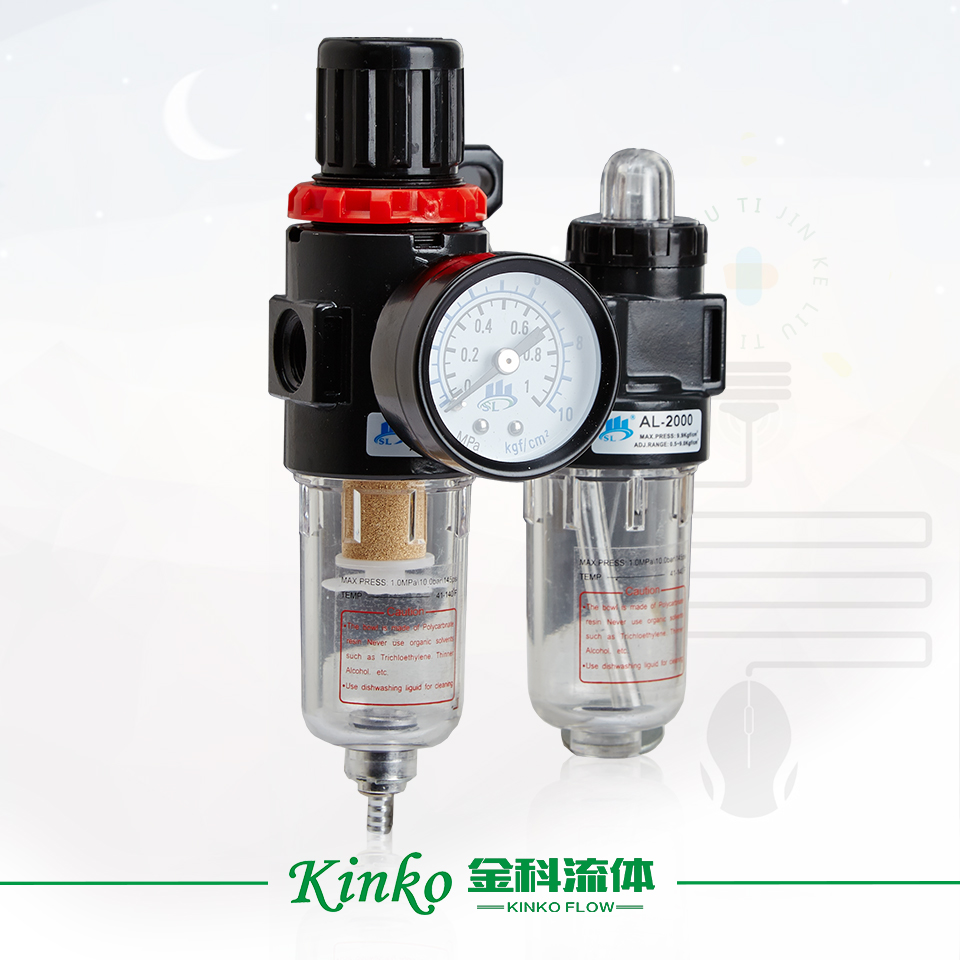
How Each FRL Component Extends Actuator Life
The Filter: Preventing Abrasive Wear
The filter removes solid particles, water droplets, and oil aerosols from the compressed air stream before they reach the actuator.
Protection Mechanism:
-
Particle Removal: Standard 5-micron elements capture rust, scale, and dust that would otherwise score cylinder walls and wear piston seals.
-
Water Separation: The filter's baffle and coalescing media separate liquid water from the air stream. Water is collected in the bowl and drained away.
-
Oil Removal (Coalescing Filters): In lubricated compressor systems, a 0.01-micron coalescing filter removes oil aerosols, preventing sludge formation.
Quantified Benefit: A properly filtered air supply reduces seal wear by up to 70%. Actuator service intervals can be extended from 6 months to 3-5 years.
Case Example: A chemical plant experienced actuator seal failures every 8 months. Inspection revealed rust particles in the actuator cylinder. After installing a 5-micron FRL filter with automatic drain, seal life extended to 4 years—a 500% improvement.
The Regulator: Protecting Against Mechanical Shock
The regulator reduces and stabilizes the plant header pressure to a precise setpoint—typically 4-6 bar (58-87 psi) for standard actuators.
Protection Mechanism:
-
Pressure Stabilization: The regulator isolates the actuator from upstream pressure fluctuations. A ±1 bar header variation becomes a stable ±0.05 bar at the actuator inlet.
-
Overpressure Prevention: The regulator limits the maximum pressure the actuator sees, preventing slam-shut events that damage the valve stem and seat.
-
Consistent Thrust: Stable pressure means consistent actuator force. The valve strokes smoothly and repeatably, reducing wear on the stem and packing.
Quantified Benefit: Pressure regulation reduces valve trim wear by up to 40%. Packing life extends by 2-3 times because the stem moves smoothly without shock loading.
Case Example: A power plant's control valves were slamming shut during compressor startup, damaging seat rings every 6 months. Installing a regulator with a relieving function capped pressure at 5.5 bar. Seat ring replacement intervals increased to 3 years.
The Lubricator: Eliminating Dry Friction
The lubricator introduces a controlled mist of oil into the air stream, providing continuous lubrication to the actuator's dynamic seals.
Protection Mechanism:
-
Reduced Friction: The oil film reduces the coefficient of friction between seals and sliding surfaces by up to 90%. Actuators stroke more smoothly with less force.
-
Seal Preservation: The oil conditions the elastomer, preventing it from drying out, hardening, and cracking. Seals remain flexible and conform to the cylinder wall.
-
Corrosion Prevention: The oil film displaces moisture, preventing rust on cylinder walls and piston rods.
-
Extended Seal Life: Lubricated seals last 3-5 times longer than dry seals.
Quantified Benefit: Proper lubrication reduces actuator friction by 50-80%, extends seal life by 300-500%, and reduces positioner workload (less force required to stroke the valve).
Critical Warning: As noted in the previous guide, do not use a lubricator upstream of YTC positioners or I/P converters. Oil mist contaminates the positioner's precision nozzle and flapper, causing hunting and failure. If your YTC positioner is in the same air circuit, install the lubricator downstream of the positioner (between the positioner output and the actuator) or use an FR unit for the positioner and a separate lubricated circuit for the actuator. Alternatively, use non-lubricated actuators with PTFE-based seals that do not require oil.
Ivan (Mobile:+86-18968769287)
WhatsApp:+86-13579991606
Wechat:+86-18968769287
Website: www.kinko-flow.com
ZHEJIANG KINKO FLUID EQUIPMENT CO.,LTD
