FRL Unit Installation and Maintenance Guide
FRL Unit Installation: Step-by-Step Guide
Proper installation ensures your FRL delivers clean, stable, lubricated (if required) air to your pneumatic system for its entire service life.
Step 1: Location Selection
Choose the installation location carefully. The FRL must be:
-
Accessible: Positioned for easy bowl draining, filter element replacement, and gauge reading.
-
Protected: Shielded from direct sunlight, rain, and extreme heat sources (radiant heat above 50°C).
-
Upstream: Installed before any branch take-off to the instrument. Ideally within 30 cm of the YTC positioner supply port.
-
Vertical: Mounted vertically with the bowl at the bottom. Horizontal mounting prevents proper condensate drainage and may cause liquid carryover.
Step 2: Piping and Fittings
The piping between the plant air header and the FRL, and from the FRL to the positioner, must be correctly sized and installed.
| Piping Element | Recommendation |
|---|---|
| Tube Material | Copper or stainless steel for instrument air. Avoid plastic or rubber tubing (degrades and sheds particles). |
| Tube Size | Minimum 1/4" OD (6mm) for single positioner. Use 3/8" OD (10mm) for long runs (> 5 meters) to minimize pressure drop. |
| Fittings | Use compression-type or push-to-connect fittings rated for the maximum supply pressure. Avoid tapered pipe threads without sealant. |
| Isolation Valve | Install a ball valve or needle valve immediately upstream of the FRL for maintenance isolation. |
Critical Rule: Purge the supply line before connecting it to the FRL inlet. Open the upstream valve and blow air through the line for 30 seconds into a safe area. This flushes welding slag, pipe scale, and debris from the installation.
Step 3: Mounting the FRL Unit
-
Bracket Mounting: Secure the FRL to a rigid bracket or panel using the provided mounting holes. Do not support the FRL by the piping alone—pipe strain can crack the regulator body or bowl.
-
Orientation: Ensure the arrow on the FRL body points in the direction of airflow (toward the positioner). Most FRLs have a clearly marked arrow on each component.
-
Bowl Clearance: Leave sufficient clearance below the bowl for removal and draining. For metal bowls with sight glass, ensure the sight glass is visible from a standing position.
-
Vibration Isolation: In high-vibration areas (near compressors or engines), mount the FRL on a vibration-isolating pad or bracket. Vibration can cause the regulator spring to oscillate, resulting in pressure fluctuations.
Step 4: Connecting the Piping
-
Inlet Connection: Connect the plant air supply to the FRL inlet port (marked "IN" or with an arrow pointing in).
-
Outlet Connection: Connect the FRL outlet port (marked "OUT") to the YTC positioner supply port (SUP).
-
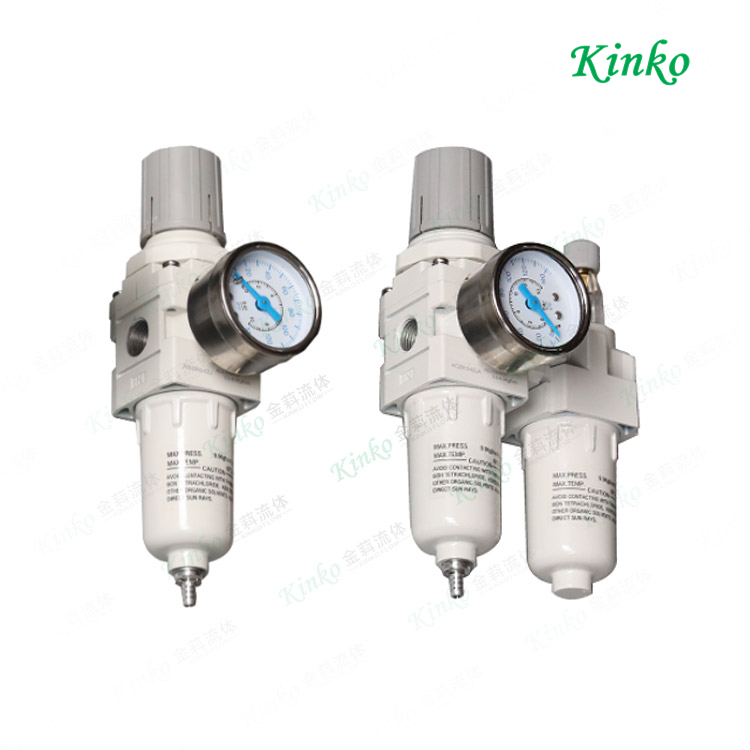
Gauge Installation: Install a pressure gauge on the regulated outlet port of the regulator. This provides visual confirmation of setpoint.
-
Drain Connection: If using an automatic drain, connect the drain outlet to a collection pipe or funnel. Manual drains should have a discharge tube routed to a safe collection point.
Thread Sealant Rule: Apply PTFE tape or liquid sealant sparingly to male threads only. Leave the first two threads bare to prevent sealant from entering the air stream and contaminating the filter element or positioner.
Step 5: Pressure Setting
-
Close the Outlet Valve: If installed, close the downstream isolation valve to prevent sudden actuator movement.
-
Open Supply Valve: Slowly open the upstream isolation valve. Do not open it suddenly—a rapid pressure surge can damage the regulator diaphragm and filter element.
-
Adjust Regulator: Pull up the regulator adjustment knob (if lockable) and turn clockwise to increase pressure, counterclockwise to decrease. Set the pressure to the actuator's maximum rated pressure (typically 4-6 kgf/cm² or 58-87 psi for YTC positioner applications).
-
Lock the Setting: Push down the knob to lock the setpoint. For regulators with a locknut, tighten the locknut against the adjustment screw.
-
Check for Leaks: Apply soapy water to all fittings and connections. Bubbles indicate leaks—tighten fittings or reapply sealant as needed.
Step 6: Final Verification
-
Open the downstream isolation valve (if installed).
-
Observe the pressure gauge. The regulated pressure should remain stable with no visible drop.
-
Cycle the positioner through a full stroke (4mA to 20mA). The actuator should stroke smoothly without hesitation.
-
Check the filter bowl for condensate. If water accumulates rapidly, the upstream air dryer may be undersized.
FRL Maintenance Guide
An FRL is not a fit-and-forget component. Regular maintenance is essential to maintain air quality and system reliability.
Daily / Weekly Checks
| Task | Action | Frequency |
|---|---|---|
| Condensate Drain | Check filter bowl for water and oil accumulation. Drain manually if no automatic drain is fitted. | Daily (or weekly for clean systems) |
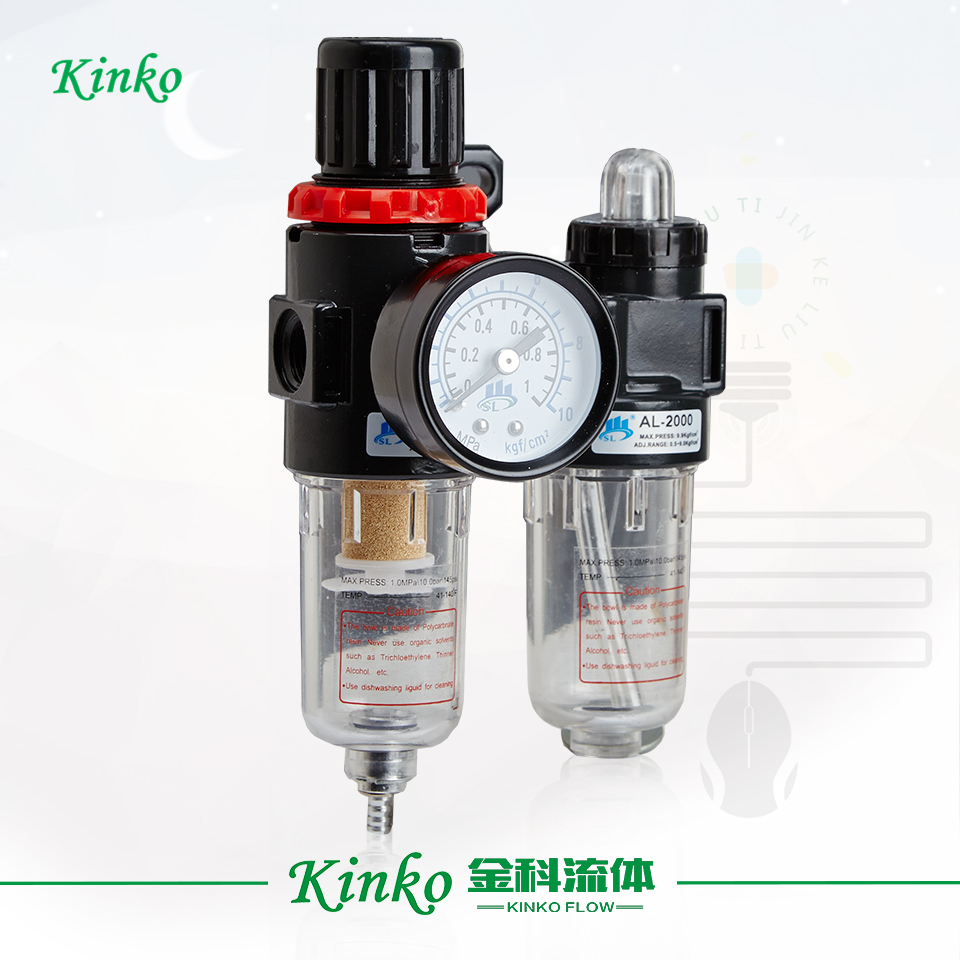
| Bowl Inspection | Visually inspect the bowl for cracks, clouding, or discoloration. Polycarbonate bowls can degrade under UV light or chemical exposure. | Weekly |
| Pressure Gauge | Verify the regulated pressure is stable. If pressure is drifting, the regulator spring or diaphragm may be failing. | Weekly |
Draining Procedure for Manual Drains:
-
Place a collection container under the drain valve outlet.
-
Open the drain valve (typically a push-button or petcock) for 2-3 seconds.
-
Close the valve. If water continues to flow, the valve seat may be worn and require replacement.
Monthly Checks
| Task | Action |
|---|---|
| Filter Element Inspection | Remove the filter element and inspect it for visible contamination (darkening, sludge, or physical damage). |
| Regulator Performance | With the system running, adjust the regulator slightly up and down. The pressure should respond smoothly. If it sticks or jumps, the regulator needs cleaning. |
| Fitting Tightness | Check all piping connections for tightness. Vibration can loosen fittings over time. |
| Bowl Threads | Inspect the bowl threads and O-ring for wear or damage. Lubricate the O-ring with a light silicone grease to prevent thread seizing. |
Filter Element Replacement Criteria:
-
Replace the filter element if it appears dark, dirty, or clogged.
-
Replace at least annually regardless of visual condition.
-
Use only genuine manufacturer replacement elements. Generic elements may not meet the required micron rating or burst pressure rating.
Common FRL Problems and Troubleshooting
| Problem | Likely Cause | Corrective Action |
|---|---|---|
| Pressure drops when actuator strokes | Regulator too small (low flow capacity) or supply line undersized | Replace with larger Cv regulator; increase tubing size |
| Pressure creeps upward | Regulator valve seat leaking; spring broken | Disassemble and clean/replace valve seat; replace spring |
| Water in downstream lines | Bowl full; automatic drain failed; filter element clogged | Drain bowl; repair/replace auto drain; replace element |
| Positioner hunts/oscillates | FRL mounted too far from positioner; pressure fluctuations | Relocate FRL closer; install secondary regulator at positioner |
| Filter bowl cracks | Chemical attack (solvents); overtightening | Replace with metal bowl; lubricate threads before tightening |
| Regulator knob spins freely | Adjustment stem stripped | Replace regulator assembly |
| Air leakage from bowl | Bowl O-ring worn; bowl not seated properly | Replace O-ring; ensure bowl is fully seated and locked |
FRL Sizing Quick Reference for YTC Positioners
For most YTC positioner installations (YT-1000, YT-1200, YT-3300), the following FRL sizing applies:
| Parameter | Recommendation |
|---|---|
| Port Size | 1/4" NPT (or BSPT) |
| Filter Micron Rating | 5 micron nominal (0.01 micron coalescing for oil removal) |
| Regulator Pressure Range | 0.5 - 7.0 kgf/cm² (7 - 100 psi) |
| Flow Capacity (Cv) | Minimum 0.5 Cv |
| Bowl Material | Metal bowl for Ex-rated areas; polycarbonate for general indoor |
| Drain Type | Automatic drain for unattended operation; manual drain for cost-sensitive applications |
| Lubricator | Omit for instrument air serving YTC positioners |
Safety Precautions
When installing or maintaining FRL units, observe these safety rules:
-
Depressurize Before Service: Always isolate and vent the downstream pressure before opening the filter bowl or disassembling the regulator. Trapped pressure can cause sudden ejection of components.
-
Lock Out / Tag Out: Follow your facility's LOTO procedure before any maintenance activity on pneumatic systems.
-
Eye Protection: Wear safety glasses when draining condensate or opening the filter bowl—pressurized water and debris can be ejected.
-
Avoid Solvents: Do not use solvents, acetone, or petroleum-based cleaners on polycarbonate bowls. These chemicals cause stress cracking and catastrophic failure.
-
Use Correct Replacement Parts: Use only manufacturer-specified replacement elements, O-rings, and diaphragms. Aftermarket parts may not meet pressure or temperature ratings.
Ivan (Mobile:+86-18968769287)
WhatsApp:+86-13579991606
Wechat:+86-18968769287
Website:www.kinko-flow.com
ZHEJIANG KINKO FLUID EQUIPMENT CO.,LTD
