Complete Maintenance Guide for Butterfly Valves
1. Why Butterfly Valve Maintenance Matters
Without regular inspection, three failures dominate:
-
Seat leakage (worn elastomer or PTFE liner)
-
Stem seizure (corrosion or debris ingress)
-
Disc misalignment (actuator coupling wear)
A proactive maintenance program extends valve life from 3–5 years (reactive) to 10–15 years (predictive).
2. Maintenance Frequency by Application
| Application Type | Visual Inspection | Functional Test | Full Overhaul |
|---|---|---|---|
| Clean water / HVAC | Every 6 months | Annually | Every 5 years |
| Wastewater / slurry | Monthly | Every 3 months | Every 2–3 years |
| Chemical / corrosive media | Every 2 weeks | Monthly | Annually |
| High-temperature ( >150°C ) | Monthly | Quarterly | Every 18 months |
Adjust frequency based on cycles per day and media aggressiveness.
3. Step-by-Step Maintenance Procedure (Kinko Standard)
3.1 Preparation
-
Isolate line & depressurize to 0 psi.
-
Lock-out/tag-out (LOTO).
-
Drain residual media (neutralize if hazardous).
3.2 External Inspection
-
Check flange bolts for corrosion (replace if thread depth <70%).
-
Verify actuator coupling alignment (max 0.5mm runout).
-
Inspect position indicator – red = closed, green = open.
3.3 Seat & Disc Inspection (Partial Disassembly)
| Component | Pass Criteria | Replace If |
|---|---|---|
| Rubber / EPDM seat | No cracks, elastic deformation | Hardening, swelling, deep scratches >0.3mm |
| PTFE seat | Smooth surface, no delamination | Whitening, chips, or leakage trace |
| Disc (ductile iron / SS316) | No pitting or edge wear | Grooves deeper than 0.5mm or bent |
| Stem / shaft | Smooth rotation, no ovality | Visible rust, >0.1mm wear at seal area |
3.4 Reassembly Torque Specifications (Critical for Leak-Free Performance)
For Kinko wafer butterfly valves, sizes DN50–DN300:
| Valve Size | Flange Bolt Torque (Nm) | Stem Packing Nut Torque (Nm) |
|---|---|---|
| DN50 (2″) | 45–55 | 8–10 |
| DN80 (3″) | 70–85 | 12–15 |
| DN100 (4″) | 95–110 | 18–22 |
| DN150 (6″) | 130–150 | 25–30 |
| DN200 (8″) | 180–200 | 35–40 |
| DN300 (12″) | 260–290 | 50–55 |
Always use a calibrated torque wrench. Over-torquing distorts the seat; under-torquing causes flange leakage.
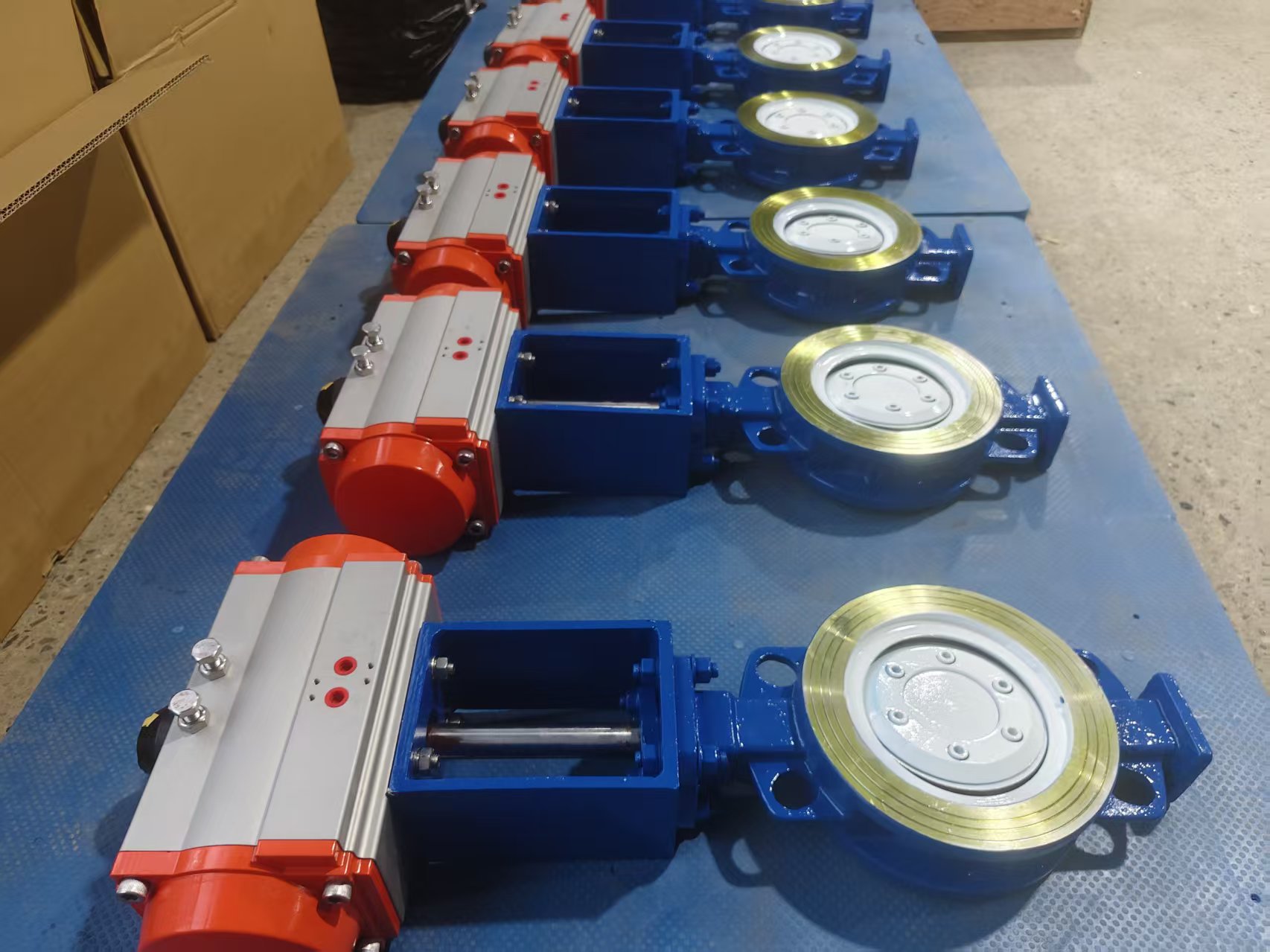
4. Common Troubleshooting Table (B2B Field Guide)
| Problem | Likely Cause | Kinko Solution |
|---|---|---|
| Valve won’t fully close | Debris between disc and seat | Back-flush line; remove and clean internally |
| Stem leakage | Worn stem O-rings / packing | Replace packing set (part# KVP-PK-xx) |
| Actuator stuck (manual gear) | Worm gear dry or damaged | Regrease with lithium EP2; replace gear if teeth worn >30% |
| High operating torque | Seat swollen (chemical attack) | Upgrade to PTFE-lined seat (Kinko PTFE series) |
| Disc hits flange inner bore | Wrong valve type (wafer instead of lug) | Verify piping ID; use concentric reducer if needed |
5. Spare Parts Planning Table (24-Month Schedule)
For a facility operating 50 butterfly valves (DN50–DN300), stock the following per 10 valves:
| Spare Part | Kinko Part Code Format | Quantity per 10 valves | Shelf Life |
|---|---|---|---|
| Seat kit (EPDM/Viton/PTFE) | K-BFV-SEAT-[size]-[material] | 3 pcs | 5 years (dry storage) |
| Stem packing set | K-BFV-PK-[size] | 5 sets | 7 years |
| Flange bolt kit (SS304) | K-BFV-BOLT-[size] | 2 kits | Indefinite |
| Gear operator (manual) | K-BFV-GEAR-[ratio] | 1 pc | N/A |
| Disc (CF8M/SS316) | K-BFV-DISC-[size]-[mat] | 1 pc | Indefinite |
Keep critical spares for DN100, DN150, and DN200 – these cover 70% of field failures.
6. Recommended Lubricants & Sealants
| Component | Product | Application Note |
|---|---|---|
| Stem packing | Silicone-free PTFE grease (e.g., Kluber Isoflex Topas NB52) | Apply 2g per seal ring |
| Gear actuator | Lithium EP2 with MoS2 | Every 12 months or 10k cycles |
| Flange gasket (if used) | Graphite-filled spiral wound (for high temp) | Replace every overhaul |
| Threaded connections | Anti-seize (nickel grade) | Only for stainless bolts in carbon steel flanges |
7. Winterization & Long-Term Storage
For valves installed outdoors or mothballed >6 months:
-
Rotate disc to 15% open (prevents seat compression set).
-
Fill cavity with inert gas (N2) or low-temp antifreeze.
-
Cover actuator breather with waterproof cap.
-
For stored valves: store vertically, disc closed, in original packaging at 5–40°C.
8. When to Replace vs. Repair (Cost Analysis)
| Condition | Repair | Replace |
|---|---|---|
| Worn seat only | ✅ Replace seat kit | ❌ |
| Corroded disc but good seat | ✅ Replace disc + stem seals | ❌ (if body OK) |
| Body cracked or flanges warped | ❌ | ✅ |
| Stem bore elongated ( >1mm oval ) | ❌ | ✅ |
| >3 overhauls already performed | ❌ | ✅ |
Kinko offers OEM spare parts for all valves sold since 2015 – quote request via your account manager.
9. Maintenance Record Template (Downloadable)
A professional CMMS-ready log should include:
-
Date & technician name
-
Valve tag / line ID
-
Seat & disc measurements (before/after)
-
Torque values applied
-
Next scheduled overhaul date
[Kinko recommends using our free Excel maintenance tracker – available upon request]
Final Checklist Before Recommissioning
-
Valve cycled 3 times manually (no binding)
-
Flange bolts retorqued after 24 hours of operation
-
Actuator air supply (if pneumatic) at 5.5–6.5 bar
-
Leak test at 1.5x operating pressure for 15 minutes
-
Position indicator recalibrated to 0° (closed) / 90° (open)
Need Technical Support or OEM Spare Parts?
Kinko supplies replacement seat kits, disc assemblies, and full butterfly valves for water, oil, gas, and chemical applications. Request a maintenance quote or download our 72-page Valve Maintenance Handbook (2026 Edition) from the resource library.
Ivan (Mobile:+86-18968769287)
WhatsApp:+86-13579991606
Wechat:+86-18968769287
Website: www.kinko-flow.com
ZHEJIANG KINKO FLUID EQUIPMENT CO.,LTD
