Benefits of Using FRL Units in Pneumatic Systems
The Problem with Raw Compressed Air
Raw compressed air contains three destructive elements:
| Contaminant | Source | Damage Caused |
|---|---|---|
| Solid particles (rust, dust, pipe scale) | Compressor wear, pipe corrosion, atmospheric intake | Abrades cylinder walls, wears seals, blocks positioner nozzles |
| Liquid water | Condensation from cooling compressed air | Corrodes internal components, freezes in cold weather, washes away lubrication |
| Oil aerosols | Carryover from lubricated compressors | Forms sticky sludge with dust, attacks elastomer seals |
The Result: Without an FRL, pneumatic component life is reduced by 50-80%. Positioners fail within months. Actuators seize within years. Downtime and maintenance costs skyrocket.
Benefit 1: Extended Component Life
The filter removes solid particles, water, and oil from the air stream before they reach sensitive components.
| Component | Without FRL | With FRL | Life Extension |
|---|---|---|---|
| Valve positioner (I/P converter) | Fails in 6-12 months | Lasts 5-10 years | 5-10x |
| Actuator seals | Wear out in 1-2 years | Last 5-8 years | 3-5x |
| Control valve packing | Leaks in 2-3 years | Lasts 8-10 years | 3-4x |
| Cylinder walls | Scored in 3-5 years | No wear in 10+ years | 2-3x |
How: The filter removes particles down to 5 microns (or 0.01 microns with coalescing elements), preventing abrasive wear. Water removal prevents corrosion. Oil removal prevents sludge formation.
Benefit 2: Stable and Consistent Actuator Performance
The regulator stabilizes supply pressure, isolating the pneumatic system from plant header fluctuations.
| Without Regulator | With Regulator |
|---|---|
| Header pressure varies ±1-2 bar | Output pressure stable ±0.05 bar |
| Actuator thrust varies | Consistent actuator force |
| Valve position drifts | Precise, repeatable positioning |
| Process oscillations | Stable control loop |
| Inconsistent product quality | Consistent product quality |
Quantified Benefit: Pressure regulation reduces valve trim wear by up to 40%. Packing life extends by 2-3 times because the stem moves smoothly without shock loading.
Benefit 3: Reduced Friction and Wear (Lubrication)
The lubricator adds a controlled oil mist to the air stream, reducing friction between moving parts.
| Without Lubricator | With Lubricator |
|---|---|
| Seals run dry | Seals continuously lubricated |
| High friction (µ = 0.5-1.0) | Low friction (µ = 0.05-0.1) |
| Rapid seal wear | Extended seal life (3-5x) |
| Erratic stroking | Smooth, consistent motion |
| High air consumption (bypass leakage) | Low air consumption |
How: The oil film reduces the coefficient of friction between seals and sliding surfaces by up to 90%. It also conditions elastomer seals, preventing them from drying out, hardening, and cracking.
Critical Rule: For instrument air serving YTC positioners, do not use a lubricator upstream of the positioner. Install the lubricator downstream of the positioner (between positioner output and actuator) or use a separate lubricated circuit for the actuator only.
Benefit 4: Reduced Maintenance and Downtime
Clean, stable, lubricated air dramatically reduces the frequency of component failure and maintenance interventions.
| Maintenance Factor | Without FRL | With FRL | Improvement |
|---|---|---|---|
| Positioner cleaning | Monthly | Annually | 12x less frequent |
| Filter element replacement | N/A (no FRL) | Annually | Planned maintenance |
| Actuator seal replacement | Every 1-2 years | Every 5-8 years | 3-5x longer |
| Unplanned downtime | 5-10% of operating time | < 1% of operating time | 5-10x reduction |
| Emergency maintenance calls | Frequent | Rare | Significant reduction |
Quantified Benefit: A properly maintained FRL reduces total maintenance labor by 50-70% over the life of the pneumatic system.
Benefit 5: Energy Efficiency
Contaminated air causes systems to work harder. Stiction and friction require higher pressure to move actuators. Air leaks waste compressed air—one of the most expensive utilities in a plant.
| Energy Factor | Without FRL | With FRL |
|---|---|---|
| Actuator friction | High (requires more pressure) | Low (efficient operation) |
| Air consumption (leaks) | High (worn seals bypass air) | Low (seals seal properly) |
| Compressor load | Higher | Lower |
| Energy cost | Higher | Lower (5-15% savings) |
How: Clean air prevents seal wear, reducing internal bypass leakage. Lubrication reduces friction, so actuators require less force (and less air pressure) to stroke.
Benefit 6: Improved Product Quality
In critical process control loops, even small valve positioning errors result in off-spec product.
| Process Factor | Without FRL | With FRL |
|---|---|---|
| Valve positioning accuracy | ±2-3% (due to friction/stiction) | ±0.5-1.0% (smooth operation) |
| Process stability | Oscillations and offset | Stable, tight control |
| Product consistency | Variable (off-spec batches) | Consistent (on-spec every batch) |
| Raw material waste | Higher (rejects) | Lower (minimal rejects) |
Quantified Benefit: In continuous processes, a 1% improvement in control accuracy can translate to significant raw material savings and reduced energy consumption.
Benefit 7: Safety and Reliability
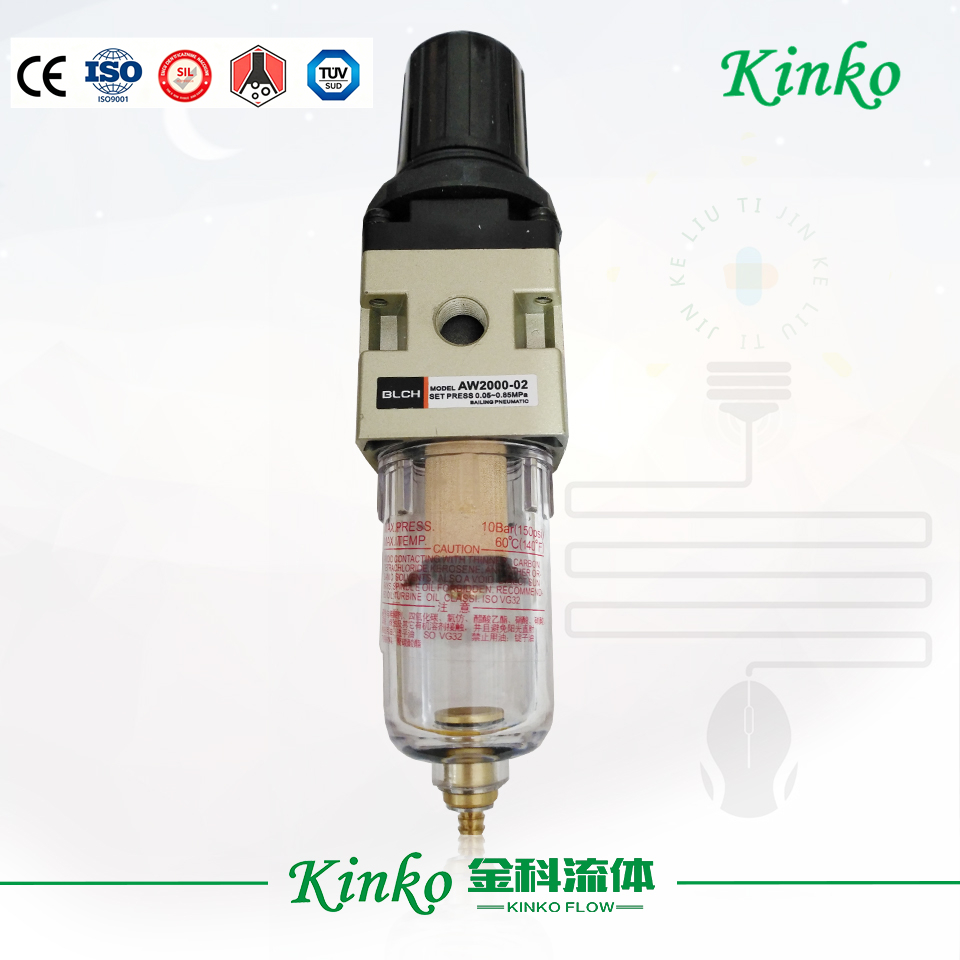
FRL units contribute directly to plant safety and system reliability.
| Safety Factor | Without FRL | With FRL |
|---|---|---|
| Valve fail-safe operation | Unreliable (sticking valves) | Reliable (smooth stroking) |
| Emergency shutdown (ESD) response | Slow / unpredictable | Fast / predictable |
| Fire/explosion risk | Higher (oil-contaminated air in hot areas) | Lower (clean, dry air) |
| Component failure risk | High (contamination damage) | Low (protected components) |
How: Clean, dry air prevents valve sticking during emergency shutdowns. Oil removal eliminates flammable oil aerosols in high-temperature areas.
Benefit 8: Extended Equipment Life – Summary Table
| Component | Typical Life Without FRL | Typical Life With FRL | Benefit |
|---|---|---|---|
| YTC Positioner (I/P converter) | 6-12 months | 5-10 years | 5-10x |
| Actuator seals | 1-2 years | 5-8 years | 3-5x |
| Control valve packing | 2-3 years | 8-10 years | 3-4x |
| Cylinder/piston | 3-5 years | 10+ years | 2-3x |
| Solenoid valves | 1-2 years | 5-7 years | 3-5x |
| Pneumatic instruments | 2-3 years | 8-10 years | 3-4x |
FRL Configuration Best Practices
| Configuration | Best Application | Benefit |
|---|---|---|
| FR only (Filter + Regulator, no lubricator) | Instrument air for YTC positioners, I/P converters, control valves | Protects sensitive instruments from oil contamination |
| FRL (Filter + Regulator + Lubricator) | Pneumatic tools, cylinders, actuators requiring lubrication | Extends seal life; reduces friction |
| FR + downstream lubricator | Positioner + actuator (actuator needs lube) | Positioner gets dry air; actuator gets lubricated air |
| Independent circuits | Critical control loops | Maximum reliability; separate maintenance |
FRL Maintenance for Maximum Benefit
An FRL is only beneficial if properly maintained. A neglected FRL becomes a contamination source.
| Frequency | Task | Benefit Maintained |
|---|---|---|
| Daily | Drain water from filter bowl | Prevents water carryover |
| Weekly | Check lubricator oil level | Prevents dry strokes |
| Monthly | Inspect filter element | Maintains filtration efficiency |
| Quarterly | Verify regulator setpoint | Maintains pressure stability |
| Annually | Replace filter element; overhaul regulator | Complete protection renewal |
Ivan (Mobile:+86-18968769287)
WhatsApp:+86-13579991606
Wechat:+86-18968769287
Website:www.kinko-flow.com
ZHEJIANG KINKO FLUID EQUIPMENT CO.,LTD
