Benefits of Automated Angle Seat Valves Over Manual Ones
1. Quick Definition
| Valve Type | Actuation | Control Method | Typical Applications |
|---|---|---|---|
| Manual angle seat valve | Hand lever or hand wheel | Operator physically turns lever | Infrequent operation, maintenance bypass, low budget |
| Automated angle seat valve | Pneumatic actuator (single acting) | Solenoid valve signal (electric or PLC) | High cycle, remote control, integration with automation |
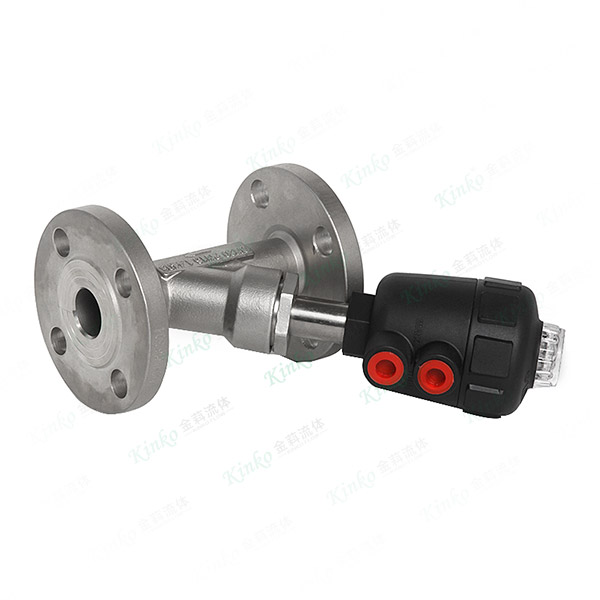
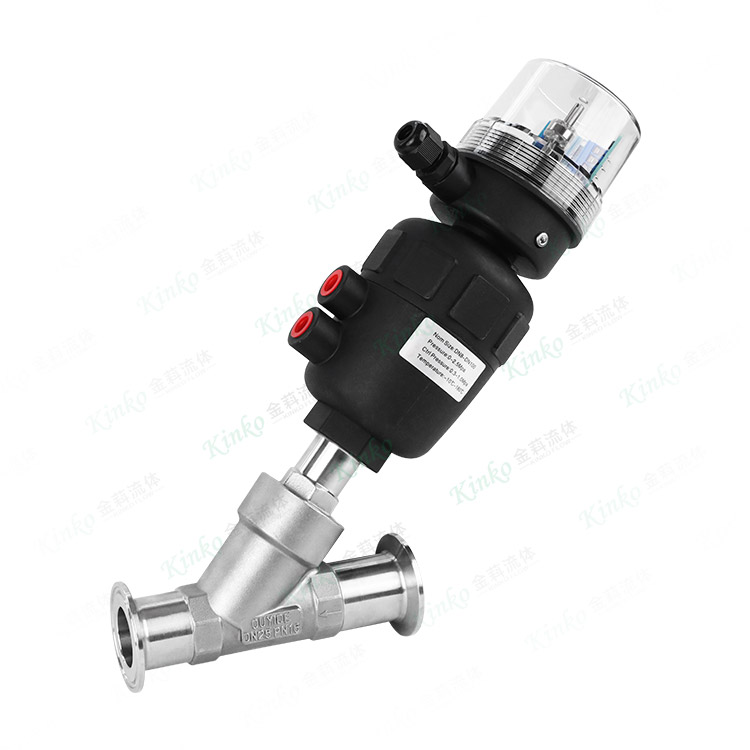
Kinko focus: Pneumatic angle seat valves (automated). We do not manufacture manual angle seat valves.
2. Benefit Comparison – Automated vs Manual
| Benefit | Automated (Pneumatic) | Manual |
|---|---|---|
| Cycle speed | 30–80 ms (very fast) | 1–3 seconds (slow) |
| Remote control | Yes (PLC / computer) | No (operator must be present) |
| Cycle life (millions) | 2–5 million | Limited by operator fatigue |
| Consistency | Identical every cycle | Varies by operator |
| Integration with automation | Seamless | Impossible |
| Safety (emergency stop) | Can be integrated | Operator dependent |
| Labor cost | None (automatic) | Operator required each cycle |
| Suitable for high frequency | Yes (up to 300+ cycles/min) | No (operator cannot keep up) |
| Data collection / monitoring | Yes (position sensors, feedback) | No |
| Initial cost | Higher | Lower |
| Long term cost | Lower (labor savings, productivity) | Higher (labor, slower production) |
3. Speed and Cycle Time
Automated advantage: Pneumatic actuation opens or closes an angle seat valve in 30–80 milliseconds.
| Operation | Automated Valve | Manual Valve |
|---|---|---|
| Open time | 0.03 – 0.08 seconds | 1 – 3 seconds |
| Close time | 0.03 – 0.08 seconds | 1 – 3 seconds |
| Maximum cycles per minute | 300+ | 20–30 (operator limited) |
Real‑world impact: On a filling machine with 8 nozzles running 10 hours per day, switching from manual to automated valves can increase output by 300–500%.
4. Consistency and Quality
Manual valves depend on the operator:
-
How fast they turn the lever
-
How far they open the valve
-
Whether they fully close it
Automated valves:
-
Same stroke every cycle
-
Same speed every cycle
-
No variation between shifts
Result: Consistent fill volumes, consistent process conditions, less product waste.
| Quality Metric | Automated | Manual |
|---|---|---|
| Fill volume variation | ±0.5% | ±3–5% |
| Operator‑dependent variation | None | Significant |
| Repeatability | Excellent | Poor |
5. Remote Control and Automation Integration
Modern factories use PLCs (Programmable Logic Controllers) to control entire production lines.
Automated valves receive signals directly from the PLC:
-
24V DC solenoid signal
-
Open on command, close on command
-
Can be sequenced with conveyors, pumps, sensors
Manual valves cannot be integrated. They require an operator to stand at the valve and turn the lever.
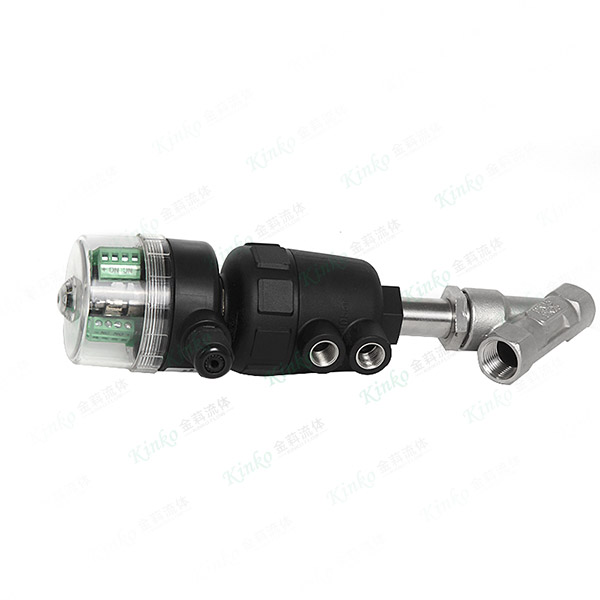
Kinko automated valves are designed for seamless integration:
-
Standard solenoid pilot (24V DC, 110V AC, 220V AC)
-
Optional position feedback (mechanical or proximity sensors)
-
4–20mA analog control available for modulating duty
6. Safety
| Safety Aspect | Automated | Manual |
|---|---|---|
| Emergency stop integration | Yes (PLC cuts signal, valve returns to fail‑safe position) | No |
| Remote operation from safe distance | Yes | No |
| Fail‑safe (NC or NO) | Yes — spring return to safe position on air/power loss | No — stays in last position |
| Operator exposure to hot/dangerous media | None | Direct exposure |
Example: A steam valve that fails open (NO type) can be automated to close on emergency stop. A manual steam valve — if left open — stays open.
7. Labor Cost and Productivity
| Factor | Automated | Manual |
|---|---|---|
| Operator required per cycle | No | Yes |
| Multiple valves operation | One PLC can control hundreds | One operator per valve (practical limit) |
| Shift coverage | 24/7 unattended operation | Requires staffing all shifts |
| Labor cost over 1 year | $0 (for valve operation) | $30,000–$60,000 (operator salary) |
Simple math: One automated valve replaces a significant amount of operator time. On multi‑valve systems, the labor savings alone often pay for automation within months.
8. Maintenance and Reliability
| Maintenance Aspect | Automated | Manual |
|---|---|---|
| Seal wear | Predictable (based on cycles) | Unpredictable (operator dependent) |
| Preventive maintenance | Schedule by cycle count | Often neglected |
| Diagnostic capability | Position feedback can detect sticking | Visual inspection only |
| Mean time between failures (MTBF) | Well documented (millions of cycles) | Unknown (operator dependent) |
Kinko automated valves are tested to 2–3 million cycles. Manual valves of similar build quality will last many years — but only because they are used infrequently.
9. Total Cost of Ownership (TCO) Comparison
Assumption: 500,000 cycles per year, 5 year lifespan.
| Cost Factor | Automated (Kinko) | Manual |
|---|---|---|
| Initial purchase price | $50–$150 (depending on size) | $30–$80 |
| Installation (solenoid, wiring, air line) | $20–$50 | $0 |
| Labor cost (operation) | $0 | $30,000–$60,000/year |
| Maintenance (seals, labor) | $20–$50/year | $10–$30/year (if used) |
| Downtime cost (slower cycle) | $0 | Significant (lost production) |
| 5‑year total | $200–$500 | $150,000–$300,000+ |
Conclusion: Even though automated valves have higher upfront cost, the labor savings alone make them far cheaper in any application requiring more than a few cycles per day.
10. When Manual Valves Still Make Sense
Manual angle seat valves are not obsolete. They are still appropriate for:
| Situation | Why Manual is Acceptable |
|---|---|
| Infrequent operation (once per day or less) | Automation cost not justified |
| Maintenance bypass / isolation valve | Operated only during maintenance |
| Very low budget project | Initial cost is only consideration |
| No compressed air available | Pneumatic actuation not possible |
| Simple on‑off with operator present | Operator is already there for other tasks |
For everything else — automated is better.
11. Upgrade Path – Manual to Automated
If you currently use manual valves but want to automate, Kinko offers:
| Option | Description |
|---|---|
| Replace entire valve | Remove manual valve, install Kinko pneumatic angle seat valve (most common) |
| Add actuator kit | Some manual valves can accept a bolt‑on pneumatic actuator (not available for all brands) |
| Partial line automation | Start with critical stations, expand over time |
Kinko recommendation: Replace manual valves with Kinko pneumatic angle seat valves for consistent, reliable automation.
12. Summary – Key Takeaways
✅ Speed: Automated valves cycle 10–50x faster than manual
✅ Consistency: No operator variation — same every cycle
✅ Integration: PLC‑controlled, remote operation, data collection
✅ Safety: Fail‑safe positioning, remote operation, emergency stop integration
✅ Labor cost: Zero operator cost for valve operation
✅ Total cost: Automated is cheaper in any high‑cycle application
Manual valves have their place — for infrequent use.
For production, automation, and efficiency — automated angle seat valves from Kinko are the clear choice.
13. Ready to Automate Your Process?
Kinko pneumatic angle seat valves offer:
-
NC and NO configurations
-
SS304 / SS316L bodies
-
PTFE, FKM, EPDM, NBR seals
-
24V DC, 110V AC, 220V AC solenoid options
-
Position feedback available
Contact Kinko to discuss upgrading your manual valves to automated.
Ivan (Mobile:+86-18968769287)
WhatsApp:+86-13579991606
Wechat:+86-18968769287
Website:www.kinko-flow.com
ZHEJIANG KINKO FLUID EQUIPMENT CO.,LTD