Why Choose Stainless Steel Actuators for Corrosive Environments
1. Superior Corrosion Resistance
The primary advantage of stainless steel actuators lies in their inherent resistance to corrosion. Unlike carbon steel or aluminum housings that rely on paint or epoxy coatings for protection, stainless steel offers material-level durability.
| Grade | Key Characteristics | Typical Applications |
|---|---|---|
| 304 SS | Good corrosion resistance, cost-effective | Food processing, water treatment, indoor chemical exposure |
| 316 SS | Superior resistance to chlorides and acids | Marine environments, offshore platforms, pharmaceutical, high-salt atmospheres |
| 316L SS | Low carbon version, excellent weldability | High-purity applications, sterile environments |
For environments exposed to saltwater, acidic chemicals, or continuous moisture, stainless steel eliminates the risk of coating failure that leads to premature actuator failure.
2. Extended Service Life in Harsh Environments
When corrosion sets in, it compromises not only the actuator housing but also internal components such as springs, gears, and seals. Rust and pitting can lead to:
-
Seizure of moving parts
-
Loss of torque output
-
Premature seal failure
-
Increased maintenance frequency
Stainless steel actuators maintain their structural integrity over decades of service, significantly reducing unplanned downtime and replacement costs.
3. Hygienic and Cleanability
In industries such as food and beverage, pharmaceutical, and biotechnology, cleanliness is paramount. Stainless steel actuators offer:
-
Smooth, non-porous surfaces that resist bacterial growth
-
Compatibility with high-pressure washdowns
-
Resistance to harsh cleaning agents and sanitizers
This makes them the standard choice for applications where hygiene compliance (e.g., FDA, EHEDG, 3-A Sanitary Standards) is required.
4. Temperature Extremes and Thermal Stability
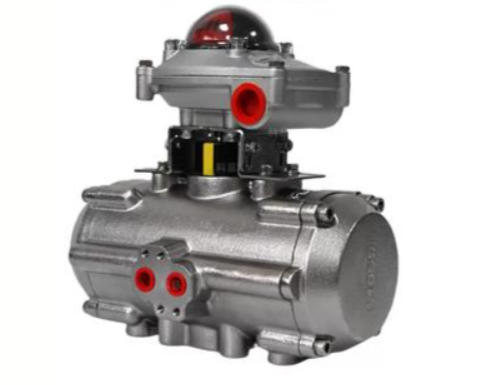
Stainless steel actuators perform reliably across a wide temperature range, making them suitable for both cryogenic and high-temperature applications.
| Environment | Temperature Range | Stainless Steel Advantage |
|---|---|---|
| Cryogenic | -196°C to -40°C | Maintains ductility, no embrittlement |
| High-temperature | Up to 500°C+ | Retains strength, no coating degradation |
| Steam sterilization | 121°C to 150°C | Compatible with SIP/CIP processes |
This thermal stability ensures consistent valve actuation even under extreme process conditions.
5. Compatibility with Aggressive Media
Beyond the external environment, the actuator must also withstand internal exposure in case of seal failure or direct contact with process media. Stainless steel construction provides:
-
Resistance to acids, alkalis, and solvents
-
Compatibility with aggressive fluids
-
Safety margin for leakage scenarios
When paired with appropriate seals (e.g., PTFE, FKM, EPDM), stainless steel actuators offer complete compatibility with a wide range of corrosive media.
6. Mechanical Strength and Durability
Stainless steel offers superior mechanical properties compared to aluminum or polymer alternatives:
| Property | Stainless Steel | Aluminum |
|---|---|---|
| Tensile Strength | 515–860 MPa | 200–600 MPa |
| Impact Resistance | High | Moderate |
| Wear Resistance | Excellent | Moderate |
| Creep Resistance | High | Low |
This translates to actuators that can withstand mechanical shock, vibration, and high-cycle operation without fatigue failure.
7. Long-Term Cost Effectiveness
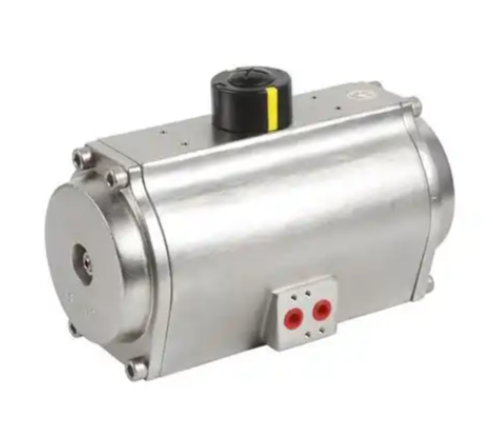
While the initial purchase price of stainless steel actuators is higher than painted aluminum equivalents, the total cost of ownership often favors stainless steel in corrosive environments:
| Cost Factor | Aluminum Actuator | Stainless Steel Actuator |
|---|---|---|
| Initial cost | Lower | Higher |
| Coating maintenance | Regular repainting required | None |
| Replacement frequency | 3–7 years typical | 15–20+ years |
| Downtime impact | Higher due to failures | Minimal |
| Total cost (10 years) | Higher | Lower |
For critical applications, the reliability and longevity of stainless steel actuators justify the initial investment.
8. Application Examples
Stainless steel actuators are essential in a wide range of industries:
| Industry | Application | Why Stainless Steel |
|---|---|---|
| Offshore Oil & Gas | Platform valve actuation | Saltwater corrosion, explosion-proof requirements |
| Marine | Ballast systems, seawater intake | Continuous salt exposure |
| Chemical Processing | Acid transfer, reactor valves | Aggressive chemical resistance |
| Food & Beverage | CIP/SIP systems, filling lines | Washdown compatibility, hygiene |
| Pharmaceutical | Sterile processing, cleanrooms | Sanitary design, cleanability |
| Water Treatment | Chlorination, chemical dosing | Chlorine resistance |
| Pulp & Paper | Bleach plants, chemical recovery | Harsh chemical environment |
Kinko Stainless Steel Actuators
At Kinko, we offer a comprehensive range of stainless steel actuators designed for demanding corrosive environments. Our product line includes:
-
Stainless steel pneumatic actuators – ISO 5211 mounting, compact design
-
Stainless steel electric actuators – IP67/IP68 protection, fail-safe options
-
Complete valve-actuator assemblies – Paired with ball valves, butterfly valves, and control valves
All Kinko actuators are manufactured to stringent quality standards, ensuring reliable performance in your most challenging applications.
Summary Table: Stainless Steel vs. Standard Actuators
| Feature | Standard (Aluminum/Painted) | Stainless Steel |
|---|---|---|
| Corrosion resistance | Coating-dependent | Material-level |
| Washdown compatibility | Limited | Excellent |
| Hygienic applications | Not recommended | Standard |
| Temperature range | -20°C to +80°C typical | -40°C to +150°C+ |
| Chemical resistance | Coating dependent | Material-level |
| Service life (harsh environment) | 3–7 years | 15–20+ years |
| Initial cost | Lower | Higher |
| Lifecycle cost | Higher | Lower |
Final Thoughts
When your application involves corrosive media, harsh environmental conditions, or stringent hygiene requirements, stainless steel actuators are not just an upgrade — they are the right choice for long-term reliability.
By investing in stainless steel actuation, you protect your operations from premature failures, reduce maintenance costs, and ensure consistent performance year after year.
Ready to upgrade your fluid control system?
Contact Kinko today to discuss your application requirements and explore our full range of stainless steel actuators, pneumatic valves, and control valves.
Ivan (Mobile:+86-18968769287)
WhatsApp:+86-13579991606
Wechat:+86-18968769287
Website: www.kinko-flow.com
ZHEJIANG KINKO FLUID EQUIPMENT CO.,LTD