Why Ball Valves Are the Most Popular Shut-Off Valves
Ball Valve vs. Other Shut-Off Valves – Quick Comparison
| Feature | Ball Valve | Gate Valve | Globe Valve | Butterfly Valve |
|---|---|---|---|---|
| Shut-off capability | Bubble-tight (Class VI) | Moderate (metal-to-metal) | Good | Moderate (seat dependent) |
| Operation speed | ¼ turn (1 second) | Multi-turn (10+ seconds) | Multi-turn | ¼ turn |
| Pressure drop (full open) | Very low (full port) | Low | Very high | Moderate |
| Flow direction | Bidirectional | Bidirectional | Unidirectional | Bidirectional |
| Cavitation resistance | Good | Good | Poor | Moderate |
| Cost (installed) | Moderate | Low | Moderate | Low |
| Maintenance frequency | Low (every 5+ years) | Moderate | High (seat wear) | Low |
| Suitable for throttling | No (except V-port) | No | Yes | Yes (limited) |
| Fire-safe option | Yes | No | No | No |
5 Key Advantages of Ball Valves
1. Quarter-Turn Operation – Fastest Shut-Off
| Valve Type | Turns to Close | Time to Close (manual) |
|---|---|---|
| Ball valve | ¼ turn | 1 second |
| Butterfly valve | ¼ turn | 1 second |
| Gate valve | 5–20 turns | 5–20 seconds |
| Globe valve | 5–10 turns | 5–10 seconds |
Benefit: Emergency shutdown, batching accuracy, and reduced operator fatigue.
2. Bubble-Tight Shut-Off (Zero Leakage)
| Seat Type | Leakage Class | Leakage Rate |
|---|---|---|
| Soft-seated ball valve (PTFE/PEEK) | Class VI | Zero bubbles (0 ml/min) |
| Metal-seated ball valve | Class IV–V | Trace (lapping required) |
| Gate valve (metal seats) | Class II–III | Visible leakage |
| Globe valve (metal seats) | Class III | Moderate leakage |
| Butterfly valve (soft seat) | Class IV | Low leakage |
Benefit: Environmental compliance (fugitive emissions), product loss prevention, and safety.
3. Full Port Option – Minimal Pressure Drop
| Valve Type | Typical Pressure Drop (Full Open) | Energy Cost Impact |
|---|---|---|
| Ball valve (full port) | Equivalent to pipe section | None |
| Ball valve (reduced port) | Low (ΔP = 1–5 psi) | Minimal |
| Gate valve | Low (but slower operation) | None |
| Globe valve | Very high (ΔP = 10–50 psi) | Significant pumping cost |
| Butterfly valve (disc in flow) | Moderate (ΔP = 2–10 psi) | Moderate |
Benefit: Lower pumping energy, higher system efficiency.
4. Bidirectional Flow – No Installation Direction
| Valve Type | Flow Direction Required | Consequence of Reverse Flow |
|---|---|---|
| Ball valve | None (works both ways) | No issue |
| Butterfly valve | None (some designs) | May affect shut-off |
| Gate valve | None | No issue |
| Globe valve | Yes (under disc) | Seat damage, leakage |
Benefit: No risk of incorrect installation. Simplified piping design.
5. Low Maintenance – High Reliability
| Maintenance Task | Ball Valve | Gate Valve | Globe Valve |
|---|---|---|---|
| Seat replacement | Simple (remove end caps) | Difficult (grind seats) | Difficult (resurface disc) |
| Stem seal replacement | Easy (external packing) | Moderate | Moderate |
| Typical service interval | 5–10 years | 2–5 years | 1–3 years |
| Common failure mode | Seat wear (gradual) | Seat corrosion (sticking) | Disc erosion (leakage) |
Benefit: Lower total cost of ownership (TCO) over 10+ years.
Where Ball Valves Excel – Best Applications
| Industry | Application | Why Ball Valve Is Preferred |
|---|---|---|
| Oil & gas | Pipeline block valves | Quick shutdown, fire-safe option |
| Chemical | Reactor isolation | Chemical resistance (PTFE seats) |
| Water treatment | Pump discharge | Bubble-tight, low maintenance |
| Food & beverage | Sanitary lines | Easy cleaning, full port |
| Pharmaceutical | Sterile processing | Smooth bore, no crevices |
| Power generation | Cooling water | High cycle capability |
| Marine | Ballast systems | Corrosion resistance (duplex/SS) |
| HVAC | Chilled water | Quarter-turn, compact size |
When NOT to Use a Ball Valve – Limitations
| Limitation | Better Alternative | Reason |
|---|---|---|
| Continuous throttling (<40% open) | V-port ball valve or globe valve | Standard ball valve seats erode |
| High-pressure drop (>3,000 psi) | Needle valve or choke valve | Seat extrusion risk |
| Slurry with large particles | Knife gate valve | Ball traps particles |
| Extreme high temperature (>1,200°F) | Gate valve (alloy) | PTFE/PEEK seats fail |
| Very low cost (disposable) | Gate or butterfly valve | Ball valves cost more upfront |
Total Cost of Ownership Comparison (10 Years)
| Cost Factor | Ball Valve (Soft Seat) | Gate Valve | Globe Valve |
|---|---|---|---|
| Initial purchase cost | $$ | $ | $$ |
| Installation cost | $ (bidirectional) | $ | $ (directional check) |
| Energy cost (pumping) | $ (low ΔP) | $ | $$$ (high ΔP) |
| Maintenance cost (10 years) | $ (1 seat kit) | $$ (2 packing changes) | $$$ (3 trims) |
| Replacement cost (if failed) | $$ | $ | $$ |
| Total 10-year TCO | $$ | $$$ | $$$$ |
Conclusion: Ball valves have higher upfront cost than gate valves but lower TCO over time due to energy savings and less maintenance.
Ball Valve Variants for Specific Shut-Off Needs
| Variant | Best For | Key Feature |
|---|---|---|
| Floating ball | Low to medium pressure (≤1,500 psi) | Simple, low cost |
| Trunnion ball | High pressure (>1,500 psi) | Low torque, stable operation |
| Full port | Pigging, low ΔP | Same bore as pipe |
| V-port | Throttling + shut-off | Characterized flow |
| 3-way ball valve | Diversion or mixing | L-port or T-port |
| Cryogenic ball valve | Low temperature (-196°C to -40°C) | Extended stem (prevents icing) |
| Jacketed ball valve | Molten sulfur, polymers | Steam tracing prevents solidification |
| Sanitary ball valve | Food, pharma, biotech | No crevices, easy CIP/SIP |
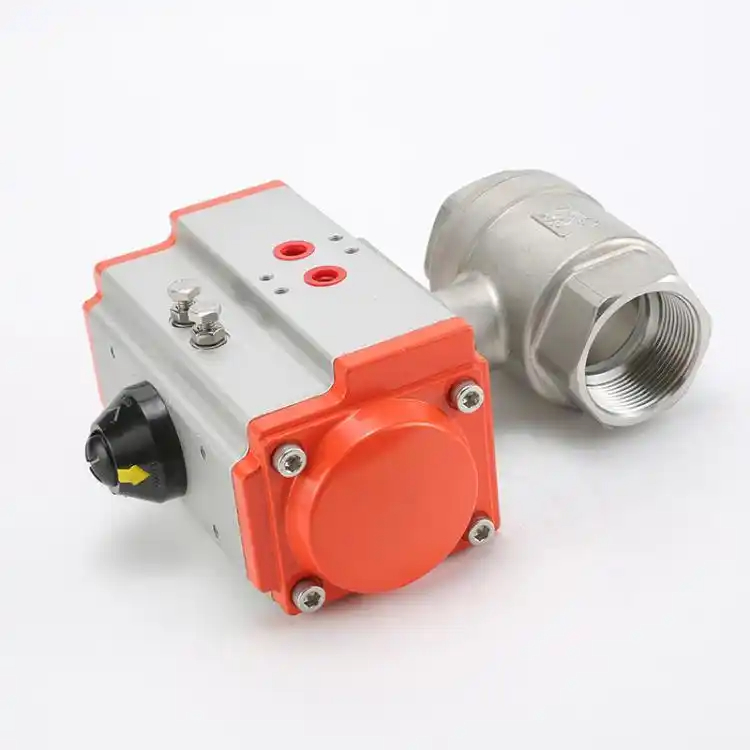
Real-World Example: Refinery Isolation
Application: Crude oil line isolation, 4", 300 psi, 200°F.
| Option | Pros | Cons |
|---|---|---|
| Ball valve (PEEK seats) | Bubble-tight, fire-safe, quick close | Higher upfront cost |
| Gate valve (metal seats) | Lower cost | Leaks after 2 years, slow operation (50 turns) |
| Butterfly valve | Low cost | Disc in flow path, not fire-safe |
Result: Ball valve selected. Zero leakage after 5 years. Gate valve replaced twice in same period.
Conclusion: Why Ball Valves Win
Ball valves are the most popular shut-off valve because they deliver:
-
Fastest operation (¼ turn)
-
Best shut-off (bubble-tight Class VI)
-
Lowest pressure drop (full port option)
-
Simplest maintenance (seat replacement without removing body)
-
Bidirectional flow (no installation error)
Kinko ball valves are available in floating, trunnion, full port, reduced port, V-port, and sanitary designs. Sizes from 1/4" to 24". Materials from brass to Hastelloy.
Ivan (Mobile:+86-18968769287)
WhatsApp:+86-13579991606
Wechat:+86-18968769287
Website:www.kinko-flow.com
ZHEJIANG KINKO FLUID EQUIPMENT CO.,LTD
