Why Actuator Quality Directly Affects Valve Service Life
The Hidden Cost of Cheap Actuators
Many buyers focus on valve quality while treating the actuator as an afterthought. This is a costly mistake. A high-quality valve paired with a poor actuator will fail faster than a mediocre valve with a good actuator.
Quick Impact Overview
| Actuator Quality Issue | Effect on Valve | Typical Failure Mode |
|---|---|---|
| Low torque output | Valve won't close fully | Leakage, seat damage |
| Torque spikes | Stem stress, packing wear | Stem fracture, bonnet leaks |
| Poor positioning accuracy | Seat rubbing, overshoot | Premature seat failure |
| Excessive vibration | Loosened connections, seal wear | Leakage, loose mounting |
| Corrosion | Contamination, stem damage | Seizure, galling |
| Inconsistent speed | Water hammer, pressure spikes | Disc/ball damage, pipeline stress |
6 Ways Actuator Quality Impacts Valve Life
1. Torque Mismatch Destroys Valve Seats
| Condition | Consequence |
|---|---|
| Under-torquing | Valve fails to seat properly → leakage → seat erosion |
| Over-torquing | Crushed seats → high torque demand → stem or gear damage |
| Inconsistent torque | Variable shut-off → unpredictable leakage |
The Solution: Use actuators with accurate, repeatable torque output matched to valve requirements.
2. Poor Stem Seal Protection
The actuator controls how the valve stem moves:
| Actuator Issue | Stem Seal Damage |
|---|---|
| Side loading | Uneven packing wear |
| Jerky movement | Scored stem surface |
| Over-travel | Packing extrusion |
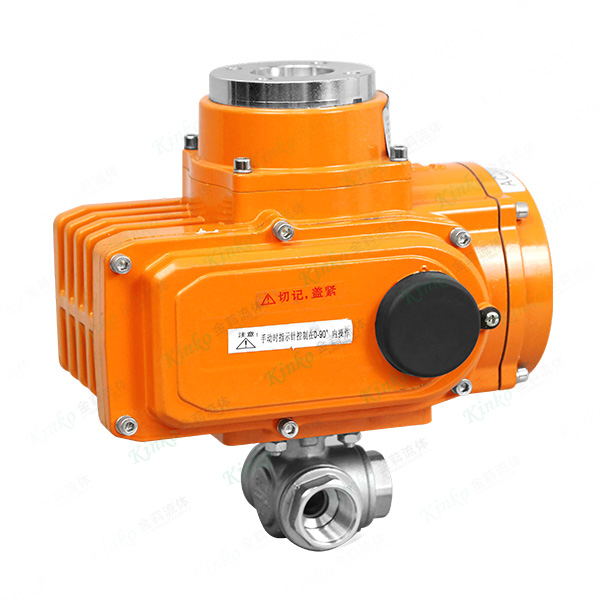
The Solution: ISO 5211 mounting ensures proper alignment and eliminates side loads.
3. Positioning Accuracy & Seat Wear
| Control Type | Typical Accuracy | Seat Wear Rate |
|---|---|---|
| Poor modulating actuator | ±5–10% | High |
| Good modulating actuator | ±1–2% | Medium |
| High-precision actuator | ±0.5% | Low |
Each time an actuator overshoots, the valve seat experiences unnecessary friction. Over thousands of cycles, this adds up to premature failure.
4. Speed Control & Water Hammer
| Actuator Speed | Effect on Valve | Effect on Pipeline |
|---|---|---|
| Too fast | Slam shut → disc/ball impact damage | Water hammer → pipe stress |
| Too slow | Seat erosion from prolonged throttling | Reduced process efficiency |
| Inconsistent | Unpredictable closing behavior | Process instability |
The Solution: Actuators with adjustable speed control or soft-start functionality.
5. Environmental Protection
| Actuator Quality | Ingress Protection | Valve Impact |
|---|---|---|
| Low (IP54) | Dust and splash resistance | Corrosion reaches stem → seizure |
| Medium (IP65–67) | Hose-down, temporary immersion | Protected in most industrial environments |
| High (IP68) | Continuous submersion | Suitable for buried or flooded installations |
A corroded actuator seizes. A seized actuator transmits excessive torque to the valve stem when operators force it. A broken stem means a scrapped valve.
6. Fail-Safe Reliability
| Fail-Safe Type | Valve Position When Air/Power Fails | Consequence of Failure |
|---|---|---|
| None (non-failsafe) | Stays in last position | Unsafe process conditions |
| Spring return | Defined fail-closed or fail-open | Predictable, safe shutdown |
| Accumulator backup | Complete stroke available | Extended fail-safe operation |
The Bottom Line: If the fail-safe system fails, the valve may be stuck in an unsafe position—or worse, damaged by attempting to move against pressure without sufficient force.
Real-World Failure Case Studies
Case 1: Seat Erosion from Under-Torquing
| Factor | Detail |
|---|---|
| Valve type | 6" butterfly valve, EPDM seat |
| Actuator | Generic on-off, 25% undersized |
| Symptom | Leakage after 8,000 cycles |
| Root cause | Actuator couldn't fully compress seat |
| Result | Valve replacement at 8,000 cycles (expected: 50,000+) |
Case 2: Stem Failure from Side Loading
| Factor | Detail |
|---|---|
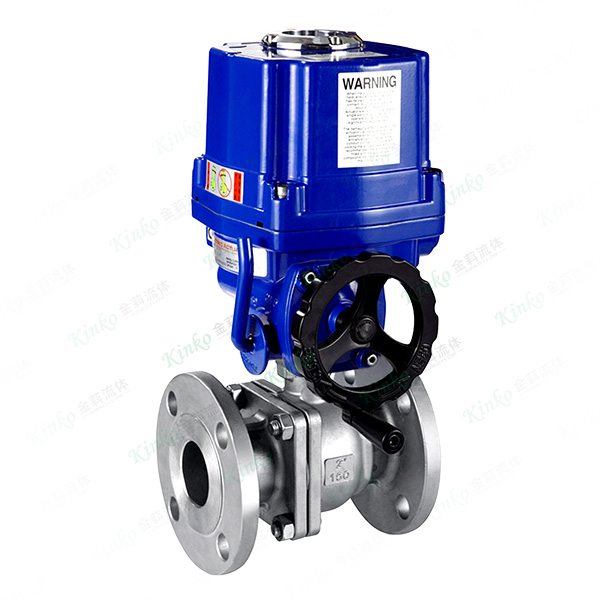
| Valve type | 3" ball valve, stainless steel stem |
| Actuator | Non-ISO mounting bracket, poor alignment |
| Symptom | Stem sheared at 15,000 cycles |
| Root cause | Actuator misalignment created bending moment |
| Result | Scrapped valve + unplanned downtime |
Case 3: Positioner-Induced Seat Wear
| Factor | Detail |
|---|---|
| Valve type | 2" globe valve, metal seat |
| Actuator | Modulating with poor (5%) deadband |
| Symptom | Seat leakage after 3 months |
| Root cause | Actuator hunted constantly, never stabilized |
| Result | Premature seat regrind every 6 months (expected: 5 years) |
Actuator Quality Indicators to Check
| Quality Feature | Why It Matters |
|---|---|
| ISO 5211 mounting | Guarantees proper alignment |
| Torque curve documentation | Matches actuator to valve requirement |
| Cycle testing data | Validates durability claims |
| Ingress protection rating (IP65/67/68) | Indicates environmental suitability |
| Fail-safe mechanism type | Defines safety capability |
| Positioner accuracy spec (±0.5–2%) | Predicts seat wear rate |
| Speed control adjustability | Prevents water hammer |
| Materials (aluminum, stainless steel, composite) | Corrosion resistance |
Selection Decision Matrix
| Application Criticality | Recommended Actuator Quality | Minimum Features |
|---|---|---|
| Low (non-critical isolation) | Standard | ISO mounting, basic torque match |
| Medium (general process control) | Good | Torque curve, IP65, basic positioner |
| High (continuous modulating) | Premium | High accuracy (±1%), IP67, adjustable speed |
| Safety-critical | Certified (SIL, ATEX) | Fail-safe verified, third-party tested |
Total Cost of Ownership (TCO) Comparison
| Factor | Cheap Actuator | Quality Actuator |
|---|---|---|
| Initial cost | $ | $$ – $$$ |
| Valve life | 1–3 years | 5–10+ years |
| Replacement valves | Multiple | None or few |
| Downtime cost | High | Low |
| Maintenance frequency | Frequent | Minimal |
| 5-year TCO | $$$$$ | $$ |
Example: A $200 cheap actuator can destroy a $2,000 valve in 6 months. A $600 quality actuator protects
that valve for 10 years.
Conclusion
Actuator quality directly determines valve service life through:
-
Proper torque delivery – seats seal correctly without damage
-
Alignment accuracy – stems aren't stressed or side-loaded
-
Positioning precision – seats aren't worn by hunting or overshoot
-
Speed consistency – water hammer and impact are prevented
-
Environmental protection – corrosion doesn't reach the valve stem
-
Fail-safe reliability – valves go to safe positions without damage
The Principle: The actuator is not an accessory. It is the component that applies all operating forces to the valve. A poor actuator will destroy any valve, regardless of quality. A good actuator will maximize the life of even a standard valve.
Need Quality Actuators That Protect Your Valves?
We supply actuators engineered for maximum valve life:
| Actuator Type | Torque Range | Positioning Accuracy | IP Rating |
|---|---|---|---|
| Pneumatic rack & pinion | 5–4000 Nm | ±1–2% (with positioner) | IP65/67 |
| Pneumatic scotch yoke | 500–250,000 Nm | ±1–2% | IP65/67 |
| Electric on-off | 10–2000 Nm | N/A | IP65/67 |
| Electric modulating | 20–3000 Nm | ±0.5–1% | IP65/67 |
Contact our engineering team for actuator sizing and selection that maximizes valve service life.
Actuator Quality | Valve Service Life | B2B Industrial Automation | OEM Supplier
Ivan (Mobile:+86-18968769287)
WhatsApp:+86-13579991606
Wechat:+86-18968769287
Website: www.kinko-flow.com
ZHEJIANG KINKO FLUID EQUIPMENT CO.,LTD
