Wafer Ball Valves vs Standard Ball Valves: Key Differences, Benefits & Selection Guide
Ball valves are among the most widely used industrial fluid control components, valued for their 90° quick operation, tight shutoff, and low fluid resistance. For B2B buyers, engineers, and procurement managers, choosing between wafer ball valves and standard flanged ball valves directly impacts project costs, installation efficiency, and long-term performance. This guide provides a detailed, data-backed comparison of wafer and standard ball valves, including technical parameters, structural differences, advantages, and ideal applications—critical for optimizing your valve selection process.
What Is a Wafer Ball Valve?
A wafer ball valve (also called a thin-type or Italian-style ball valve) is a compact, wafer-style valve designed for installation between two pipeline flanges without its own integral flanges. It features an ultra-short face-to-face length, lightweight body, and direct clamping design, making it ideal for space-constrained applications. Kinko’s wafer ball valves are available in DN15–DN100, with pressure ratings of PN16/PN25/Class 150 and body materials including CF8 (304), CF8M (316), and WCB.

What Is a Standard Ball Valve?
A standard ball valve (flanged ball valve) is a full-featured valve with integral flanges on both ends for bolted connection to pipeline flanges. It has a longer face-to-face length, robust body construction, and versatile design suitable for high-pressure, high-temperature, and heavy-duty applications. Kinko’s standard ball valves cover DN15–DN200, with pressure ratings up to PN40/Class 300 and materials including cast steel, stainless steel, and alloy steel.

Core Technical Parameters Comparison Table
| Parameter | Wafer Ball Valve | Standard Flanged Ball Valve |
|---|---|---|
| Connection Type | Wafer (clamped between flanges) | Integral flanged (bolt-on) |
| Face-to-Face Length | Ultra-short (1/3–1/2 of standard) | Standard (per API 6D/ASME B16.10) |
| Weight (DN50, PN16) | ~5–8 kg | ~12–18 kg |
| Pressure Rating | PN10–PN25 / Class 150 | PN16–PN40 / Class 150–300 |
| Nominal Diameter | DN15–DN100 | DN15–DN200 |
| Body Material | CF8/CF8M (304/316), WCB | WCB, CF8, CF8M, LCC |
| Seal Material | PTFE, RPTFE, EPDM | PTFE, PPL, Metal hard-seal |
| Operating Temperature | -30°C to +120°C | -29°C to +250°C |
| Installation | Fast, no flange alignment needed | Requires flange bolt alignment |
| Maintenance Access | Limited (compact design) | Easy (full-body access) |
| Cost (DN50, PN16) | Lower (30–40% cheaper) | Higher |
Structural & Design Differences
1. Body Design
-
Wafer Ball Valve: Slim, one-piece body with no flanges. The body is sandwiched between two pipeline flanges and secured by long bolts. This ultra-compact structure saves 50%+ installation space compared to standard valves.
-
Standard Ball Valve: Two-piece or three-piece body with integrated flanges. The robust design withstands higher mechanical stress and provides stable sealing under extreme pressure/temperature conditions.
2. Connection Mechanism
-
Wafer: Relies on pipeline flanges for clamping. No dedicated valve flanges reduce material costs but require precise flange parallelism.
-
Standard: Integral flanges match pipeline flange standards (ASME B16.5, GB/T 9113). Bolted connections ensure reliable sealing and easy disassembly for maintenance.
3. Weight & Size
-
Wafer: Lightweight (e.g., DN50 PN16: ~6 kg) reduces structural load on pipelines and supports.
-
Standard: Heavier (e.g., DN50 PN16: ~15 kg) due to flange reinforcement, suitable for heavy-duty industrial pipelines.
-
Key Advantages & Disadvantages
Wafer Ball Valve
✅ Advantages:
-
Space-saving: Ultra-short length ideal for tight installations (e.g., skid-mounted systems, compact piping).
-
Cost-effective: Lower material and installation costs (no valve flanges, fewer bolts).
-
Lightweight: Reduces pipeline stress and simplifies handling during installation.
-
Quick installation: Clamps directly between flanges; no flange alignment required.
❌ Disadvantages:
-
Pressure limitation: Not suitable for pressures above PN25/Class 150.
-
Temperature constraint: Limited to ≤120°C with standard PTFE seals.
-
Maintenance challenges: Compact design complicates seal replacement and internal inspection.
-
Risk of misalignment: Dependent on pipeline flange parallelism for proper sealing.
Standard Ball Valve
✅ Advantages:
-
High pressure/temperature resistance: Handles up to PN40/Class 300 and 250°C.
-
Superior sealing: Integral flanges and robust body prevent leakage in critical applications.
-
Easy maintenance: Two/three-piece design allows full disassembly for seal replacement and repair.
-
Versatile applications: Suitable for oil/gas, chemical, power, and other heavy-duty industries.
❌ Disadvantages:
-
Bulky & heavy: Requires more installation space and structural support.
-
Higher cost: More materials (flanges, bolts) and longer installation time increase project costs.
-
Slower installation: Requires precise flange bolt alignment and torqueing.
Ideal Applications
When to Choose Wafer Ball Valves
-
Space-constrained systems: Skid-mounted equipment, compact piping layouts, and tight valve rooms.
-
Low-to-medium pressure: PN10–PN25/Class 150 applications (water, gas, light oil, non-corrosive fluids).
-
Cost-sensitive projects: HVAC, water treatment, food processing, and general industrial piping.
-
Frequent installation/removal: Temporary pipelines and systems requiring quick valve replacement.
When to Choose Standard Ball Valves
-
High-pressure/high-temperature: Oil/gas transmission, chemical processing, power plants, and steam systems.
-
Critical safety applications: Refineries, petrochemical plants, and pipelines handling hazardous fluids.
-
Large-diameter pipelines: DN100–DN200 systems requiring robust structural support.
-
Long-term reliability: Permanent installations where minimal maintenance and leak-tight performance are critical.
-
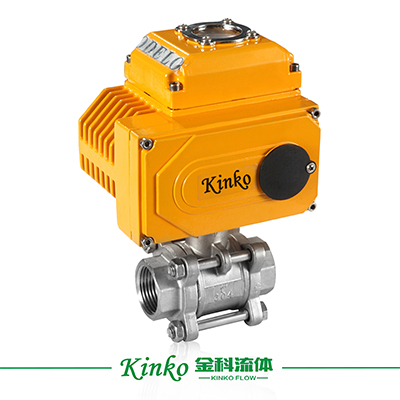
Kinko’s Wafer & Standard Ball Valve Offerings
Wafer Ball Valves (Q71F Series)
-
Sizes: DN15–DN100
-
Pressure: PN16/PN25, Class 150
-
Materials: CF8 (304), CF8M (316), WCB
-
Seals: PTFE, EPDM, RPTFE
-
Features: Fire-safe design, anti-static structure, ISO 5211 top mounting for actuators.
Standard Flanged Ball Valves (Q41F Series)
-
Sizes: DN15–DN200
-
Pressure: PN16–PN40, Class 150–300
-
Materials: WCB, CF8, CF8M, LCC
-
Seals: PTFE, PPL, metal hard-seal
-
Features: Full bore, bidirectional sealing, API 6D compliance, bolted bonnet design.
Final Selection Tips for B2B Buyers
-
Prioritize space: Choose wafer valves for compact installations; standard valves for unrestricted space.
-
Check pressure/temperature: Wafer valves for ≤PN25/120°C; standard valves for higher ratings.
-
Evaluate budget: Wafer valves reduce costs by 30–40% for low-to-medium duty projects.
-
Assess maintenance: Standard valves offer easier access for repairs; wafer valves suit low-maintenance systems.
-
Confirm industry standards: Match valve design to project specifications (API 6D, ASME B16.5, GB/T 9113).
Conclusion
Wafer ball valves and standard ball valves serve distinct roles in industrial fluid control. Wafer valves excel in compact, cost-effective, low-to-medium pressure applications, while standard flanged valves deliver robust performance in high-pressure, high-temperature, and critical safety systems. As a professional valve manufacturer, Kinko provides high-quality wafer and standard ball valves tailored to your project requirements—supporting your B2B procurement with reliable products and expert technical guidance.
Ivan (Mobile:+86-18968769287)
WhatsApp:+86-13579991606
Wechat:+86-18968769287
Website: www.kinko-flow.com
ZHEJIANG KINKO FLUID EQUIPMENT CO.,LTD
