How to Select the Right Butterfly Valve for Your System
1. Introduction
Selecting the wrong butterfly valve leads to premature failure, unsafe operation, and costly downtime. With multiple types (concentric, double offset, triple offset), end connections (wafer, lug), materials, and actuation options, procurement professionals need a clear, repeatable selection process.
This guide provides a 10-step checklist to match a butterfly valve to your system's pressure, temperature, media, and operational requirements.
2. Step 1: Determine Valve Function
| Function | Requirement |
|---|---|
| On/Off (isolation) | Any butterfly valve type – soft seat recommended |
| Throttling (flow regulation) | Double offset or triple offset (better for modulating) |
| Emergency shut-down (ESD) | Spring-return pneumatic actuator + soft seat |
| Frequent cycling | Double offset (higher cycle life) |
3. Step 2: Define Line Size
| Pipe Size (inches) | Recommendation |
|---|---|
| 1" – 2" | Ball valve may be more economical |
| 2" – 6" | Butterfly valve is competitive |
| 6" – 24" | Butterfly valve is ideal (best cost-to-performance) |
| 24" – 80" | Butterfly valve is the only practical choice |
KINKO note: Below 2", ball valves typically offer lower pressure drop and better shut-off.
4. Step 3: Identify Maximum Pressure
| Pressure Range | Recommended Butterfly Valve Type |
|---|---|
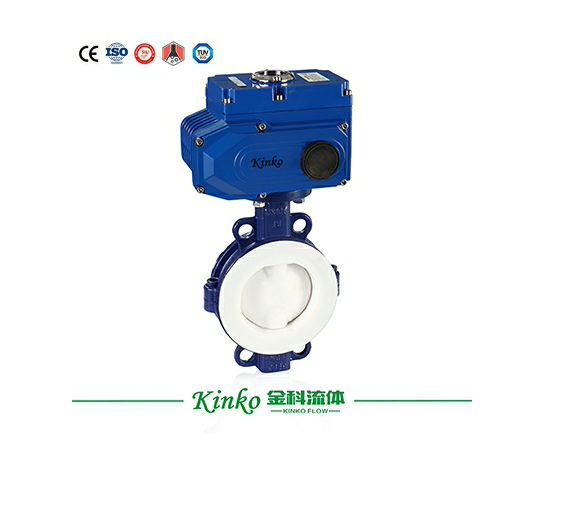
| ≤ 250 PSI (PN16) | Concentric (rubber-lined) – KBF-LT |
| 250 – 740 PSI (Class 150–300) | Double offset (high performance) – KBF-HP |
| 740 – 1500 PSI (Class 600+) | Triple offset (metal-seated) – KBF-TO |
5. Step 4: Identify Maximum Temperature
| Temperature Range | Seat Material | Valve Type |
|---|---|---|
| -40°C to +120°C | EPDM, NBR | Concentric |
| -20°C to +200°C | Viton, PTFE | Concentric or Double offset |
| -40°C to +400°C | RTFE, PEEK | Double offset |
| -196°C to +800°C | Metal seat | Triple offset |
Rule of thumb: Soft seats ≤ 200°C. Above 200°C, move to metal-seated (triple offset).
6. Step 5: Identify Media (Fluid Type)
| Media | Seat Material | Body Material | Notes |
|---|---|---|---|
| Water / Air / Light slurry | EPDM | Ductile iron / CI | Concentric is fine |
| Oil / Fuel / Grease | NBR | Ductile iron / SS316 | NBR resists petroleum |
| Chemicals / Acids / Solvents | PTFE, Viton | SS316, WCB | Double offset preferred |
| Steam | PTFE, RTFE, Metal | WCB, SS316 | Double or triple offset |
| Food / Dairy / Beverage | EPDM, Silicone (FDA) | SS316L (sanitary) | KBF-SAN series |
| Slurry / Abrasive | Hard rubber, Metal | Ductile iron with hardened disc | Concentric with lined disc |
| Seawater | EPDM, NBR | Aluminum bronze, SS316 | Avoid cast iron |
7. Step 6: Choose End Connection
| Requirement | Recommended Connection |
|---|---|
| Lowest cost, standard installation | Wafer |
| Dead-end service | Lug |
| Frequent downstream pipe removal | Lug |
| High pressure (>Class 300) | Flanged |
| Sanitary / food contact | Clamp (Tri-Clamp) |
| Large diameter (>24") | Wafer (lighter, easier to handle) |
See Part 43 for detailed wafer vs lug comparison.
8. Step 7: Select Seat (Liner) Material
| Seat Material | Temp Range | Best For | Not Suitable For |
|---|---|---|---|
| EPDM | -40°C to 120°C | Water, air, dilute acids | Oils, solvents, hydrocarbons |
| NBR (Buna-N) | -20°C to 90°C | Oil, fuel, grease | Ozone, brake fluids |
| Viton (FKM) | -15°C to 200°C | Chemicals, solvents, acids | Steam, hot water (above 150°C) |
| PTFE | -40°C to 230°C | Almost all chemicals | High pressure (extrusion risk) |
| Silicone | -60°C to 200°C | Food, pharma, inert | Oils, steam |
| Metal (SS316) | -196°C to 800°C | High temp, steam, cryogenic | Abrasive without coating |
9. Step 8: Determine Actuation Type
| Requirement | Actuation |
|---|---|
| Manual, infrequent operation (≤6") | Lever handle |
| Manual, large valve (>6") or high torque | Gear operator |
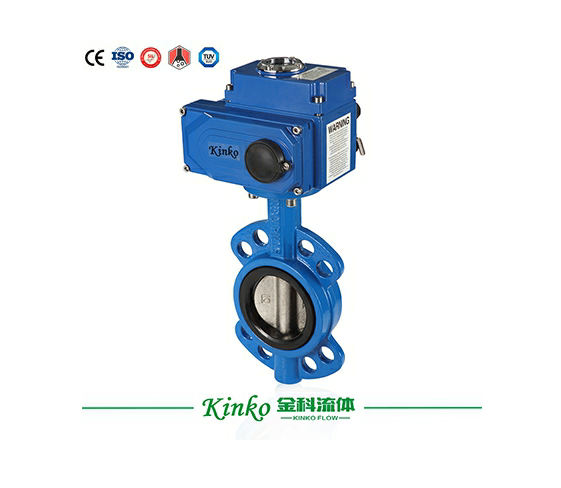
| Fast operation, fail-safe required | Pneumatic (spring-return) |
| No air supply available | Electric (motorized) |
| Precise modulating control | Electric or pneumatic + positioner |
| Hazardous / explosive area | Pneumatic (no sparks) |
| Remote SCADA control | Electric with 4-20mA feedback |
See Part 42 for pneumatic vs motorized detailed comparison.
10. Step 9: Check Special Requirements
| Requirement | What to Specify |
|---|---|
| Fire-safe | Triple offset or double offset with API 607 cert |
| Cryogenic (-196°C) | Triple offset with extended stem, BS 6364 |
| NACE (sour service) | NACE MR0175 / MR0103 certified materials |
| FDA / 3A Sanitary | KBF-SAN series with electropolished finish |
| ATEX (explosive atmosphere) | Pneumatic actuator + grounding device |
| Low fugitive emissions | Live-loaded packing, ISO 15848 certified |
| Vacuum service | Concentric with PTFE seat (down to 1 torr) |
11. Step 10: Validate with a Selection Table
Fill out this checklist before sending your RFQ to KINKO:
| Parameter | Your Value |
|---|---|
| Line size (inches / DN) | ______ |
| Maximum pressure (PSI / bar) | ______ |
| Maximum temperature (°C / °F) | ______ |
| Minimum temperature | ______ |
| Media (fluid type) | ______ |
| Function (on/off or throttling) | ______ |
| End connection (wafer / lug / flanged / clamp) | ______ |
| Actuation (lever / gear / pneumatic / electric) | ______ |
| Special certs (fire-safe, NACE, FDA, ATEX) | ______ |
| Cycle frequency (times per hour) | ______ |
| Fail-safe required? | Yes / No |
12. Quick Selection Matrix – Which KINKO Series Fits?
| Application | Size | Pressure | Temp | Media | Recommended Series |
|---|---|---|---|---|---|
| Water treatment | 4"–24" | ≤250 PSI | ≤80°C | Water | KBF-LT (EPDM, wafer) |
| HVAC chilled water | 6"–20" | ≤150 PSI | ≤60°C | Water/glycol | KBF-LT (EPDM, lug) |
| Chemical dosing | 2"–8" | ≤300 PSI | ≤150°C | Acids | KBF-HP (PTFE, lug) |
| Steam line | 3"–12" | ≤300 PSI | ≤250°C | Steam | KBF-HP (RTFE) |
| High temp oil | 4"–24" | ≤600 PSI | ≤450°C | Thermal oil | KBF-TO (metal seat) |
| Dairy / CIP | 2"–6" | ≤150 PSI | ≤120°C | Milk/cleaning | KBF-SAN (clamp, EPDM) |
| Refinery crude | 6"–48" | ≤1500 PSI | ≤400°C | Crude oil | KBF-TO (metal, fire-safe) |
| Slurry / mining | 4"–20" | ≤250 PSI | ≤80°C | Sludge | KBF-LT (hard rubber disc) |
13. Common Selection Mistakes to Avoid
| Mistake | Consequence |
|---|---|
| Using EPDM with oil | Swelling, rapid failure |
| Using wafer for dead-end service | Valve blows out |
| Rubber-lined valve above 200°C | Seat melts, valve jams |
| PTFE seat in high cycling | Extrusion, loss of shut-off |
| Cast iron body in seawater | Rapid corrosion |
| Manual lever on 12" valve | Impossible to operate by hand (needs gear) |
| No actuator margin (torque) | Actuator stalls, valve fails in mid-position |
14. Conclusion
Selecting the right butterfly valve requires matching pressure, temperature, media, end connection, actuation, and special requirements to the correct valve series.
KINKO provides a full range from rubber-lined concentric to metal-seated triple offset – all with full traceability, test documentation, and engineering support.
Send your completed 10-step checklist to the KINKO sales team for a verified recommendation and quote.
Ivan (Mobile:+86-18968769287)
WhatsApp:+86-13579991606
Wechat:+86-18968769287
Website: www.kinko-flow.com
ZHEJIANG KINKO FLUID EQUIPMENT CO.,LTD
