How to Maintain Ball Valves for Extended Lifespan: A 7-Step Technical Guide for Industrial Procurement
Why Ball Valve Maintenance Matters for B2B Facilities
A neglected ball valve leads to:
-
Stem leakage (escaping media into the atmosphere)
-
Seat wear (loss of shut-off capability)
-
Torque increase (actuator failure or handwheel damage)
-
Cavitation damage (in high-pressure drops)
Proper maintenance extends service life from 2–3 years to over 10 years in many applications.
The 7-Step Ball Valve Maintenance Procedure
Step 1: Visual & Operational Weekly Check (No Disassembly)
Conduct this without stopping the process (where safe):
| Check Point | Acceptable Condition | Action Required |
|---|---|---|
| Body & bonnet | No visible corrosion, pitting, or sweat marks | Torque bolts to spec (see table below) |
| Stem area | Dry; no fluid film or crystallization | Tighten stem packing nut 1/8 turn |
| End connections | No weeping at flanges or threaded joints | Re-torque flange bolts in star pattern |
| Lever/actuator | Smooth 90° rotation; no binding | Cycle valve fully twice; add lubricant |
Step 2: Cycle Partially Every 30 Days
If a ball valve remains in fully open or fully closed position for >30 days, the ball can cold-weld to the seats (especially in PTFE or PEEK seats).
Procedure: Cycle valve from fully closed → 50% open → fully open → fully closed. Repeat 3 times.
Step 3: Lubrication Schedule for Stem & Seats
Refer to your service medium. Kinko recommends:
| Valve Series | Medium Temp Range | Lubricant Type | Frequency |
|---|---|---|---|
| Kinko V-Port | -20°C to 150°C | PTFE-based grease | Every 6 months |
| Kinko Cryogenic | -196°C to 80°C | Moly disulfide dry lube | Every 3 months |
| Kinko High-Temp | 150°C to 450°C | Graphite paste | Every 2 months |
| Kinko Sanitary | 0°C to 120°C | Food-grade grease (NSF H1) | Monthly |
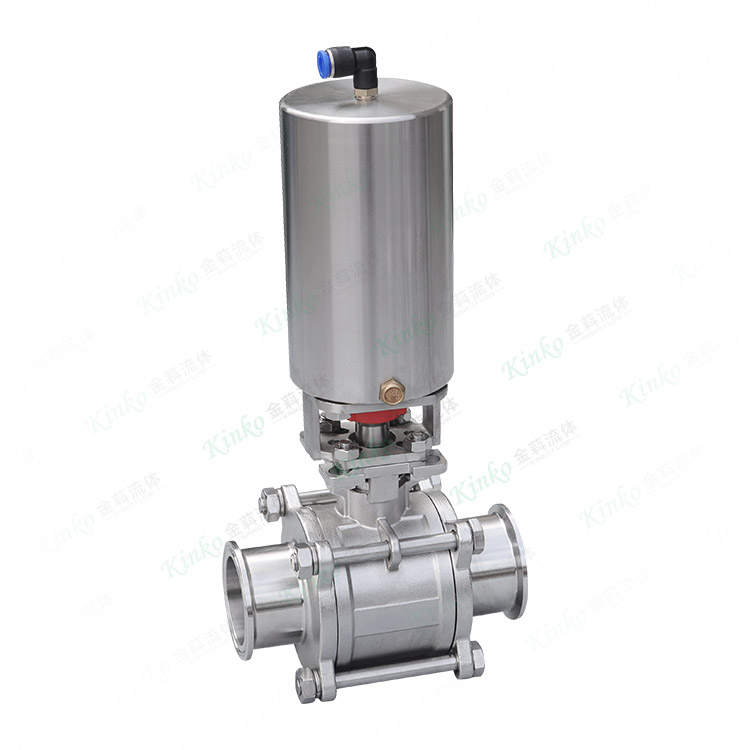
Step 4: Stem Packing Adjustment for Fugitive Emissions
Loose packing is the #1 cause of external leakage.
How to adjust:
-
Loosen the two stem packing nuts evenly.
-
Re-tighten to 80% of original torque value (see torque table below).
-
If leakage continues after 2 adjustments, replace packing rings.
Step 5: Seat & Seal Integrity Test (6-Month Intervals)
Perform a hydrostatic or pneumatic seat test without removing the valve:
-
Test pressure: 1.5× rated working pressure (cold water)
-
Acceptable leakage: ISO 5208 Rate A (zero visible leakage for soft seats)
-
Action: If leakage exceeds Rate B, disassemble and inspect seats.
Step 6: Flange Bolt Re-Torquing (Annually)
Thermal cycling and pressure spikes loosen flange bolts over time.
| Bolt Size | Recommended Torque (N·m) – Kinko Carbon Steel | Recommended Torque (N·m) – Kinko Stainless |
|---|---|---|
| M12 | 55–65 | 45–55 |
| M16 | 120–140 | 100–120 |
| M20 | 200–230 | 170–200 |
| M24 | 320–370 | 280–330 |
→ Use a calibrated torque wrench in a star pattern.
Step 7: Full Overhaul Schedule
| Service Condition | Overhaul Interval | Required Kit |
|---|---|---|
| Clean media (water, air, light oil) | 5 years or 20,000 cycles | Seat & seal kit |
| Abrasive media (slurry, sand-laden water) | 12–18 months | Ball, seat, stem, bearing kit |
| Corrosive media (acid, chemical) | 24 months | All wetted parts (Hastelloy or Tantalum upgrade) |
| High-cycle automation (>50 cycles/hr) | 1 year or 400,000 cycles | Actuator coupling & stem bearings |
Common Mistakes That Shorten Ball Valve Life
-
Using the valve as a throttle for extended periods
→ Install a V-port or globe valve instead. -
Ignoring torque increase
→ Stem bearings or seats are failing; overhaul immediately. -
Mixing lubricant types
→ PTFE grease + hydrocarbon grease causes swelling and seizure. -
Over-tightening packing
→ Increases stem friction; damages stem finish.
Kinko Ball Valve Series – Maintenance Parameters at a Glance
Use this table for your CMMS (Computerized Maintenance Management System):
| Kinko Series | Body Material | Seat Material | Max Cycles Before Service | Stem Packing Type | Recommended Grease |
|---|---|---|---|---|---|
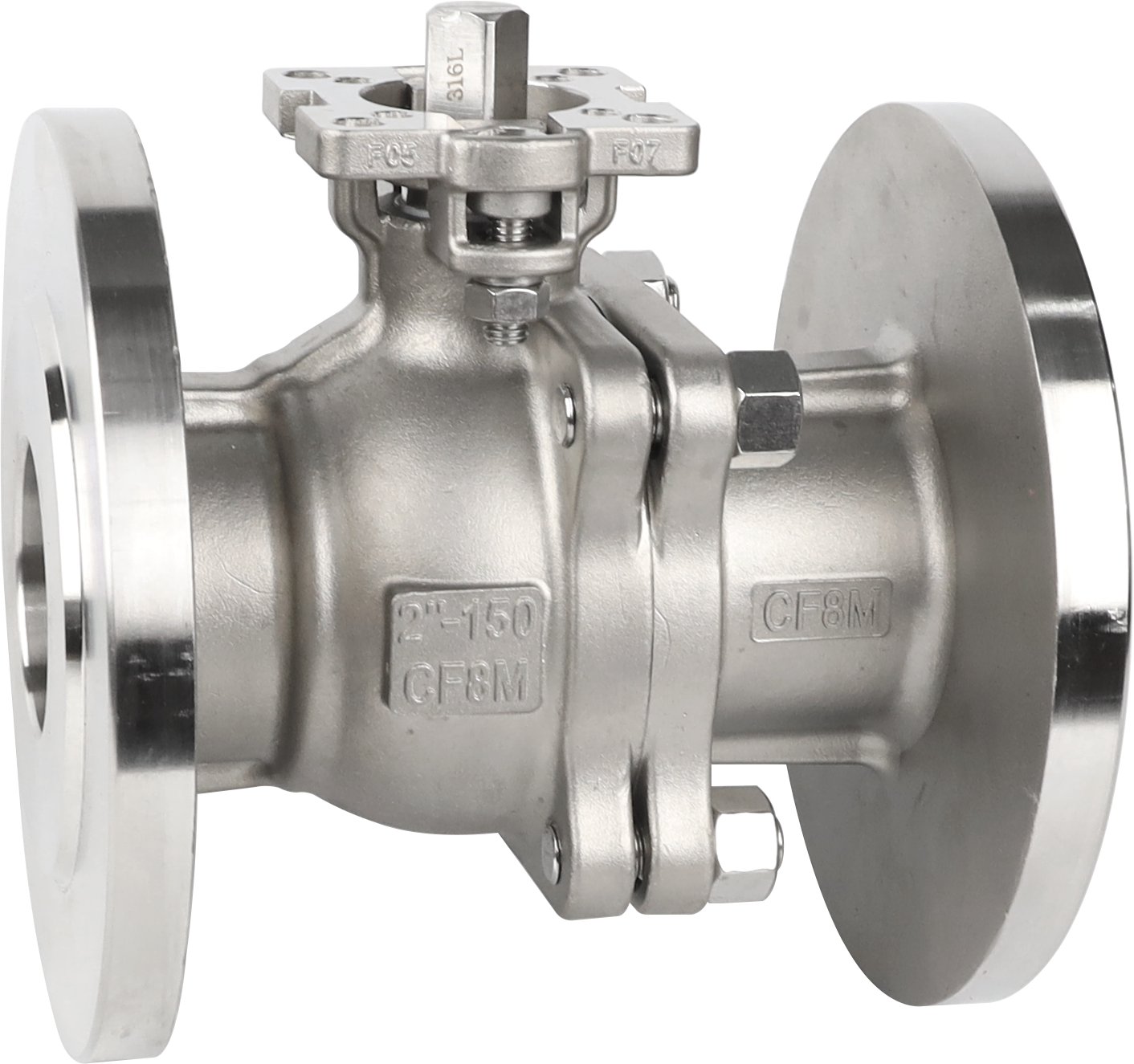
| KINKO-F15 | CF8M Stainless | PTFE + 15% GF | 50,000 | Live-loaded V-ring | Kluber Isoflex NBU15 |
| KINKO-C22 | Carbon Steel WCB | PEEK | 80,000 | Graphite ribbon | Never-Seez NSBT-8 |
| KINKO-HC10 | Hastelloy C276 | RTFE | 40,000 | Adjustable PTFE | Chemours Krytox GPL205 |
| KINKO-SAN5 | 316L (Electropolished) | PTFE (FDA) | 30,000 | Sanitary clamp seal | LubriPlate FML-2 |
When to Replace vs. Repair – A B2B Decision Matrix
| Condition | Repair (Replace seats/seals) | Replace Entire Valve |
|---|---|---|
| Stem bent or ball galled | ❌ No | ✅ Yes |
| Body cracked or pitted through | ❌ No | ✅ Yes |
| Seats worn but ball smooth | ✅ Yes | ❌ No |
| Torque normal but packing leaks | ✅ Yes | ❌ No |
| End threads stripped | ❌ No | ✅ Yes |
Conclusion: Maintenance Is an Investment, Not a Cost
Following this 7-step procedure will double or triple the service life of your Kinko ball valves. For procurement teams: factor maintenance intervals into your total cost of ownership (TCO). A valve that lasts 8 years at 15% lower annual maintenance cost beats a cheap valve replaced every 2 years.
Need OEM-recommended spare kits or torque specs for your specific valve size? Contact Kinko support with your valve series and serial number. We provide free maintenance schedule templates in Excel for plant engineers.
Ivan (Mobile:+86-18968769287)
WhatsApp:+86-13579991606
Wechat:+86-18968769287
Website: www.kinko-flow.com
ZHEJIANG KINKO FLUID EQUIPMENT CO.,LTD
