How to Choose the Right Ball Valve for Industrial Use
Introduction
Selecting the wrong ball valve leads to leaks, unplanned downtime, and safety hazards. For procurement managers and engineers, the challenge is not finding a valve—it is matching the right specifications to your exact fluid, pressure, and temperature profile.
This guide breaks down the five critical decisions for industrial ball valve selection.
Step 1: Determine the Valve Body Configuration
Choose between 1-piece, 2-piece, or 3-piece designs.
| Body Type | Best Use Case | Maintenance |
|---|---|---|
| 1-piece | Low-pressure water/air, disposable lines | None (replace only) |
| 2-piece | General industrial, oil, gas, steam | Field repairable |
| 3-piece | Sanitary, corrosive fluids, frequent cleaning | Full access without removing pipe |
Kinko recommendation: For 80% of industrial applications, a 2-piece ball valve offers the best balance of cost and serviceability.
Step 2: Select the Correct Port Size
Port size directly affects flow rate and pressure drop.
-
Standard Port (Reduced Bore): Valve bore is one pipe size smaller (e.g., 2" valve has 1.5" bore). Lower cost, higher pressure drop. Acceptable for gases and low-viscosity liquids.
-
Full Port (Full Bore): Valve bore equals pipe inner diameter. Zero flow restriction, easier pigging, higher cost. Required for slurries, viscous fluids, and high-flow systems.
Rule of thumb: If your fluid contains solids or you cannot afford pressure loss, specify full port.
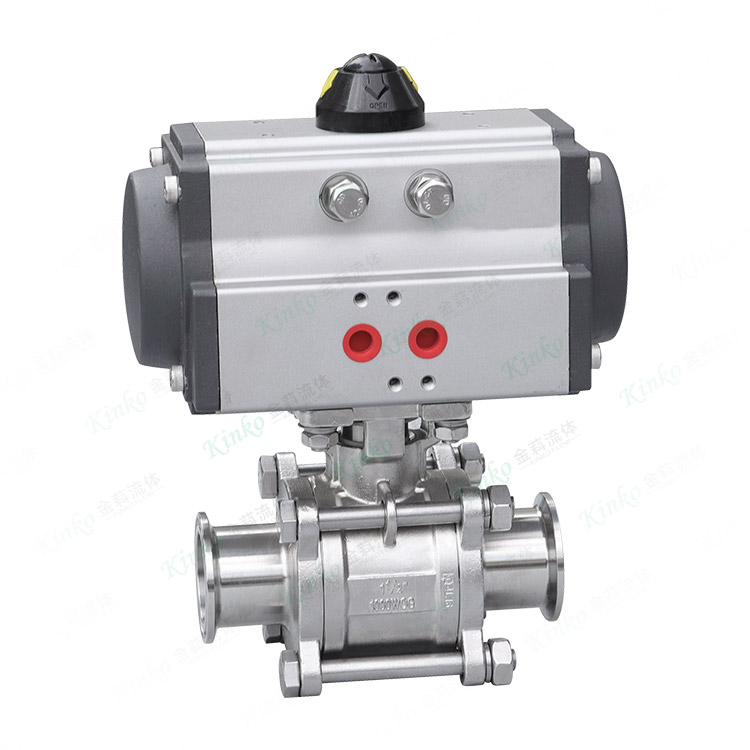
Step 3: Match Material to Fluid Compatibility
This is the #1 cause of valve failure. Use the table below.
| Material | Fluid Compatibility | Limitation |
|---|---|---|
| Brass | Water, air, oil, LPG | No saltwater, no acidic chemicals |
| CF8 (304 SS) | Mild chemicals, food, beer, oil | Limited chloride resistance |
| CF8M (316 SS) | Saltwater, bleach, acetic acid, marine | Higher cost |
| WCB (Carbon Steel) | Steam, natural gas, fuel oil | Rusts in water service |
Critical note: Never use brass with ammonia or 316 SS with concentrated hydrochloric acid.
Step 4: Verify Pressure & Temperature Ratings
Check two numbers on the valve tag:
-
WOG (Water, Oil, Gas): Maximum cold working pressure (e.g., 1000 PSI).
-
SWP (Steam Working Pressure): Maximum saturated steam pressure.
Example: A valve rated 1000 WOG / 150 SWP means:
-
1000 PSI max for cold water/oil/gas
-
150 PSI max for steam (higher temperature reduces strength)
Temperature limits by seat material:
| Seat Material | Max Temp | Best For |
|---|---|---|
| PTFE (standard) | 230°C (446°F) | General purpose |
| PEEK | 260°C (500°F) | High-temp, aggressive chemicals |
| Delrin | 80°C (176°F) | Low-cost water service |
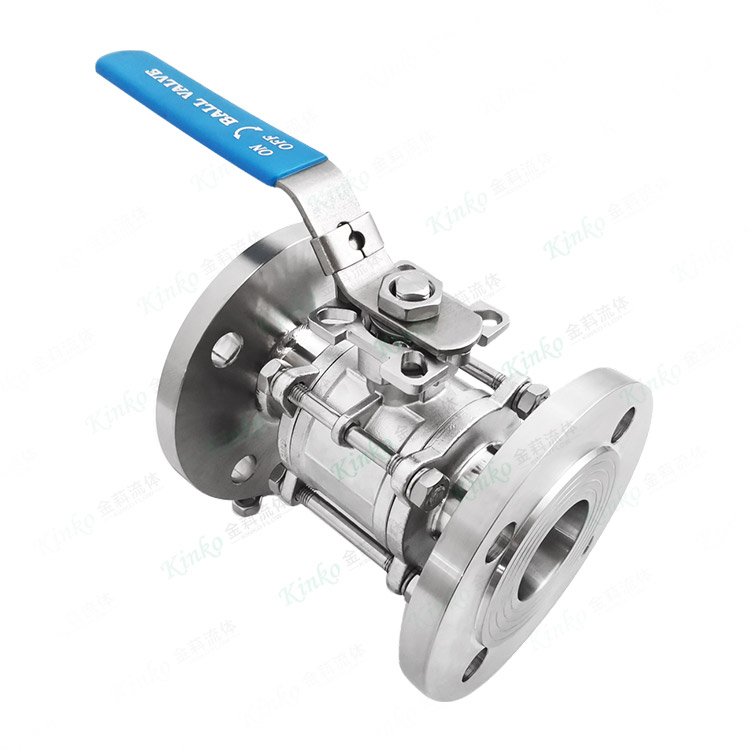
Step 5: Choose End Connections
| Connection | Pros | Cons |
|---|---|---|
| Threaded (NPT/BSP) | Low cost, easy install | Sealing tape required |
| Socket Weld | Leak-proof, permanent | Cannot remove |
| Flanged | Easy removal, high pressure | Expensive, heavy |
| Tri-clamp | Sanitary, quick open | Limited to food/pharma |
B2B tip: For threaded valves, specify NPT for North America or BSP for Asia/Europe. Mixing thread standards guarantees leakage.
Quick Selection Table by Application
| Application | Body | Port | Material | Seat |
|---|---|---|---|---|
| Compressed air line | 1-piece | Standard | Brass | PTFE |
| Chemical transfer pump | 2-piece | Full | 316 SS | PTFE |
| Low-pressure steam | 2-piece | Standard | Carbon steel | PTFE |
| Sanitary food line | 3-piece | Full | 316 SS | PTFE |
| Saltwater cooling | 2-piece | Full | 316 SS | PTFE |
| High-temp oil (200°C) | 2-piece | Full | 316 SS | PEEK |
Procurement Checklist (Copy for your RFQ)
Send this checklist to Kinko with your inquiry:
-
Valve size: _____ inch/mm
-
Body configuration: 1-piece / 2-piece / 3-piece
-
Port type: Standard / Full
-
Body material: Brass / CF8 / CF8M / WCB
-
Pressure required: _____ PSI or bar
-
Fluid temperature: _____ °C / °F
-
Fluid type: _____ (water / steam / chemical / gas)
-
End connection: Threaded / Socket weld / Flanged
-
Thread standard (if applicable): NPT / BSP
Conclusion
Choosing the right ball valve requires answering five questions: body type, port size, material, pressure rating, and end connection. Start with the fluid chemistry, then match pressure and temperature. For most industrial applications, a 2-piece, 316 stainless steel, full port, PTFE-seated ball valve provides the widest safety margin.
Kinko stocks the full range:
-
1-piece brass valves (1/4" to 2", 600 WOG)
-
2-piece 316/304 stainless valves (1/2" to 4", 1000-2000 WOG)
-
2-piece carbon steel valves (steam service, 150 SWP)
-
Full port and standard port options
-
NPT and BSP threads available
Send your RFQ with the checklist above for a same-day quotation.
Ivan (Mobile:+86-18968769287)
WhatsApp:+86-13579991606
Wechat:+86-18968769287
Website:www.kinko-flow.com
ZHEJIANG KINKO FLUID EQUIPMENT CO.,LTD
