1-Piece vs 2-Piece Ball Valves: Differences & Applications
Introduction
Choosing the right ball valve directly impacts your system’s maintenance costs and operational uptime. For B2B buyers, the decision between a 1-piece ball valve and a 2-piece ball valve is not about quality—it is about application fit.
This guide provides a technical comparison, a detailed parameter table, and procurement recommendations for engineers and purchasing managers.
What is a 1-Piece Ball Valve?
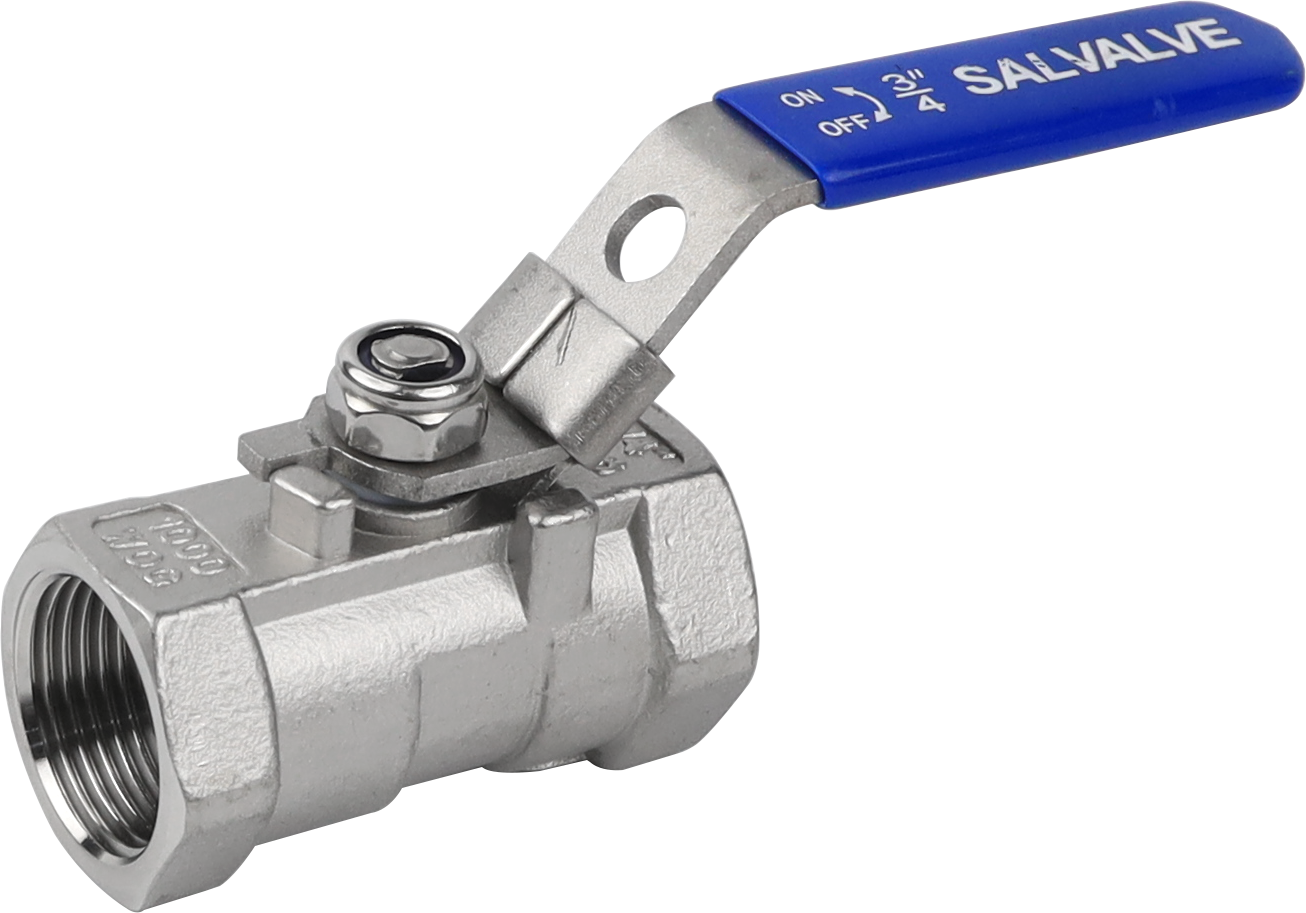
A 1-piece ball valve features a single body construction where the ball, seats, and stem are inserted through one end. The end connection is then permanently sealed.
Key Characteristics:
-
Non-repairable: Cannot be opened for cleaning or seal replacement.
-
Compact size: Short face-to-face dimension.
-
Lower cost: Fewer components and less machining.
Best for: Low-pressure systems, fixed installations, disposable applications (e.g., air compressors, water hoses).
What is a 2-Piece Ball Valve?
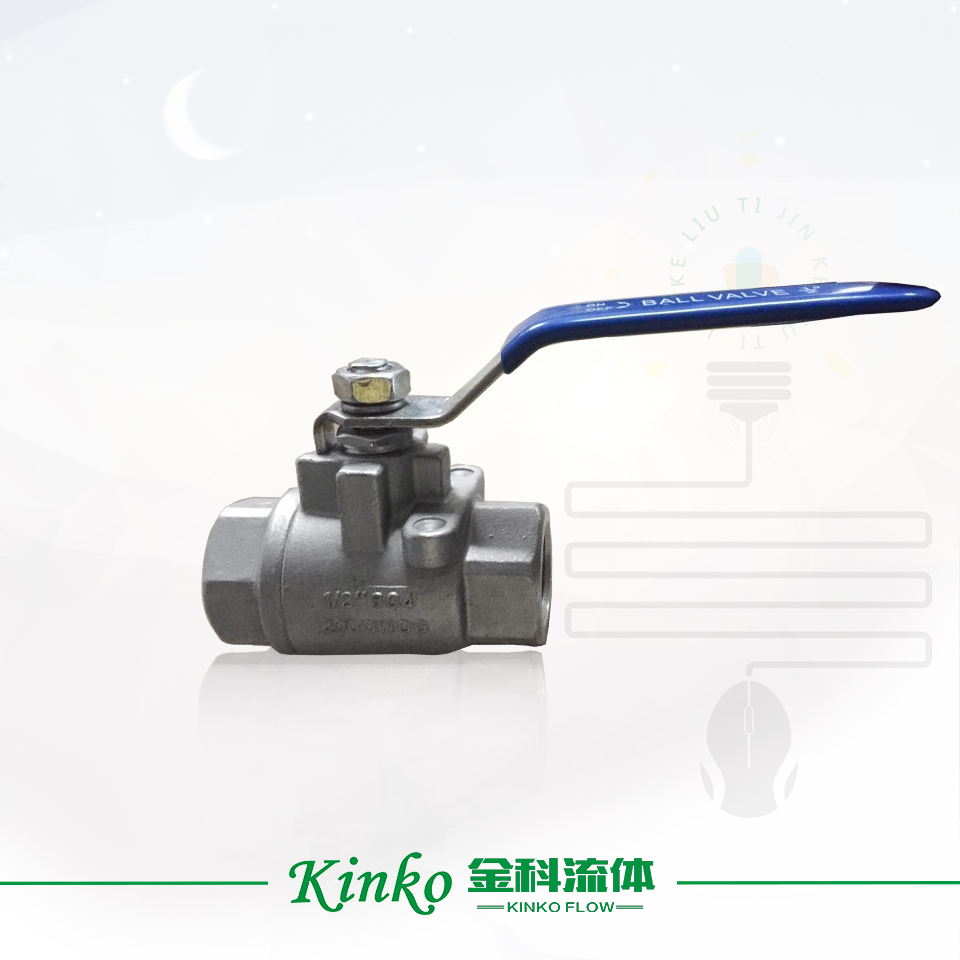
A 2-piece ball valve consists of two body parts bolted or threaded together. One end allows access to the internal ball and seats after removing the downstream pipe.
Key Characteristics:
-
Field-repairable: Seats and seals can be replaced without removing the entire valve body.
-
Higher pressure rating: Stronger under thermal cycling and vibration.
-
Versatile connections: Often available with mixed ends (e.g., threaded one side, socket weld the other).
Best for: Industrial pipelines, chemical transfer, steam services, and high-cycle applications.
Technical Comparison Table
| Parameter | 1-Piece Ball Valve | 2-Piece Ball Valve |
|---|---|---|
| Body Structure | Single, non-demountable | Two bolted/threaded parts |
| Maintenance | Non-repairable (replace only) | Repairable (seats/seals) |
| Pressure Rating | Up to 1000 PSI (PN63) | Up to 2000 PSI (PN140) |
| Temperature Range | -20°C to 120°C (standard) | -20°C to 200°C (with suitable seals) |
| End Connections | Threaded (NPT/BSP) only | Threaded, Socket Weld, Flanged |
| Bore Type | Standard port only | Full port or standard port |
| Cost (relative) | Low | Medium |
| Typical Life Cycle | 10,000–20,000 cycles | 50,000+ cycles |
Critical Differences for B2B Buyers
1. Maintenance & Downtime
-
1-Piece: When the valve fails, cut it out and replace it. Labor + new valve = higher long-term cost.
-
2-Piece: Unscrew the downstream pipe, remove the body cap, replace seats. 15-minute repair vs. 2-hour replacement.
2. Pressure & Thermal Shock
-
1-Piece: Can leak at the crimped body joint under thermal expansion.
-
2-Piece: Bolted construction absorbs thermal stress. Recommended for steam and hot oil.
3. Flow Efficiency
-
1-Piece: Typically reduced port (smaller than pipe ID). Causes pressure drop.
-
2-Piece: Easily available in full port (same ID as pipe). No flow restriction.
Procurement Recommendations
Choose 1-Piece ball valves when:
-
System pressure is below 600 PSI.
-
Valve size is 1/4" to 1" for non-critical services.
-
You require the lowest upfront cost.
-
The pipeline is disposable or temporary.
Choose 2-Piece ball valves when:
-
Pressure exceeds 1000 PSI or temperature varies daily.
-
You need to minimize maintenance downtime.
-
The valve is installed in a hard-to-access location.
-
You are buying for chemical, oil, or steam applications.
Conclusion
For most industrial B2B applications, the 2-piece ball valve offers a lower total cost of ownership despite a higher purchase price. The 1-piece valve remains suitable for OEM equipment and low-pressure utilities.
Kinko’s product line includes:
-
Full port 2-piece ball valves (CF8M/CF8/WCB, 1000 WOG, 150 SWP)
-
Economical 1-piece ball valves (brass/304SS, 600 WOG)
-
Custom end-to-end dimensions for bulk orders
Contact Kinko for a valve matrix recommendation based on your fluid, pressure, and cycle frequency.
Ivan (Mobile:+86-18968769287)
WhatsApp:+86-13579991606
Wechat:+86-18968769287
Website:www.kinko-flow.com
ZHEJIANG KINKO FLUID EQUIPMENT CO.,LTD
