Heavy-Duty Actuators for Continuous Industrial Operation
What Defines a Heavy-Duty Actuator?
Heavy-duty actuators are designed for demanding applications that exceed the capabilities of standard industrial actuators. Key distinguishing features include:
| Feature | Heavy-Duty Characteristics |
|---|---|
| Construction | Cast iron, stainless steel, or heavy-gauge aluminum housings |
| Torque/Thrust | High output capacity; designed for large valves and high pressures |
| Duty cycle | Continuous operation capability (S1 duty for electric; high-cycle for pneumatic) |
| Lifespan | Designed for millions of cycles; 10–20+ years service life |
| Environmental protection | IP67/IP68, corrosion-resistant coatings, explosion-proof options |
| Safety features | SIL certification, fail-safe redundancy, manual override |
Heavy-Duty vs. Standard Actuators
| Parameter | Standard Actuator | Heavy-Duty Actuator |
|---|---|---|
| Typical torque | Up to 1,000 Nm | 1,000–500,000+ Nm |
| Duty cycle | Intermittent (S2, S4) | Continuous (S1, S5) or high-cycle |
| Housing material | Aluminum (coated) | Cast iron, ductile iron, stainless steel |
| Seal life | 100,000–500,000 cycles | 1,000,000–2,000,000+ cycles |
| Gear train | Standard gears | Hardened, ground, or helical gears |
| Motor type | Standard industrial | High-efficiency, high-start torque |
| Temperature range | -20°C to +80°C | -40°C to +150°C+ |
| MTBF | 5–10 years | 15–25 years |
Types of Heavy-Duty Actuators
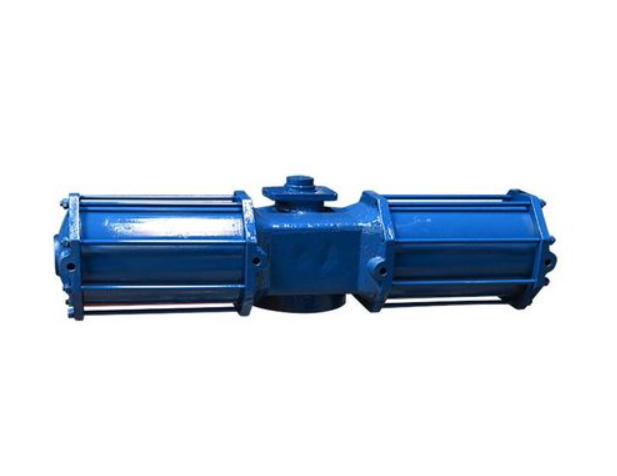
1. Heavy-Duty Pneumatic Scotch Yoke Actuators
Best for: Large quarter-turn valves (ball, butterfly, plug) in oil & gas, pipeline, and power generation.
| Feature | Benefit |
|---|---|
| High torque output | Delivers maximum torque at stroke ends — where it's needed most |
| Robust construction | Cast iron or ductile iron housing for extreme durability |
| Fail-safe options | Spring-return with high spring torque for emergency shutdown |
| High cycle life | Designed for continuous operation with minimal maintenance |
Typical Applications:
-
Pipeline isolation
-
Wellhead control
-
Refinery processes
-
Power plant cooling water
2. Heavy-Duty Electric Actuators
Best for: Continuous modulating service, remote locations, and applications without compressed air infrastructure.
| Feature | Benefit |
|---|---|
| Continuous duty (S1) | Operates indefinitely without overheating |
| High torque | Up to 10,000+ Nm with integrated gearboxes |
| Diagnostic capabilities | Torque monitoring, cycle counting, predictive maintenance |
| Communication protocols | Modbus, Profibus, Foundation Fieldbus, HART |
Typical Applications:
-
Control valve automation
-
Water/wastewater treatment
-
Power generation
-
Chemical processing
3. Heavy-Duty Hydraulic Actuators
Best for: Ultra-high torque requirements, subsea applications, and heavy industrial processes.
| Feature | Benefit |
|---|---|
| Extremely high force | Torque/thrust beyond pneumatic or electric capabilities |
| Precise control | Excellent for modulating service |
| Fail-safe | Accumulator-based spring-return |
| Subsea capability | Designed for deepwater installations |
Typical Applications:
-
Subsea Christmas trees
-
Large gate valves
-
Hydroelectric power
-
Steel mills
4. Heavy-Duty Rack and Pinion Actuators
Best for: High-cycle quarter-turn applications requiring compact footprint and reliable torque.
| Feature | Benefit |
|---|---|
| High cycle life | Designed for millions of cycles |
| Compact design | Smaller footprint than scotch yoke for equivalent torque |
| Corrosion resistant | Stainless steel or heavy-coated aluminum options |
| Modular design | Easy maintenance and accessory mounting |
Typical Applications:
-
Automated production lines
-
Packaging machinery
-
High-cycle testing
-
Marine and offshore
Key Considerations for Continuous Operation
1. Duty Cycle Classification
Understanding duty cycle ratings is essential for selecting actuators that match your operational demands.
| Duty Cycle | Definition | Typical Applications |
|---|---|---|
| S1 – Continuous duty | Operation at constant load for sufficient time to reach thermal equilibrium | Modulating control, continuous processes |
| S2 – Short-time duty | Operation at constant load for specified time, then idle | Intermittent isolation |
| S4 – Intermittent duty with starting | Repeated cycles of starting, running, and braking | Frequent cycling, automated lines |
| S5 – Intermittent duty with electric braking | Similar to S4 with additional braking | High-precision positioning |
For continuous industrial operation: Select actuators rated for S1 (electric) or high-cycle pneumatic designs with adequate thermal capacity.
2. Thermal Management
Continuous operation generates heat that must be managed to prevent premature failure.
| Actuator Type | Thermal Considerations |
|---|---|
| Electric | Motor temperature rise; enclosure cooling; duty cycle limitations |
| Pneumatic | Minimal heat generation; but cold environments may affect seals |
| Hydraulic | Fluid temperature management; cooling requirements for continuous service |
Best Practices:
-
Oversize electric actuators to reduce percentage of rated load
-
Provide adequate ventilation around actuators
-
Consider thermal switches for motor protection
-
Monitor housing temperature during commissioning
3. Mechanical Wear and Lifespan
Continuous operation accelerates mechanical wear. Heavy-duty actuators address this through:
| Feature | Benefit |
|---|---|
| Hardened gears | Resists wear under continuous cycling |
| Heavy-duty bearings | Supports high radial and axial loads |
| Replaceable wear components | Extends overall service life |
| High-grade seals | Maintains integrity over millions of cycles |
Expected Lifespan:
-
Heavy-duty pneumatic: 2–5 million cycles (or more) with proper maintenance
-
Heavy-duty electric: 1–3 million cycles or 15–20 years continuous service
-
Heavy-duty hydraulic: 10–20 years with fluid maintenance
4. Maintenance Accessibility
For continuous operations, maintenance must be performed without extended shutdowns.
| Design Feature | Benefit |
|---|---|
| Modular construction | Components can be replaced without disconnecting the valve |
| External adjustment | Limit switches, positioners adjustable without disassembly |
| Sight glasses | Visual indication of position without opening enclosure |
| Tool-free access | Quick access for routine inspection |
5. Redundancy and Fail-Safe
Critical continuous processes often require redundancy to prevent production loss.
| Redundancy Type | Application |
|---|---|
| Dual actuators | Parallel actuators on single valve |
| Battery backup | Electric actuators with UPS for power outages |
| Accumulator | Hydraulic actuators with stored energy |
| Spring-return | Pneumatic actuators with fail-safe positioning |

Application Examples by Industry
Oil & Gas
| Application | Actuator Type | Key Requirements |
|---|---|---|
| Pipeline isolation | Pneumatic scotch yoke | High torque, fail-safe, SIL certification |
| Gas compression | Electric or hydraulic | Continuous operation, remote monitoring |
| LNG terminals | Stainless steel scotch yoke | Low-temperature, corrosion resistance |
Power Generation
| Application | Actuator Type | Key Requirements |
|---|---|---|
| Boiler feedwater | Electric linear | Precise modulating, continuous duty |
| Cooling water | Pneumatic scotch yoke | Large valves, high cycle life |
| Steam isolation | Pneumatic with thermal protection | High temperature, fail-safe |
Chemical Processing
| Application | Actuator Type | Key Requirements |
|---|---|---|
| Reactor feed | Electric or hydraulic | Precise control, hazardous area |
| Transfer lines | Pneumatic rack and pinion | High cycle life, corrosion resistant |
| Emergency shutdown | Spring-return scotch yoke | SIL rating, fast response |
Water & Wastewater
| Application | Actuator Type | Key Requirements |
|---|---|---|
| Pump station | Electric multi-turn | Continuous duty, remote monitoring |
| Filter operation | Pneumatic rack and pinion | High cycle life, corrosion resistant |
| Chemical dosing | Electric modulating | Precise positioning, low maintenance |
Mining & Minerals
| Application | Actuator Type | Key Requirements |
|---|---|---|
| Slurry lines | Heavy-duty pneumatic | Abrasion resistance, high torque |
| Concentrator | Hydraulic | High force, dust protection |
Heavy-Duty Actuator Comparison
| Parameter | Pneumatic Scotch Yoke | Heavy-Duty Electric | Hydraulic | Heavy-Duty Rack & Pinion |
|---|---|---|---|---|
| Torque range | 1,000–500,000+ Nm | 100–10,000+ Nm | 5,000–1,000,000+ Nm | 100–10,000 Nm |
| Duty cycle capability | High-cycle | S1 continuous | Continuous | High-cycle |
| Speed | Fast | Moderate | Moderate | Fast |
| Precision | Good with positioner | Excellent | Excellent | Good with positioner |
| Fail-safe | Spring-return | Battery backup | Accumulator | Spring-return |
| Service life | 2–5M cycles | 15–20 years | 10–20 years | 1–3M cycles |
| Best application | Large quarter-turn valves | Modulating, remote | Ultra-high torque | High-cycle, compact |
Selection Criteria for Heavy-Duty Continuous Operation
1. Torque/Thrust Calculation
| Factor | Consideration |
|---|---|
| Break torque | Highest torque required to initiate movement |
| Running torque | Torque during travel |
| Seating torque | Torque required for tight shutoff |
| Safety margin | 20–30% for heavy-duty applications |
| Temperature effects | Derate for extreme temperatures |
2. Cycle Frequency
| Cycle Frequency | Actuator Recommendation |
|---|---|
| < 10 cycles/day | Standard heavy-duty suitable |
| 10–100 cycles/day | Heavy-duty with high-cycle components |
| 100–1,000 cycles/day | High-cycle design; consider pneumatic |
| > 1,000 cycles/day | Specialized high-cycle actuators; frequent maintenance |
3. Environmental Conditions
| Condition | Heavy-Duty Requirement |
|---|---|
| Outdoor | IP67/IP68, UV-resistant coatings |
| Corrosive | Stainless steel or heavy epoxy coating |
| Hazardous | ATEX/IECEx certified |
| High temperature | Thermal isolation, high-temp seals |
| Submerged | IP68, subsea-rated materials |
4. Control and Integration
| Requirement | Consideration |
|---|---|
| On/off control | Simple open/close; limit switches |
| Modulating control | Positioner or analog control (4–20 mA) |
| Network integration | Modbus, Profibus, Foundation Fieldbus, HART |
| Diagnostics | Torque monitoring, cycle counting, predictive alerts |
| SIL rating | For safety instrumented systems |
Maintenance Strategies for Continuous Operation
| Strategy | Description | Benefit |
|---|---|---|
| Predictive maintenance | Monitor torque trends, cycle counts, and temperature | Identifies issues before failure |
| Scheduled inspection | Regular visual inspection, seal checks, lubrication | Extends service life |
| Component replacement | Replace seals, lubricants, and wear parts on schedule | Prevents unplanned downtime |
| Spare parts inventory | Stock critical components (actuator, positioner, solenoids) | Minimizes repair time |
| Remote monitoring | Real-time status and alerts | Enables proactive response |
For assistance with heavy-duty actuator selection, sizing, or project specifications, feel free to reach out.
Ivan (Mobile:+86-18968769287)
WhatsApp:+86-13579991606
Wechat:+86-18968769287
Website:www.kinko-flow.com
ZHEJIANG KINKO FLUID EQUIPMENT CO.,LTD
