Custom Ball Valves for Special Industrial Applications: Engineering Beyond Standards
When Do You Need a Custom Ball Valve?
Not every project requires customization. But if you answer "yes" to any of the following questions, standard valves will likely compromise performance or safety:
-
Does your media contain suspended solids that cause standard valves to jam or wear rapidly?
-
Are you operating outside the standard temperature range of -20°F to 400°F?
-
Does your fluid require wetted materials not commonly stocked (e.g., Hastelloy, Monel, or Titanium)?
-
Do your pipeline dimensions or flange patterns fall outside ANSI, DIN, or JIS standards?
-
Is your cycle rate extremely high (e.g., 50+ actuations per hour) requiring reinforced stems and seats?
If any of these apply, a custom ball valve will deliver longer service life, lower maintenance costs, and safer operation than trying to retrofit a standard product.
Industries That Rely on Custom Ball Valves
1. Chemical Processing
Aggressive acids, solvents, and chlorinated compounds attack standard seals and bodies. Custom valves allow for exotic alloys (Hastelloy C276, Inconel) or fully lined designs (PFA, PTFE) with specialized seat materials.
2. Mining & Mineral Processing
Slurries containing sand, ore particles, or tailings cause rapid abrasion. Custom solutions include hardened trunnion ball valves with tungsten carbide coatings, replaceable seats, and flush ports for cleaning.
3. Oil & Gas (Upstream & Midstream)
Sour gas (H2S), high-pressure frac sand, and cryogenic LNG service all require specific material certifications (NACE MR0175) and design features not found on standard commercial valves.
4. Pharmaceutical & Biotech
Sanitary applications demand crevice-free designs, electropolished surfaces (Ra < 0.4µm), and complete drainability. Custom ball valves can integrate aseptic steam barriers and validation-ready serial numbers.
5. High-Purity Water (Semiconductor)
The microelectronics industry requires ultra-clean valves with minimal particle generation and extractables. Custom solutions often involve PVDF or PTFE bodies with specialty diaphragm actuators.
Customization Options Available
When requesting a custom ball valve, you can modify virtually every component. The table below outlines the most common engineering changes.
| Component | Standard Options | Custom Options |
|---|---|---|
| Body Material | Cast CF8M (316SS), WCB Carbon Steel | Duplex 2205, Hastelloy, Titanium, Monel, Zirconium |
| Lining / Coating | None / PTFE sleeve | PFA, FEP, UHMWPE, Tungsten Carbide, Ceramic |
| Ball Material | 316SS, Chrome-plated brass | Hardened 17-4PH, Stellite, Hastelloy, Ceramic |
| Seat Material | Virgin PTFE, RPTFE, PEEK | PEEK with carbon fiber, Polyimide (Vespel), Nylon |
| End Connections | Flanged (ANSI/DIN), Threaded (NPT/BSP) | Lug, Wafer, Clamp (Tri-clamp), Weld end, Grooved, Custom flange drilling |
| Port Size | Standard port, Full port | Reduced port (custom ratio), Oversized for slurry |
| Stem Design | Blowout-proof standard | Extended stem (for cold service), reinforced for high torque |
| Actuation Mounting | ISO 5211 pad | Custom bracket for non-standard actuators |
Engineering Considerations for Custom Ball Valves
Pressure & Temperature Combined Limits
Standard valves are rated for specific pressure-temperature combinations. Custom designs must be re-certified when either parameter changes. For example, a valve rated for 1000 psi at 100°F may only handle 400 psi at 600°F. Always provide both maximum pressure and maximum temperature simultaneously.
Fugitive Emissions Compliance
For chemical and oil & gas applications, custom valves can be designed to meet ISO 15848-1 or API 624 low-emission standards. This involves live-loaded stem packing, secondary O-ring backups, and certified leakage testing.
High-Cycle Applications
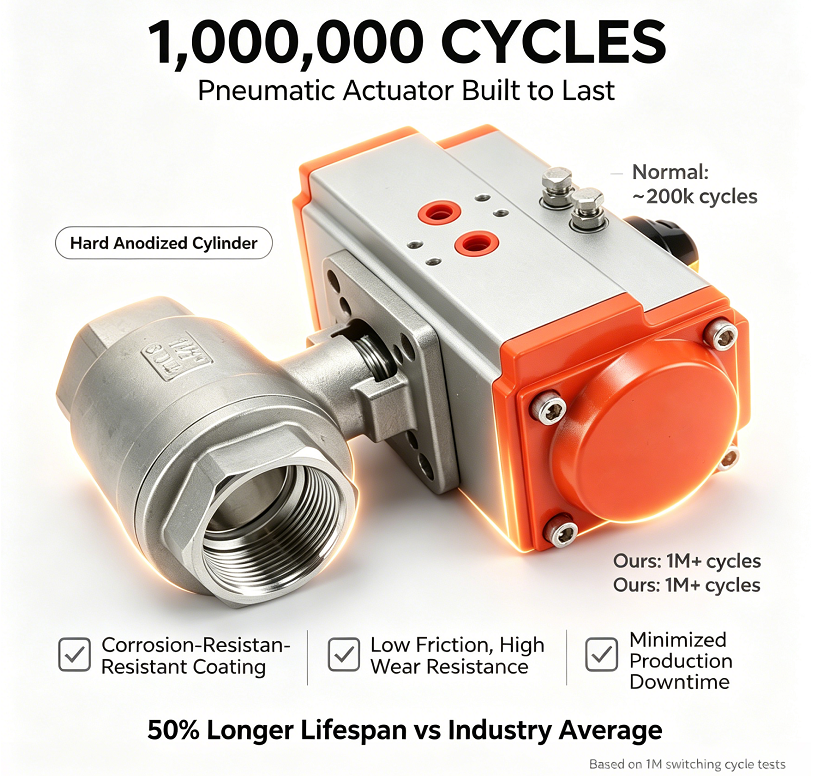
If your valve will cycle more than 100 times per day, standard PTFE seats will cold-flow and fail. Custom options include reinforced PEEK, Torlon, or metal-to-metal seating with lapped surfaces.
Abrasive Service Modifications
For sand, slurry, or catalyst handling, custom features include:
-
Hard chrome or tungsten carbide coating on ball and seat surfaces (65-72 HRC)
-
V-port or segmented ball for shear action on fibrous media
-
Flush ports to purge accumulated solids before valve closure
The Custom Sourcing Process: From RFQ to Delivery
Procuring custom ball valves requires a more detailed specification process than standard products. Follow this framework when contacting suppliers.
Step 1: Complete a Detailed Data Sheet
Provide the following information without ambiguity:
-
Fluid composition (including % solids, chlorides, pH, oxygen content)
-
Operating pressure (min, normal, max) and temperature (min, normal, max)
-
Required cycle life (number of operations before maintenance)
-
Applicable codes (ASME B16.34, API 6D, NACE, 3-A Sanitary, etc.)
Step 2: Request Material Certifications
For custom alloys, require:
-
Mill test reports (MTRs) with actual chemistry
-
Positive Material Identification (PMI) verification on finished parts
-
Impact testing (Charpy) for low-temperature service
Step 3: Approve a Drawing Before Production
Professional custom valve manufacturers will provide a certified dimensional drawing and cross-section for your approval. Verify:
-
Face-to-face dimensions (if mating to existing piping)
-
Bolt hole patterns and gasket surfaces
-
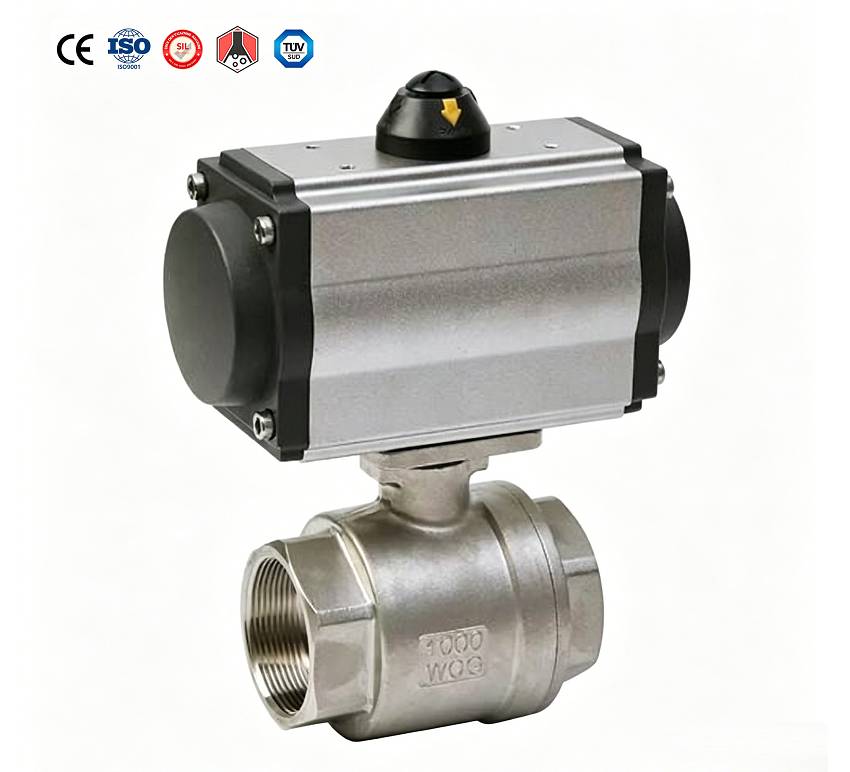
Actuator mounting height and clearance
Step 4: Witness Factory Acceptance Testing (FAT)
For critical or expensive custom valves (e.g., $10,000+ per unit), request to witness:
-
Hydrostatic shell test (1.5x rated pressure)
-
High-pressure seat test (1.1x rated pressure)
-
Low-pressure air seat test (80 psi)
-
Fugitive emissions sniff test (if applicable)
Cost vs. Value: The Business Case for Custom
Custom ball valves have higher upfront costs—typically 1.5x to 5x standard products. However, the total cost of ownership often justifies the investment.
| Scenario | Standard Valve Outcome | Custom Valve Outcome |
|---|---|---|
| Abrasive slurry (mining) | Seat failure in 2 weeks | 18 months of continuous service |
| High-temp acid (chemical) | Body corrosion, leak after 3 months | 5+ years with same alloy |
| Cryogenic (-300°F) | Standard seals crack, external leak | Certified low-temp operation, zero leaks |
| High-purity (pharma) | Batch contamination, product loss | Validated clean, meets FDA/USP Class VI |
In each case, the custom valve pays for itself through reduced downtime, avoided safety incidents, and extended replacement intervals.
How to Choose a Custom Ball Valve Manufacturer
Not all suppliers have the engineering capability for true customization. Look for these indicators:
-
In-house engineering team (not just sales representatives)
-
CNC machining capability for non-standard parts
-
Experience with your specific alloy or lining material
-
Willingness to produce a single prototype before full batch production
-
ISO 9001:2015 certification plus industry-specific certs (API, NACE, PED)
Avoid suppliers who simply "assemble" parts from third parties. True custom manufacturing requires direct control over casting, machining, and testing.
Ivan (Mobile:+86-18968769287)
WhatsApp:+86-13579991606
Wechat:+86-18968769287
Website: www.kinko-flow.com
ZHEJIANG KINKO FLUID EQUIPMENT CO.,LTD
