Can an Electric Actuator Kit Retrofit a Manual Ball Valve?
What Is an Electric Actuator Retrofit Kit?
An electric actuator retrofit kit typically includes:
-
Electric actuator (quarter-turn, 90° rotation)
-
Mounting bracket and hardware
-
ISO 5211 or custom drive coupling
-
Wiring harness or terminal box
-
Manual override (handwheel or hex key)
-
Optional position feedback and control board
The kit is designed to bolt onto the valve's top flange or stem, replacing manual operation with electric control while retaining the original valve body and internals.
When Retrofitting Makes Sense
Retrofitting a manual ball valve with an electric actuator is a practical solution when:
-
Budget is limited – replacing the entire valve assembly is more expensive than adding an actuator
-
Valve is in a difficult-to-reach location – remote operation eliminates manual access challenges
-
Valve is still in good condition – body, seats, and seals have plenty of service life left
-
Plant is upgrading to automation – gradual migration from manual to automated control
-
Process changes require faster response – manual operation is too slow for new requirements
-
Safety concerns – remote operation keeps operators away from hazardous areas
Key Compatibility Checks Before Retrofitting
Not every manual ball valve can be retrofitted. Verify these critical points:
| Check Point | What to Look For |
|---|---|
| Stem configuration | Square, flat, or keyed drive—must match actuator coupling |
| Mounting flange | ISO 5211 pattern (F03, F04, F05, F07) preferred; custom brackets available |
| Valve stem height | Must be within actuator output shaft engagement range |
| Torque requirement | Valve breakaway torque must not exceed actuator rated torque |
| Operating pressure | Higher pressure increases torque—verify at actual process conditions |
| Cycle frequency | Electric actuator duty cycle must match expected usage |
| Enclosure clearance | Actuator must physically fit above/alongside the valve with piping clearance |
| Temperature range | Actuator rated temperature must suit ambient and process heat |
If your manual valve lacks an ISO 5211 flange, you will need a custom bracket and coupling adapter—which adds cost and complexity but is still feasible.
Actuator Sizing for Retrofits
The most common mistake in retrofitting is undersizing the actuator. Manual ball valves often have higher breakaway torque than automated valves due to:
-
Older seals that have swollen or hardened
-
Infrequent operation causing static friction buildup
-
Process deposits on the ball surface
Always measure or obtain the valve's actual breakaway torque at operating pressure. A general rule: select an actuator with at least 1.5× the measured breakaway torque to ensure reliable operation over time.
Installation Process Overview
A typical retrofit installation follows these steps:
-
Remove the manual handle or gear operator
-
Install the mounting bracket onto the valve top flange (or bonnet)
-
Slide the drive coupling onto the valve stem
-
Attach the actuator to the bracket and secure it
-
Align the coupling with the actuator output shaft
-
Tighten all bolts to specified torque
-
Wire the actuator to power and control signals
-
Set travel limits (open/closed) per valve stroke
-
Perform test cycles to verify proper function
-
Label the valve and actuator for future identification
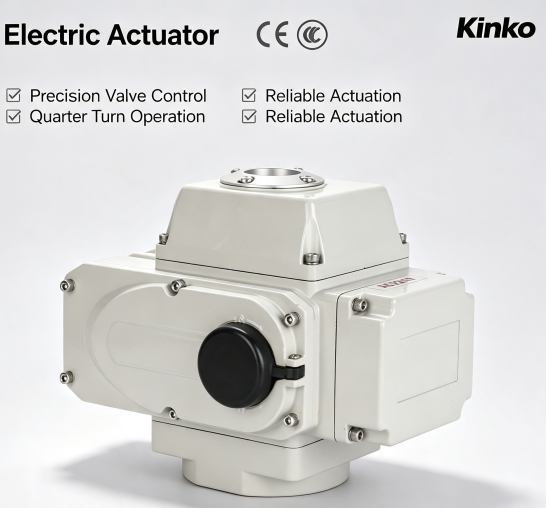
Manual Override – A Crucial Feature for Retrofits
When retrofitting, always choose an electric actuator with a manual override (handwheel or hex key). Why?
-
Power outages – actuator cannot operate without electricity
-
Control signal failure – override allows manual positioning
-
Commissioning – manual stroking during setup
-
Emergency – immediate closure without waiting for power restoration
-
Maintenance – safe positioning during service
Our KK Series electric actuators include a manual override as standard on most models—a feature that is especially valuable in retrofit applications where the original manual capability is being removed.
Common Retrofit Challenges and Solutions
| Challenge | Solution |
|---|---|
| No ISO 5211 mounting flange | Use a custom adapter bracket or mounting kit |
| Valve stem too short for coupling | Use a stem extension adaptor |
| Tight clearance above valve | Choose a compact actuator (e.g., KK Series with low profile) |
| High breakaway torque | Select next larger actuator size; replace older seals if possible |
| Existing valve has high cycle friction | Clean/regrease valve or replace seats if needed |
| Actuator rotation direction mismatch | Use reversible motor models or adjust limit settings |
| Electrical connection not available | Route cable from nearest panel; consider battery backup if intermittent |
Valve Types That Can Be Retrofitted
| Valve Type | Retrofit Feasibility | Notes |
|---|---|---|
| Manual ball valve (standard) | Excellent | Most common retrofit candidate |
| Manually operated butterfly valve | Good | Requires bracket; lower torque than ball valves |
| Plug valve | Moderate | May require higher torque; good for some services |
| Gate valve (multi-turn) | Not recommended | Requires multi-turn actuator; more complex retrofit |
| Globe valve (linear) | Not possible | Requires linear actuator, not quarter-turn |
Benefits of Retrofitting vs. Buying New Automated Valve
| Factor | Retrofit Existing Valve | Buy New Automated Valve |
|---|---|---|
| Cost | Lower (actuator + bracket only) | Higher (valve + actuator + assembly) |
| Lead time | Shorter (actuator in stock) | Longer (full assembly delivery) |
| Valve body condition | Existing—must be verified | New—no wear |
| Seal condition | Existing—may need replacement | New seals |
| Installation effort | Moderate (field fitment) | Lower (pre-assembled, tested) |
| Warranty | Actuator only | Full valve+actuator warranty |
| Standardization | May vary by valve brand | Consistent assembly |
Practical Example – Retrofitting a DN50 Manual Ball Valve
A common scenario: a plant has a DN50 stainless steel ball valve used for cooling water, manually operated twice per shift. The process now requires remote start/stop from a control room.
Retrofit solution:
-
Measured torque: 22 Nm breakaway, 14 Nm running
-
Selected actuator: KK-20 (20 Nm rated, with 1.5× safety margin)
-
Mounting: Custom bracket (valve does not have ISO 5211)
-
Coupling: Square drive adaptor
-
Control: 24V DC, On/Off with open/closed limit switches
-
Manual override: Handwheel included
-
Installation time: Approx. 2 hours by trained technician
Result: Reliable remote operation without replacing the valve—saving 70% compared to a full new automated valve assembly.
Frequently Asked Questions
Q1: Can any manual ball valve be retrofitted with an electric actuator?
Most quarter-turn manual valves can be retrofitted, provided the stem configuration and mounting can be adapted. Gate and globe valves require multi-turn actuators and are more complex.
Q2: Do I need to replace the valve seals before retrofitting?
Not necessarily—but if the valve is old or has been cycled frequently, replacing seats and seals before automation is good practice to ensure long-term reliability.
Q3: What if my valve has no mounting holes?
A clamp-on or strap-on bracket can be used for some designs, but a custom bracket is more common for permanent installations.
Q4: How do I know the torque requirement for my manual valve?
Check the valve datasheet or measure using a torque wrench during manual operation. Add a safety margin of 1.3–1.5× for actuator selection.
Q5: Can I use the same actuator for both open/close and modulating control?
Yes—if you select a modulating version of the actuator (0–10V or 4–20mA control). Our KK Series offers both On/Off and modulating versions.
Q6: Is a professional installation required?
While a skilled technician can install the kit, professional installation ensures proper alignment, torque settings, and electrical safety.
Retrofitting vs. Replacement – Decision Guide
| Consideration | Retrofit | Replace |
|---|---|---|
| Valve body condition | Good | Worn or damaged |
| Valve availability | Standard size | Obsolete or non-stock |
| Budget | Limited | Available |
| Time to implement | Urgent | Can wait for new assembly |
| Standardization | Not critical | Important for plant consistency |
| Long-term maintenance | Acceptable | Lower with new valve |
The KK Series Advantage for Retrofits
Our KK Series electric actuators are particularly well-suited for retrofit applications:
-
Wide torque range – KK-05 to KK-60 covers most manual ball valves
-
Multiple voltage options – 24V DC, 110V AC, 220V AC
-
ISO 5211 mounting – direct fit on flanged valves, or easy bracket adaptation
-
Manual override standard – retains manual capability after automation
-
Compact design – fits in tight spaces
-
Available On/Off or Modulating – flexible for different control needs
-
Feedback options – limit switches, potentiometer, or 4–20mA position feedback
Ivan (Mobile:+86-18968769287)
WhatsApp:+86-13579991606
Wechat:+86-18968769287
Website: www.kinko-flow.com
ZHEJIANG KINKO FLUID EQUIPMENT CO.,LTD
