Butterfly Valves for Wastewater Treatment Systems
Introduction: The Harsh Reality of Wastewater
Wastewater treatment is one of the most demanding environments for flow control equipment. Valves face:
-
Abrasive solids (sand, grit)
-
Corrosive chemicals (chlorine, ozone, ferric chloride)
-
Fibrous materials (rags, wipes)
-
Hydrogen sulfide gas (H2S – accelerates corrosion)
Butterfly valves are the industry standard for wastewater due to their compact design, cost-effectiveness, and reliable shutoff. However, selecting the wrong materials leads to rapid failure and unplanned downtime.
This guide covers butterfly valve selection for each stage of wastewater treatment, with specific recommendations for Kinko valves and AT/AW series actuators.
Part 1: Wastewater Treatment Stages & Valve Requirements
| Treatment Stage | Media | Key Challenge | Recommended Valve Type |
|---|---|---|---|
| Headworks (influent) | Raw sewage, sand, rags | Clogging, abrasion | Wafer, full lug, EPDM seat |
| Primary clarifier | Settled sludge, scum | Solids buildup | Lug type, removable for cleaning |
| Aeration basin | Mixed liquor, air | Frequent cycling | Pneumatic actuator (Kinko AT series) |
| Secondary clarifier | Activated sludge | Slow flow, solids | Large bore (12″+) |
| Disinfection | Chlorine, UV, ozone | Chemical corrosion | PTFE seat, corrosion-resistant disc |
| Effluent discharge | Treated water | Low pressure, large volume | Wafer or lug, EPDM seat |
Part 2: Material Selection for Wastewater
Disc Materials
| Disc Material | Corrosion Resistance | Abrasion Resistance | Best For |
|---|---|---|---|
| Ductile iron (coated) | Moderate | Moderate | Clean water, primary influent |
| 304 Stainless steel | Good | Moderate | Aeration, secondary treatment |
| 316 Stainless steel | Excellent | Good | Chlorine, chemical dosing |
| Super duplex | Excellent | Excellent | High chlorides, aggressive wastewater |
| Nylon-coated ductile | Good | Excellent | Abrasive sludge |
Kinko recommendation: 316 stainless steel disc for most wastewater applications. Super duplex for high-chloride or marine-adjacent plants.
Seat Materials
| Seat Material | Chemical Resistance | Temperature Range | Best For |
|---|---|---|---|
| EPDM | Good (water, dilute acids) | -20°C to +110°C | General wastewater, influent, effluent |
| NBR (nitrile) | Good (oils, grease) | -10°C to +100°C | Grease traps, oil-water separators |
| PTFE | Excellent (most chemicals) | -20°C to +180°C | Chemical dosing, chlorine |
| Viton (FKM) | Excellent (hydrocarbons, acids) | -15°C to +200°C | Aggressive chemicals |
Kinko recommendation: EPDM for 90% of wastewater lines. PTFE for chemical dosing stations. Viton for aggressive industrial waste.
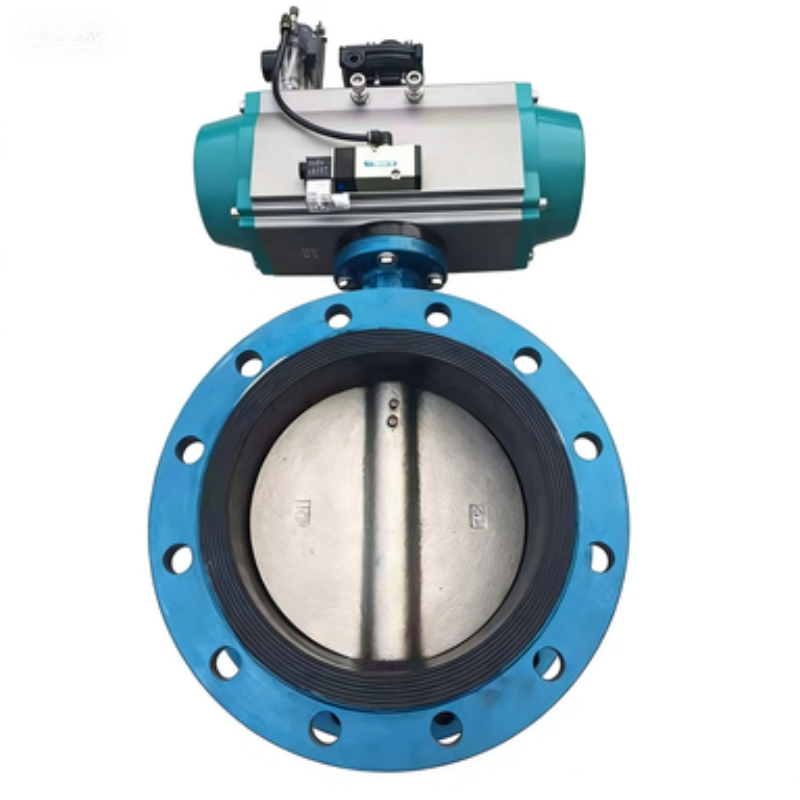
Body Materials
| Body Material | Standard | Best For |
|---|---|---|
| Cast iron (GGG40) | Most common | General wastewater, low cost |
| Ductile iron | Higher strength | Larger lines, higher pressure |
| Stainless steel | Corrosion-proof | Chemical dosing, marine environments |
Part 3: Common Wastewater Applications
1. Influent (Headworks)
Conditions: Raw sewage with sand, grit, rags, wipes.
Requirements:
-
Full lug type (allows removal of downstream piping for cleaning)
-
EPDM seat (resists abrasion and chemicals)
-
316 stainless steel disc
Recommended Kinko valve: Kinko lug type, DN100-DN600, 316 disc, EPDM seat.
Actuator recommendation: Kinko AT-DA pneumatic (double-acting) for frequent backwashing cycles.
2. Aeration Basin Air Lines
Conditions: Clean compressed air, continuous operation, high cycle counts.
Requirements:
-
Lightweight wafer design
-
Very high cycle life (valves open/close every few minutes)
-
Fast actuation speed
Recommended Kinko valve: Kinko wafer type, DN50-DN300, aluminum disc (lightweight), EPDM seat.
Actuator recommendation: Kinko AT series pneumatic (rack and pinion). Cycle life exceeding 500,000 cycles. Double-acting for air lines.
3. Sludge Lines (Primary and Secondary)
Conditions: Thick, abrasive, slow-moving sludge. High solids content.
Requirements:
-
Larger bore (reduce velocity and abrasion)
-
Full lug type for rodding access
-
Harder disc coating (nylon or ceramic)
Recommended Kinko valve: Kinko lug type, DN150-DN400, nylon-coated ductile iron disc, EPDM seat.
Actuator recommendation: Kinko AW series scotch yoke for high break torque. Sludge tends to solidify around the disc when stagnant.
4. Chemical Dosing (Chlorine, Ferric Chloride, Polymer)
Conditions: Highly corrosive chemicals, low flow rates, precise dosing.
Requirements:
-
PTFE seat (chemical resistance)
-
Stainless steel or super duplex disc
-
Modulating control for precise chemical feed
Recommended Kinko valve: Kinko wafer type, DN25-DN100, PTFE seat, 316 stainless steel disc.
Actuator recommendation: Kinko electric actuator with 4-20mA modulating control. For hazardous chlorine areas, use Kinko AT-SR with ATEX certification.
5. Effluent Discharge
Conditions: Clean treated water, low pressure, large diameters.
Requirements:
-
Low cost (clean service)
-
Wafer design acceptable
-
EPDM seat sufficient
Recommended Kinko valve: Kinko wafer type, DN200-DN800, ductile iron disc with nylon coating, EPDM seat.
Actuator recommendation: Kinko electric actuator (on/off) or Kinko AT pneumatic depending on control system preference.
Part 4: Actuator Selection for Wastewater
| Application | Duty Cycle | Recommended Actuator | Why |
|---|---|---|---|
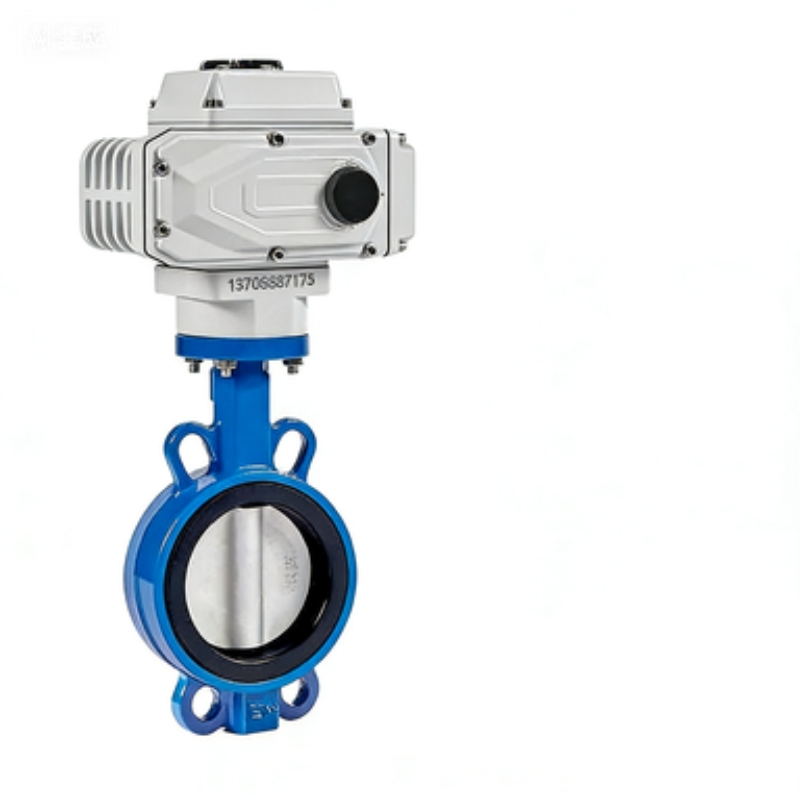
| Influent slide gate valve | Low (2-4 cycles/day) | Kinko electric (on/off) | No compressed air in headworks |
| Aeration air valve | High (100+ cycles/hour) | Kinko AT-DA pneumatic | Fast cycling, long life |
| Sludge line | Low, high break torque | Kinko AW series | Extra torque to break sludge |
| Chemical dosing | Continuous modulating | Kinko electric (4-20mA) | Precise position control |
| Effluent discharge | Low (4-8 cycles/day) | Kinko electric or AT-DA | Plant preference |
Special wastewater actuator features to specify:
-
IP67 or IP68 enclosure (flood-prone pits and manholes)
-
Corrosion-resistant coating (epoxy or nickel plating)
-
Manual override (for power outage or maintenance)
Part 5: Common Failure Modes in Wastewater
| Failure | Cause | Prevention |
|---|---|---|
| Seat tearing | Rags or wipes caught on disc edge | Install shredder at headworks; use full lug valves |
| Stem corrosion | H2S gas attack | Upgrade to 316 stainless or super duplex stem |
| Actuator failure in pits | Flooding, moisture ingress | Specify IP68 actuator (submersible) |
| Disc won't close | Sludge buildup on seat | Cycle valve weekly; install flush port |
| Bolt corrosion | Chloride attack on bolts | Use stainless steel flange bolts, not carbon |
Part 6: Kinko Wastewater Valve Packages
| Package | Valve | Actuator | Application |
|---|---|---|---|
| K-WW-AIR | Wafer, EPDM, DN50-DN300 | Kinko AT-DA pneumatic | Aeration basin air lines |
| K-WW-SLUDGE | Lug, nylon disc, DN150-DN400 | Kinko AW scotch yoke | Primary and secondary sludge |
| K-WW-CHEM | Wafer, PTFE seat, DN25-DN100 | Kinko electric (4-20mA) | Chemical dosing |
| K-WW-INFLUENT | Lug, 316 disc, DN100-DN600 | Kinko electric (on/off) | Headworks isolation |
| K-WW-SUB | Wafer, EPDM, all sizes | Kinko AT-DA (IP68) | Submerged pit service |
Part 7: Maintenance Schedule for Wastewater Valves
| Interval | Action |
|---|---|
| Weekly | Cycle all sludge line valves to prevent solids settling. |
| Monthly | Inspect stem seals for leakage. Check actuator bolts for tightness. |
| Quarterly | Lubricate stem (top and bottom). Inspect disc edge for wear. |
| Annually | Remove and inspect seat on critical valves. Replace if worn. |
| Every 2-3 years | Full valve overhaul: new seat, stem seals, bushings. |
For Kinko actuators in wastewater:
-
Monthly: Check air filter bowls (drain water).
-
Annually (AT series): Replace piston seals if cycle count exceeds 100,000.
-
Annually (AW series): Inspect scotch yoke bushing for wear.
Conclusion: Wastewater Demands the Right Valve
Wastewater treatment is unforgiving. The wrong butterfly valve fails within months. The right valve—with proper materials and actuator—runs for years with minimal maintenance.
Kinko recommendations by application:
| Application | Valve Body | Disc | Seat | Actuator |
|---|---|---|---|---|
| Influent | Lug | 316 SS | EPDM | Kinko electric or AT-DA |
| Aeration air | Wafer | Aluminum | EPDM | Kinko AT-DA |
| Sludge | Lug | Nylon-coated | EPDM | Kinko AW |
| Chemical dosing | Wafer | 316 SS | PTFE | Kinko electric (4-20mA) |
| Effluent | Wafer | Nylon-coated | EPDM | Kinko electric or AT-DA |
Ivan (Mobile:+86-18968769287)
WhatsApp:+86-13579991606
Wechat:+86-18968769287
Website: www.kinko-flow.com
ZHEJIANG KINKO FLUID EQUIPMENT CO.,LTD
