Ball Valves for Vacuum and Low-Pressure Systems
Most ball valve specifications focus on high pressure. But vacuum and low-pressure systems have their own unique demands – often more challenging than high-pressure service.
In vacuum, air leaks inward through seals, packing, and body joints. A tiny leak that means nothing at 100 psi can destroy vacuum in seconds.
At Kinko, we manufacture ball valves specifically rated for vacuum service. This guide covers sealing requirements, pressure ratings, and selection criteria.
Vacuum vs Low-Pressure: Definitions
| Pressure Range | Absolute Pressure | Typical Applications |
|---|---|---|
| Low pressure | 1 – 15 psig (above atmospheric) | Suction lines, gravity flow, fans |
| Atmospheric | 0 psig (14.7 psia) | Drain lines, vents |
| Rough vacuum | 760 – 1 torr | Vacuum distillation, filtration |
| Medium vacuum | 1 – 10⁻³ torr | Freeze drying, degassing |
| High vacuum | 10⁻³ – 10⁻⁷ torr | SEM chambers, thin film coating |
Note: For this guide, "vacuum" means rough vacuum (down to 1 torr). High vacuum requires specialized all-metal or bellows-sealed valves.
Why Vacuum Service Is Different
| Issue | High Pressure | Vacuum |
|---|---|---|
| Leak direction | Outward (visible, detectable) | Inward (invisible, hard to find) |
| Seal behavior | Pressure pushes seals tighter | Vacuum pulls seals away |
| Packing | Compressed by internal pressure | No pressure assist – relies on spring force |
| Testing | Hydrostatic (positive pressure) | Helium leak test (mass spectrometer) |
| Body porosity | Acceptable (sealed by pressure) | Unacceptable (air drawn through casting) |
Key insight: A valve that holds 1000 psi may fail completely in vacuum service.
Critical Requirements for Vacuum Ball Valves
1. Live-Loaded Stem Packing
Standard packing relies on internal pressure to seal. In vacuum, there is no pressure assist – packing must be constantly compressed by springs.
| Packing Type | Suitable for Vacuum? | Why |
|---|---|---|
| Standard PTFE (no spring) | No | No pressure assist → leaks |
| Live-loaded (Belleville springs) | Yes | Constant compression, even in vacuum |
| Graphite with spring | Yes (medium vacuum) | Higher temperature tolerance |
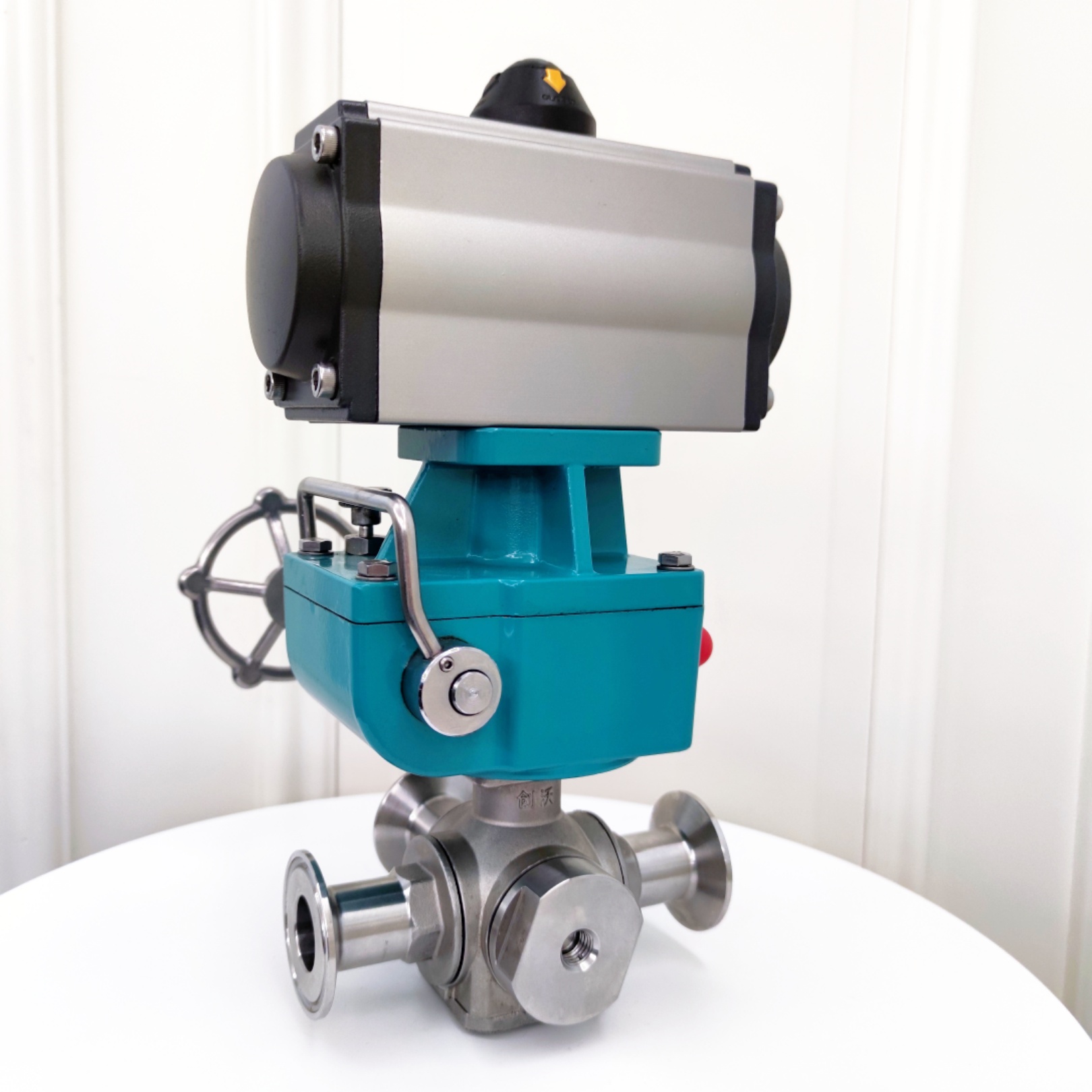
2. Two-Piece or Three-Piece Body Construction
One-piece (unibody) valves cannot be serviced and may have hidden porosity. For vacuum:
| Body Type | Vacuum Suitability |
|---|---|
| One-piece (unibody) | Poor – no access to inspect seals |
| Two-piece (threaded end) | Fair – limited access |
| Three-piece (bolted) | Best – full access, multiple seals |
3. Helium Leak Tested
Standard hydrostatic testing (water pressure) does not detect small vacuum leaks. Vacuum-rated valves require:
| Test Method | Detection Limit | Standard For |
|---|---|---|
| Hydrostatic (water) | >10⁻² mbar·L/s | General service |
| Air under water (bubble test) | ~10⁻³ mbar·L/s | Low vacuum |
| Helium mass spectrometer | 10⁻⁶ – 10⁻⁹ mbar·L/s | Medium to high vacuum |
Kinko offering: Helium leak testing available for vacuum-rated ball valves.
4. Forged Body (No Porosity)
Cast bodies can have microscopic porosity – invisible to the eye but a vacuum leak path. Forged bodies have dense, continuous grain structure – no porosity.
| Body Construction | Vacuum Suitability |
|---|---|
| Cast (CF8, CF8M) | Rough vacuum only (with special inspection) |
| Forged (F304, F316) | Medium vacuum capable |
| Bar stock (machined) | High vacuum capable |
5. Special Seat & Seal Materials
Standard PTFE can outgas in vacuum – releasing trapped air into the system.
| Seat Material | Outgassing Risk | Vacuum Suitability |
|---|---|---|
| Virgin PTFE | Medium | Rough vacuum only |
| PEEK | Low | Medium vacuum |
| Vespel (polyimide) | Very low | High vacuum |
| Metal seat (alloy) | None | Ultra-high vacuum |
Low-Pressure Systems (Above Atmospheric)
Low-pressure systems (1–15 psig) have different challenges: low driving force for flow and minimal sealing pressure.
Key Considerations for Low Pressure
| Issue | Implication | Solution |
|---|---|---|
| Low pressure drop margin | Even small ΔP reduces flow | Use full-port ball valves |
| Minimal seat sealing force | Seats may not deform to seal | Softer seat materials (PTFE) |
| Gravity flow risk | Solids settle in cavity | Install vertically (ball horizontal) |
| Small leaks are significant | 1 psig leak is 7% loss | Tight tolerance machining |
Low-Pressure Recommendation Table
| Pressure Range | Recommended Valve | Port Type | Seat Material |
|---|---|---|---|
| 1 – 5 psig | Full-port | Full-port | Soft PTFE |
| 5 – 15 psig | Full-port or reduced-port | Full-port preferred | PTFE or RTFE |
| 15 – 30 psig | Standard selection | As needed | PTFE |
Application-Specific Recommendations
| Application | Pressure | Recommended Valve | Key Feature |
|---|---|---|---|
| Vacuum distillation column | 10 – 100 torr | SS316, forged body | Helium leak tested |
| Suction side of pump | 5 – 14 psia (low absolute) | Full-port, SS316 | Minimize NPSH loss |
| Vacuum filter (slurry) | 100 – 500 torr | SS316, three-piece | Easy cleaning |
| Laboratory vacuum manifold | 1 – 760 torr | SS316, bar stock | Low outgassing |
| Freeze dryer | 0.1 – 1 torr | SS316L, electropolished | PEEK seats |
| Gravity flow drain | <5 psig | Full-port, any material | Low ΔP |
| Vacuum packaging machine | 50 – 200 torr | SS304 or SS316 | Fast cycle capability |
Kinko Vacuum-Rated Ball Valve Specifications
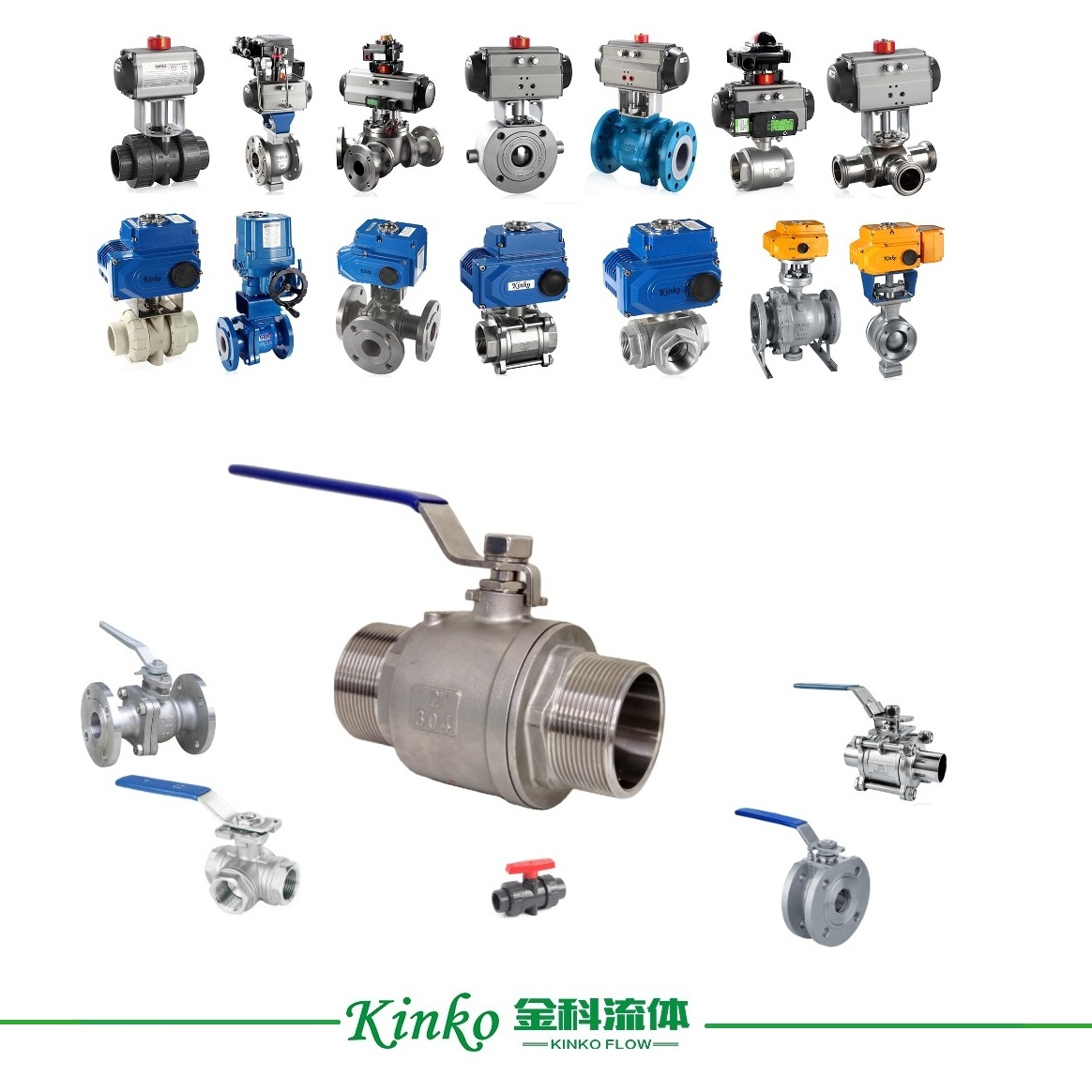
| Parameter | Kinko Vacuum Series (Model KVV-VAC) |
|---|---|
| Size range | 1/4" – 6" (DN8 – DN150) |
| Pressure range | Full vacuum (0 psia) to 150 psig |
| Vacuum rating | 10⁻⁵ torr (with PEEK seats) |
| Body material | Forged SS316L (standard), bar stock (optional) |
| Seat material | PTFE (rough vacuum), PEEK (medium vacuum) |
| Packing | Live-loaded PTFE with Belleville springs |
| Body construction | Three-piece (bolted) |
| Leak test | Helium mass spectrometer (1×10⁻⁶ mbar·L/s) |
| Surface finish | Standard (rough vacuum) or electropolished (medium vacuum) |
| Outgassing treatment | Ultrasonic cleaning + vacuum bake-out (optional) |
| End connections | Threaded, flanged, clamped (KF/NW), welded |
Common Mistakes to Avoid
| Mistake | Consequence | Correct Action |
|---|---|---|
| Standard valve in vacuum | Air leakage, lost vacuum | Specify vacuum-rated valve |
| Cast body in medium vacuum | Porosity leak | Use forged or bar stock |
| No live-loaded packing | Packing leaks inward | Specify spring-loaded packing |
| Hydrostatic test only | Missed vacuum leaks | Request helium leak test |
| Reduced-port in low pressure | Flow restriction, pressure drop | Use full-port |
| PTFE seats in high vacuum | Outgassing contamination | Use PEEK or metal seats |
Installation Tips for Vacuum Ball Valves
-
Orientation: Stem vertical (side ports horizontal) – reduces particle settling in body cavity
-
Piping alignment: Misalignment stresses body – use flexible coupling if needed
-
Gaskets: Use full-face metal or elastomer gaskets – no PTFE tape alone
-
Leak check: After installation, spray helium around seals while monitoring mass spectrometer
-
First cycle: Operate valve several times before applying full vacuum – seats seat better
When to Upgrade to Specialty Vacuum Valves
| Requirement | Standard Ball Valve | Specialty Valve Needed |
|---|---|---|
| Pressure <10⁻⁵ torr | No | All-metal gate or right-angle valve |
| Bake-out >200°C | No | Metal-seated, bellows-sealed |
| Ultra-clean (UHV) | No | Electropolished, welded bellows |
| Rapid cycling in vacuum | Limited | Pneumatic with vacuum-compatible actuator |
Ivan (Mobile:+86-18968769287)
WhatsApp:+86-13579991606
Wechat:+86-18968769287
Website: www.kinko-flow.com
ZHEJIANG KINKO FLUID EQUIPMENT CO.,LTD
