How Valve Positioners Affect Flow Regulation
How Valve Positioners Affect Flow Regulation
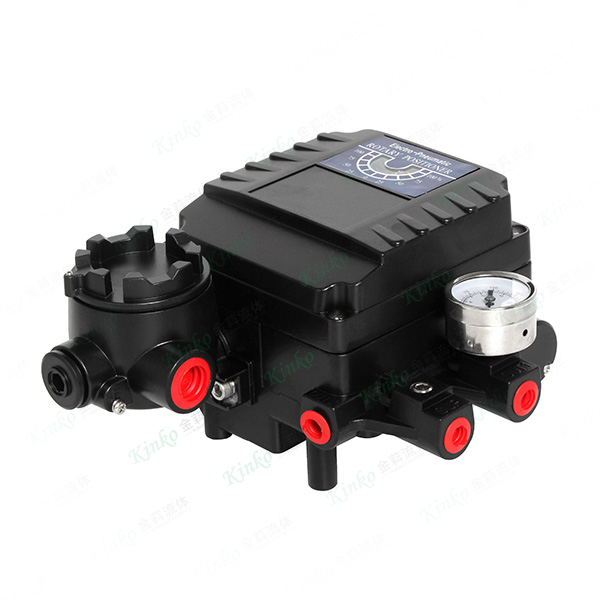
In process control, the valve positioner is the component that determines how accurately flow, pressure, or temperature follows the setpoint. Without a properly tuned positioner, even the best valve and actuator combination will exhibit lag, overshoot, and instability.
For control engineers and procurement professionals, understanding the relationship between positioner performance and flow regulation is essential for specifying the right device for modulating applications.
This article explains how positioners affect three critical aspects of flow regulation: precision, response time, and stability.
The Role of the Positioner in the Control Loop
A positioner compares the control signal (typically 4–20 mA from the DCS/PLC) with the valve stem's actual position and adjusts actuator pressure to eliminate any deviation.
Without a positioner:
-
Actuator pressure is applied directly, and valve position is determined by spring force versus process pressure.
-
Friction, hysteresis, and process pressure changes cause significant position error.
-
Flow regulation is coarse and unreliable.
With a positioner:
-
The valve position is continuously corrected to match the demanded setpoint.
-
Friction and process forces are actively compensated.
-
Flow regulation becomes precise, repeatable, and responsive.
1. Precision: Steady-State Accuracy
Precision refers to how closely the valve position matches the demanded setpoint under stable conditions.
How the positioner affects precision:
| Factor | Impact on Precision |
|---|---|
| Feedback resolution | Higher resolution feedback (analog or digital) allows finer position adjustments. |
| Deadband | Lower deadband reduces the "neutral zone" where the valve does not respond to small signal changes. |
| Linearity | A positioner with good linearity ensures the same signal change produces the same position change across the full stroke. |
| Hysteresis compensation | Advanced algorithms compensate for mechanical backlash and packing friction. |
Result: A well-tuned positioner holds the valve position within ±0.5–1% of the demanded setpoint, enabling tight process control.
2. Response Time: Dynamic Behavior
Response time is the speed at which the valve reaches a new position after a setpoint change.
How the positioner affects response time:
| Factor | Impact on Response |
|---|---|
| Pneumatic output flow | Higher flow capacity strokes the actuator faster. |
| Algorithm tuning | Aggressive tuning reduces overshoot but can cause oscillation; conservative tuning is slower but stable. |
| Gain settings | High gain speeds response but risks instability; low gain is slower but safer. |
| Boosters | External boosters amplify positioner output for large actuators, reducing stroke time significantly. |
Result: A positioner with appropriate tuning and flow capacity ensures the valve responds within the process time constant—critical for fast-changing loops like pressure control.
3. Stability: Avoiding Oscillation and Hunting
Stability refers to the valve's ability to maintain a steady position without continuous oscillation around the setpoint.
How the positioner affects stability:
| Factor | Impact on Stability |
|---|---|
| Damping settings | Prevents the valve from hunting due to signal noise or mechanical vibration. |
| Friction compensation | Overcompensating for high friction can cause stick-slip oscillation. |
| Supply pressure stability | Fluctuating instrument air pressure directly affects positioner output and stability. |
| Feedback linkage wear | Loose or worn feedback connections introduce play, causing continuous correction cycles. |
Result: A stable positioner maintains the valve at setpoint without hunting, reducing wear on the valve seat and actuator components.
Positioner Types and Their Impact on Flow Regulation
| Positioner Type | Precision | Response Time | Stability | Best For |
|---|---|---|---|---|
| Mechanical (Pneumatic) | Moderate | Moderate | Moderate | Simple loops, non-critical control |
| Analog (I/P) | Good | Moderate | Good | Standard 4–20 mA control |
| Smart (Digital) | Excellent | Fast | Excellent | Critical loops with diagnostics |
| High-gain / Boosted | Good | Very Fast | Moderate (tuning critical) | Fast-responding safety valves |
Tuning Considerations for Flow Regulation
Positioner tuning parameters significantly affect regulation performance. Key adjustments include:
-
Proportional gain: Higher gain increases response speed but can cause overshoot.
-
Integral time: Reduces steady-state error but increases settling time.
-
Derivative action: Anticipates error changes; useful for fast loops but noisy signals make it risky.
Best practice: Use the positioner's auto-tuning feature to establish baseline parameters, then fine-tune based on actual loop response.
Common Flow Regulation Issues and Positioner Solutions
| Problem | Likely Positioner-Related Cause | Remedy |
|---|---|---|
| Slow response to setpoint changes | Insufficient output flow capacity | Add a booster or increase supply pressure |
| Oscillation around setpoint | High gain or low damping | Reduce gain, increase damping setting |
| Offset between signal and position | Worn feedback linkage or zero drift | Re-calibrate and inspect mechanical linkage |
| Erratic movement under steady load | Supply pressure fluctuations | Stabilize instrument air pressure upstream |
| Hysteresis-induced error | Mechanical backlash or worn positioner | Use digital positioner with compensation |
Smart Positioner Advantages for Flow Regulation
Digital/smart positioners offer significant benefits over analog types:
-
Self-calibration: Automatic zero and span adjustment reduces commissioning time.
-
Diagnostic data: Stroke signature analysis detects wear, friction changes, and seat erosion before they affect regulation.
-
Adaptive tuning: Some models adjust tuning parameters in real-time based on process response.
-
Communication: HART or Profibus allows remote monitoring and parameter adjustment.
These features translate to tighter flow regulation, reduced maintenance downtime, and longer valve service life.
Ivan (Mobile:+86-18968769287)
WhatsApp:+86-13579991606
Wechat:+86-18968769287
Website:www.kinko-flow.com
ZHEJIANG KINKO FLUID EQUIPMENT CO.,LTD
