How Limit Switches Improve Valve System Safety
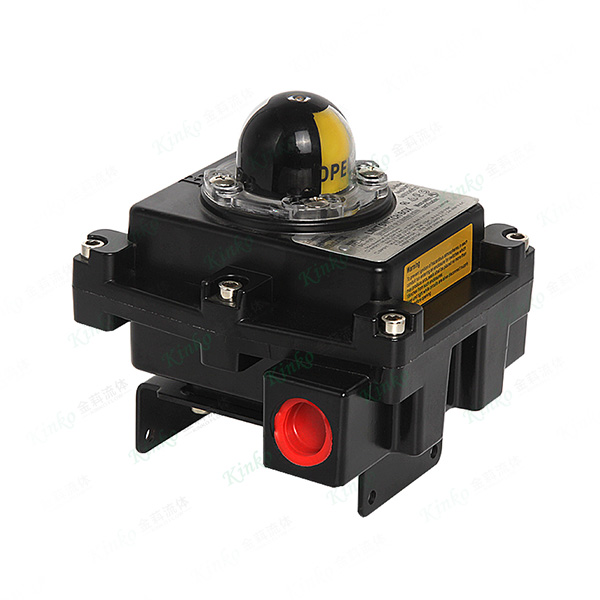
The Core Safety Functions
Limit switches improve safety through four primary mechanisms:
-
End-Position Confirmation: Verifies the valve is fully seated (closed) or fully unseated, preventing cavitation, seat wear, or over-travel.
-
Interlock Enablement: Prevents downstream equipment (e.g., pumps or compressors) from starting unless the valve confirms the correct position.
-
Fault Annunciation: Triggers alarms if the valve fails to reach its target position within a set time, alerting operators to jamming or actuator failure.
-
Maintenance Lockout: Provides visual and electrical confirmation that the valve is isolated before maintenance work begins.
Key Safety Features to Specify
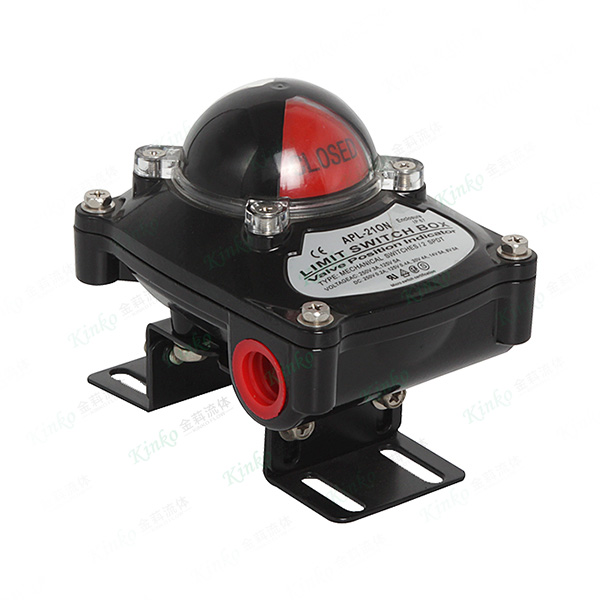
Not all limit switches offer the same protection level. Prioritize these features for safety-critical applications:
| Feature | Safety Benefit |
|---|---|
| Positive opening action | Mechanically forces contacts apart, preventing false "closed" signals even if internal parts weld or stick. |
| Redundant channels (dual switches) | Provides separate feedback paths for DCS and safety PLC, supporting SIL 1–3 architectures. |
| High ingress protection (IP67 / IP68) | Prevents water ingress that could short-circuit signals or cause silent failures. |
| Corrosion-resistant housing | Stainless steel housings resist offshore, chemical, or humid environments. |
| Ex-Protection (ATEX / IECEx) | Flameproof or intrinsically safe designs prevent ignition in explosive atmospheres. |
Common Hazards Mitigated
| Hazard | How the Limit Switch Helps |
|---|---|
| Valve fails to close during emergency shutdown | Triggers an alarm; operator initiates manual isolation. |
| Pump starts against a closed suction valve | Interlock prevents start unless valve confirms "open." |
| Over-torque damage to seat | Confirms seat contact; control system stops actuator force upon "closed" signal. |
| Process contamination due to valve leak-by | Dual verification confirms tight shut-off. |
Installation Best Practices
To maximize safety integrity:
-
Mount rigidly to prevent cam misalignment from vibration.
-
Segregate wiring from power cables to avoid induced false signals.
-
Schedule proof tests for SIL-rated installations—verify contact resistance and mechanical wear regularly.
-
Adjust cams properly to ensure sufficient dwell angle and avoid contact bounce.
Conclusion
The limit switch is a small component with an outsized impact on valve system safety. By specifying positive-opening mechanisms, redundant channels, and environmental protection appropriate to your site, you transform simple feedback into a robust safety barrier.
For procurement teams, this means fewer nuisance trips, faster fault diagnosis, and compliance with functional safety standards.
Ivan (Mobile:+86-18968769287)
WhatsApp:+86-13579991606
Wechat:+86-18968769287
Website: www.kinko-flow.com
ZHEJIANG KINKO FLUID EQUIPMENT CO.,LTD
