How to Properly Lubricate Pneumatic Angle Seat Valves
1. Do All Angle Seat Valves Need Lubrication?
| Valve Type | Lubrication Required | Notes |
|---|---|---|
| Kinko angle seat valve (standard) | Yes (on air supply side) | Piston seal requires clean, lubricated air |
| Valves with self‑lubricating seals | Minimal | PTFE seals have low friction but still benefit |
| Valves used with dry air (instrument air) | Yes — add lubricator | Dry air accelerates seal wear |
Bottom line: Even with PTFE seals, light, consistent lubrication of the pneumatic pilot air extends cycle life significantly.
2. What Needs Lubrication?
| Component | Lubrication Needed | Frequency |
|---|---|---|
| Piston seal (inside actuator) | Yes — via compressed air | Continuous (inline lubricator) |
| Piston cylinder wall | Yes — via compressed air | Continuous |
| Spring (inside actuator) | No — dry operation | Not required |
| Valve stem / spindle | No (sealed design) | Not required |
| PTFE seat seal | No | Self‑lubricating |
| Pilot solenoid valve | Yes (some models) | Check manufacturer spec |
Key point: For Kinko angle seat valves, lubrication is delivered through the compressed air supply — not by disassembling the valve.
3. Recommended Lubricants for Pneumatic Systems
| Lubricant Type | Viscosity | Compatibility | Recommended |
|---|---|---|---|
| ISO VG 32 (light) | 32 cSt @40°C | FKM, NBR, PTFE | ✅ Yes (Kinko standard) |
| ISO VG 46 (medium) | 46 cSt @40°C | FKM, NBR, PTFE | ⚠️ Only for high-cycle, hot ambient |
| Mineral oil (non‑detergent) | 32 cSt | FKM, NBR | ✅ Yes |
| Synthetic oil (PAO) | 32 cSt | All seals | ✅ Yes (best for wide temp range) |
| Food‑grade (H1) lubricant | 32 cSt | FKM, EPDM, PTFE | ✅ Yes for food/pharma applications |
| WD‑40 or penetrating oil | Very low | Unknown | ❌ No — evaporates, attracts dirt |
| Grease | N/A | — | ❌ No — will clog actuator |
Kinko recommendation: Use ISO VG 32 pneumatic tool oil or food‑grade H1 oil for sanitary applications.
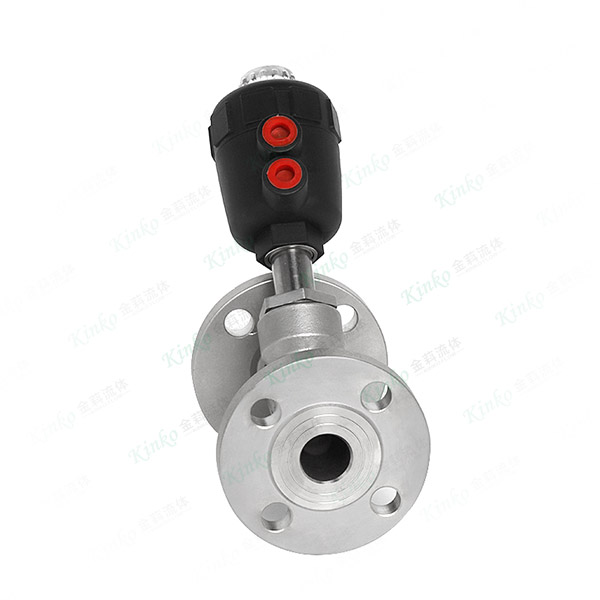
4. How to Lubricate – Methods
Method 1: Inline Air Lubricator (Recommended)
| Step | Action |
|---|---|
| 1 | Install an air lubricator in the compressed air line feeding the valve |
| 2 | Fill lubricator with ISO VG 32 oil |
| 3 | Set drip rate to 1–2 drops per minute (for continuous cycling) |
| 4 | For intermittent cycling: 1 drop per 100 cycles (adjust as needed) |
Pros: Automatic, consistent, no downtime.
Cons: Requires upfront installation.
Method 2: Manual Lubrication (Temporary / Field Service)
| Step | Action |
|---|---|
| 1 | Disconnect air supply |
| 2 | Apply 2–3 drops of ISO VG 32 oil directly into the pilot port |
| 3 | Reconnect air and cycle valve 5–10 times to distribute |
| 4 | Repeat monthly or as needed |
Pros: No lubricator needed.
Cons: Easy to over‑lubricate or forget.
Method 3: Pre‑lubricated Air (Central system)
| Step | Action |
|---|---|
| 1 | Inject oil at compressor or air receiver |
| 2 | All valves downstream receive lubrication automatically |
Pros: One central point, consistent.
Cons: Risk of over‑lubricating other components (e.g., cylinders, tools).
5. Lubrication Frequency Guide
| Operating Condition | Lubrication Method | Frequency |
|---|---|---|
| Continuous high cycle (≥100 cycles/min) | Inline lubricator | Continuous (1–2 drops/min) |
| Moderate cycle (10–60 cycles/min) | Inline lubricator | Continuous (1 drop/2–3 min) |
| Intermittent (few times per hour) | Manual | 5–10 drops every 3 months |
| Dry instrument air (no oil) | Inline lubricator mandatory | Continuous |
| Food/pharma sanitary | Inline lubricator (H1 oil) | Continuous |
6. Signs of Improper Lubrication
| Symptom | Cause | Solution |
|---|---|---|
| Valve cycles slowly | Too little lubrication | Add lubricator, increase oil |
| Valve sticks or fails to open | No lubrication, dry seal | Manual lube + install lubricator |
| Oil mist visible at exhaust | Over‑lubrication | Reduce drip rate |
| Seal swelling | Wrong oil type (incompatible) | Flush and switch to ISO VG 32 |
| Black residue at exhaust | Seal wear from no lube | Replace seals, add lubricator |
| Actuator leaking air | Piston seal dried/cracked | Replace seal, add lubricator going forward |
7. What About Food / Sanitary Applications?
In food, beverage, or pharmaceutical lines, standard lubricants are not allowed — they can contaminate product.
| Requirement | Solution |
|---|---|
| No oil contact with media | Use Kinko angle seat valve with PTFE seal (media stays separate) |
| Lubrication for actuator | Use food‑grade H1 (NSF) pneumatic oil |
| No lubricant at all | Possible but reduces cycle life — use dry running PTFE seals (Kinko option) |
Kinko offers: Dry‑running PTFE piston seals for oil‑free air systems (reduced cycle life — contact us for details).
8. What NOT to Do
| Don't | Why |
|---|---|
| Use grease or heavy oil | Clogs small air passages in pilot valve |
| Over‑lubricate | Oil mist enters downstream equipment, attracts dirt |
| Use WD‑40 or penetrating oil | Evaporates quickly, leaves sticky residue |
| Lubricate the valve body / stem | Not needed — sealed design |
| Ignore lubrication for months | Seal wears out prematurely |
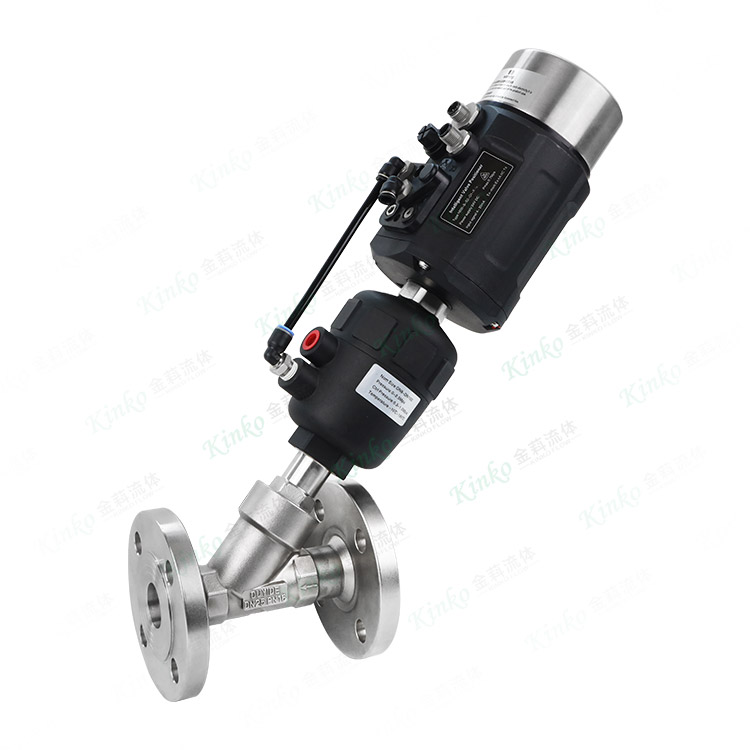
9. Quick Reference – Lubrication Checklist
| Check | OK? |
|---|---|
| Compressed air is clean and dry | ☐ |
| Inline lubricator installed (recommended) | ☐ |
| Lubricator filled with ISO VG 32 or H1 oil | ☐ |
| Drip rate set to 1–2 drops per minute (continuous cycle) | ☐ |
| For intermittent use: manual lube every 3 months | ☐ |
| No black residue at exhaust port | ☐ |
| Valve cycles smoothly without sticking | ☐ |
10. Summary – Key Takeaways
✅ Lubrication extends cycle life — up to 2x longer with proper lubrication
✅ Use ISO VG 32 pneumatic oil (or food‑grade H1 for sanitary)
✅ Best method: inline air lubricator with 1–2 drops/min
✅ Do not use grease, WD‑40, or heavy oils
✅ For dry / instrument air systems — lubricator is mandatory
✅ Signs of trouble: slow cycling, sticking, black exhaust residue
A well‑lubricated Kinko angle seat valve delivers millions of reliable cycles.
11. Need Maintenance Support or Spare Parts?
Kinko offers:
-
replacement seal kits (PTFE, FKM, EPDM, NBR)
-
complete actuator assemblies
-
inline lubricators (pneumatic accessories)
-
technical support for maintenance planning
Contact Kinko for spare parts or maintenance recommendations.
Ivan (Mobile:+86-18968769287)
WhatsApp:+86-13579991606
Wechat:+86-18968769287
Website:www.kinko-flow.com
ZHEJIANG KINKO FLUID EQUIPMENT CO.,LTD
