How Actuators Improve Automation Efficiency in Production Lines
The Role of Actuators in Production Automation
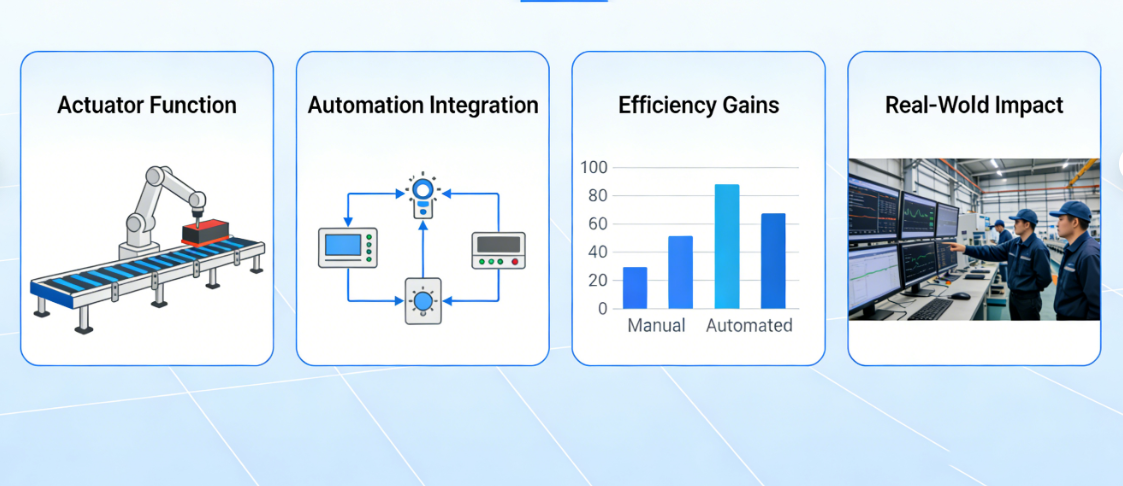
Actuators are the "muscles" of automated systems — converting control signals into physical motion that opens, closes, or modulates valves. Their performance directly affects:
| Factor | Impact on Efficiency |
|---|---|
| Cycle time | Faster actuation increases throughput |
| Position accuracy | Precise control reduces waste and rework |
| Reliability | Fewer failures mean less downtime |
| Energy consumption | Efficient actuators lower operating costs |
| Maintenance | Easy serviceability minimizes production interruptions |
1. Reducing Cycle Times
Faster valve operation translates directly to higher production throughput.
| Actuator Type | Typical Cycle Time | Efficiency Impact |
|---|---|---|
| Pneumatic rack and pinion | 0.5–2 seconds | Fastest for on/off applications |
| Pneumatic scotch yoke | 1–3 seconds | High torque with good speed |
| Electric on/off | 2–10 seconds | Moderate speed; programmable |
| Electric modulating | 5–30 seconds | Slower; optimized for precision |
Efficiency Tip:
-
For high-speed filling, packaging, or transfer lines, pneumatic actuators offer the fastest cycle times
-
Electric actuators with optimized speed settings can balance speed with precision
2. Enhancing Positioning Accuracy
Precise valve positioning reduces product waste, improves quality, and enables consistent results.
| Application | Accuracy Requirement | Efficiency Benefit |
|---|---|---|
| Batching/dosing | ±0.5–1% | Minimizes overfill and underfill |
| Blending | ±1–2% | Consistent product quality |
| Temperature control | ±1°C | Reduces energy waste |
| Pressure regulation | ±1–2% | Stable process conditions |
Efficiency Tip:
-
Use modulating electric actuators with position feedback for precision applications
-
For pneumatic, add digital positioners to achieve ±0.5–1% accuracy
3. Maximizing Uptime with Reliability
Unplanned downtime is the enemy of production efficiency. Reliable actuators keep lines running.
| Reliability Factor | Efficiency Impact |
|---|---|
| Mean time between failures (MTBF) | Longer MTBF = less downtime |
| Mean time to repair (MTTR) | Shorter MTTR = faster recovery |
| Predictable wear | Planned maintenance vs. emergency repairs |
Efficiency Tip:
-
Select actuators with proven reliability records for critical applications
-
Choose modular designs for faster repairs (component-level replacement)
-
Implement predictive maintenance using diagnostic data
4. Reducing Energy Consumption
Energy-efficient actuators lower operating costs and support sustainability goals.
| Efficiency Feature | Energy Saving |
|---|---|
| Electric over pneumatic | 50–70% energy cost reduction |
| Self-locking gear trains | Zero holding power |
| High-efficiency motors (IE3/IE4) | 5–15% motor efficiency gain |
| Optimized deadband | Reduces unnecessary cycling |
Efficiency Tip:
-
For continuous operation, electric actuators typically offer lower energy costs
-
For pneumatic systems, ensure compressed air is leak-free and properly regulated
5. Enabling Smart Automation
Modern actuators with communication capabilities integrate seamlessly into Industry 4.0 environments.
| Smart Feature | Efficiency Benefit |
|---|---|
| Position feedback | Real-time status monitoring |
| Torque/thrust monitoring | Predictive maintenance alerts |
| Cycle counting | Service interval planning |
| Communication protocols | Integration with PLC, SCADA, MES |
| Remote diagnostics | Faster troubleshooting |
Efficiency Tip:
-
Specify actuators with digital communication (Modbus, Profibus, HART) for centralized monitoring
-
Use diagnostic data to optimize maintenance schedules
6. Simplifying Installation and Commissioning
Fast installation and setup reduce time to production.
| Installation Factor | Efficiency Impact |
|---|---|
| Direct ISO 5211 mounting | Eliminates bracket fabrication |
| Pre-wired/pre-tubed | Reduces field labor |
| Factory pre-configuration | Minimal commissioning time |
| Plug-and-play connections | Faster installation |
Efficiency Tip:
-
Request factory configuration for critical parameters (limit switches, control signals)
-
Use pre-assembled actuator-valve packages to simplify procurement and installation
7. Improving Maintenance Efficiency
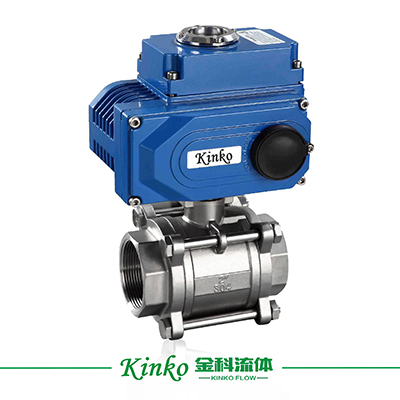
Maintenance efficiency directly impacts overall equipment effectiveness (OEE).
| Maintenance Feature | Efficiency Benefit |
|---|---|
| Modular design | Component replacement without actuator removal |
| Tool-free access | Faster service |
| Visual position indication | Quick status checks |
| Diagnostic LEDs | Immediate fault identification |
Efficiency Tip:
-
Standardize actuator models across production lines to simplify spare parts and training
-
Implement condition-based maintenance using actuator diagnostic data
Application Examples by Production Type
High-Speed Filling Lines
| Requirement | Recommended Actuator | Efficiency Impact |
|---|---|---|
| Fast cycle times | Pneumatic rack and pinion | 0.5–1 second cycle |
| Precise dosing | Electric modulating with feedback | ±0.5% accuracy |
| Washdown environment | Stainless steel, IP69K | No cleaning delays |
Batch Processing
| Requirement | Recommended Actuator | Efficiency Impact |
|---|---|---|
| Multiple ingredients | Electric with positioner | Consistent ratios |
| CIP/SIP compatibility | Stainless steel, high-temp seals | Reduced cleaning downtime |
| Recipe changes | Communication-enabled | Quick changeover |
Continuous Processing
| Requirement | Recommended Actuator | Efficiency Impact |
|---|---|---|
| 24/7 operation | S1 continuous duty electric | No duty cycle limitations |
| Remote monitoring | Modbus/Profibus communication | Centralized control |
| Predictive maintenance | Diagnostic capabilities | Planned interventions |
Efficiency Metrics to Track
| Metric | What It Measures | Target Improvement |
|---|---|---|
| Cycle time | Time per actuation | Reduce by 10–30% |
| OEE (Overall Equipment Effectiveness) | Availability × Performance × Quality | Increase by 5–15% |
| MTBF | Mean time between failures | Extend by 20–50% |
| MTTR | Mean time to repair | Reduce by 30–60% |
| Energy consumption | kWh per production unit | Reduce by 10–40% |
Actuator Selection for Production Efficiency
| Production Requirement | Recommended Actuator Type | Key Features |
|---|---|---|
| High-speed on/off | Pneumatic rack and pinion | Fast cycling, reliable |
| Precise modulating | Electric with positioner | Accuracy, repeatability |
| Continuous operation | Electric S1 duty | No duty cycle limits |
| Washdown environment | Stainless steel, IP69K | Cleaning compatibility |
| Remote monitoring | Smart electric with communication | Diagnostics, feedback |
| Retrofit/upgrade | Modular design | Future flexibility |
Efficiency Improvement Checklist
| Strategy | Action | ✓ |
|---|---|---|
| Cycle time optimization | Select fast actuators for high-speed lines | ☐ |
| Accuracy improvement | Use modulating actuators with feedback | ☐ |
| Reliability focus | Choose proven designs with high MTBF | ☐ |
| Energy reduction | Evaluate electric vs. pneumatic lifecycle | ☐ |
| Smart integration | Specify communication-enabled actuators | ☐ |
| Installation speed | Use pre-configured, direct mount units | ☐ |
| Maintenance efficiency | Standardize and modularize | ☐ |
| Performance monitoring | Track cycle times, MTBF, energy use | ☐ |
Final Thoughts
Actuators are more than just valve operators — they are critical drivers of production line efficiency. By selecting the right actuator type, optimizing cycle times, ensuring precision, and leveraging smart features, manufacturers can achieve significant gains in throughput, quality, and uptime.
Whether you're designing a new production line or upgrading existing automation, investing in high-performance actuators delivers measurable returns through improved efficiency and reduced operating costs.
At Kinko, we offer a comprehensive range of actuators designed for production line efficiency — including fast-cycling pneumatic rack and pinion actuators, precision electric actuators with communication capabilities, and stainless steel options for hygienic environments. Our team can help you select the right solution for your throughput and reliability goals.
For assistance with actuator selection for production line automation, feel free to reach out.
Ivan (Mobile:+86-18968769287)
WhatsApp:+86-13579991606
Wechat:+86-18968769287
Website: www.kinko-flow.com
ZHEJIANG KINKO FLUID EQUIPMENT CO.,LTD
