High-Temperature Butterfly Valves: Complete Guide
High-Temperature Butterfly Valves: Material Selection, Thermal Expansion, and Sealing Guide
Standard rubber-seated butterfly valves fail above 120°C (250°F). For high-temperature applications—steam lines, exhaust systems, heat recovery units, or molten salt loops—specialized materials and engineering are required.
This guide covers temperature ratings, material compatibility, thermal expansion compensation, and installation considerations for high-temperature butterfly valves up to 800°C (1470°F).
Temperature Classifications
| Class | Temperature Range | Typical Sealing Type |
|---|---|---|
| Low Temperature | -40°C to +120°C | EPDM, Viton, NBR |
| Medium Temperature | +120°C to +250°C | PTFE, RTFE, reinforced PTFE |
| High Temperature | +250°C to +450°C | Graphite, Metal seated (soft) |
| Extreme Temperature | +450°C to +800°C | Metal seated (hard), ceramic coated |
Seat Material vs. Maximum Temperature
Seat material is the primary limitation. Use this table for selection.
| Seat Material | Max Continuous Temp | Max Peak Temp | Media Suitability |
|---|---|---|---|
| EPDM | 120°C (250°F) | 130°C | Hot water, low-pressure steam |
| Viton (FKM) | 200°C (390°F) | 230°C | Oils, chemicals, medium steam |
| PTFE / Teflon | 230°C (450°F) | 260°C | Corrosive fluids, clean steam |
| Reinforced PTFE | 250°C (480°F) | 280°C | High-pressure steam, acids |
| Flexible Graphite | 450°C (840°F) | 500°C | Superheated steam, thermal oil |
| Metal Seated (SS316) | 650°C (1200°F) | 700°C | Exhaust gases, incineration |
| Metal Seated (Inconel) | 800°C (1470°F) | 850°C | Molten salt, extreme combustion |
Critical Note: PTFE softens under compression. At 230°C+ , metal-seated or graphite-seated valves are mandatory for reliable shut-off.
Body and Disc Material Selection
Thermal expansion differs by material. Mismatched materials cause binding or leakage.
| Component | Material | Max Temp | Thermal Expansion (µm/m·K) | Best For |
|---|---|---|---|---|
| Body | Ductile Iron | 350°C | 12 | Steam, thermal oil |
| Body | Cast Steel (WCB) | 425°C | 12 | Superheated steam |
| Body | Stainless Steel 316 | 650°C | 17 | Corrosive high-temp gases |
| Body | Inconel 625 | 800°C | 13 | Extreme chemical + heat |
| Disc | SS304 / SS316 | 650°C | 17 | General high-temp service |
| Disc | Duplex SS | 350°C | 13 | Thermal cycling resistance |
| Disc | Stellite-coated | 750°C | 14 | Abrasive hot gases |
| Stem | SS630 (17-4 PH) | 450°C | 11 | High strength at temp |
| Stem | Inconel 718 | 700°C | 13 | Extreme torque applications |
Metal-Seated vs. Graphite-Seated Comparison
For applications above 250°C, choose between these two technologies.
| Feature | Metal-Seated (Hard) | Flexible Graphite |
|---|---|---|
| Max Temperature | 650-800°C | 450°C |
| Shut-off Leakage Rate | Class IV – Class VI | Class V – Class VI |
| Pressure Rating | PN25 – PN40 | PN16 – PN25 |
| Torque Requirement | Higher (metal-to-metal friction) | Moderate |
| Abrasion Resistance | Excellent | Fair |
| Thermal Cycling Tolerance | Good (if lapped) | Excellent |
| Cost | High | Medium |
| Typical Applications | Exhaust, incineration, gas turbine | Superheated steam, thermal oil |
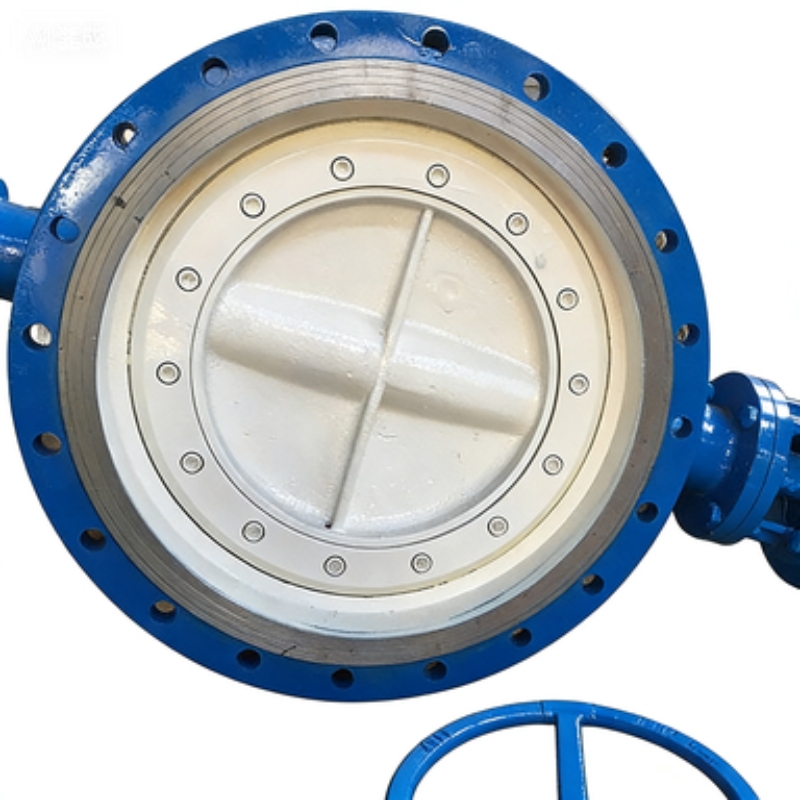
Thermal Expansion Compensation
At high temperatures, the disc expands radially and can contact the seat or body bore. Calculate clearance:
Approximate disc diameter increase formula:
ΔD = D × α × ΔT
Where:
-
ΔD = Diameter increase (mm)
-
D = Disc diameter (mm)
-
α = Thermal expansion coefficient (µm/m·K ÷ 1000)
-
ΔT = Temperature rise from ambient (°C)
Example: 200mm SS316 disc heated from 20°C to 500°C.
-
α for SS316 = 0.000017 m/m·K
-
ΔT = 480°C
-
ΔD = 200 × 0.000017 × 480 = 1.63 mm
Result: The disc expands by ~1.6mm. The valve body bore must accommodate this clearance without losing sealing. Metal-seated valves are factory-lapped at operating temperature.
Actuator Selection for High-Temperature Valves
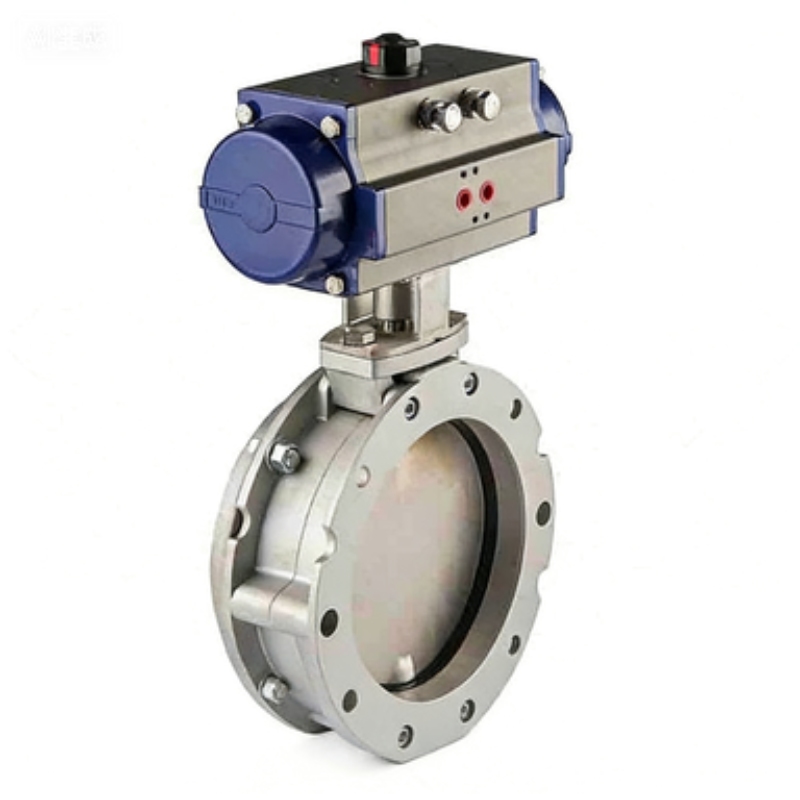
High temperatures affect actuator performance. Electric actuators overheat; pneumatic actuators require heat shielding.
| Actuator Type | Max Ambient Temp | High-Temp Adaptation | Recommended For |
|---|---|---|---|
| Electric (Standard) | 60°C | None | Not suitable for hot zones |
| Electric (High-temp) | 90°C | Heat sink, remote mounting | Limited high-temp |
| Pneumatic (Standard) | 80°C | None | Acceptable with shielding |
| Pneumatic + Heat Shield | 150°C | Radiation shield, extended bracket | Steam lines, exhaust |
| Pneumatic Remote Mount | 300°C+ | 300mm+ stem extension | Furnaces, incinerators |
Stem Extension Requirement
For valve body temperatures above 200°C, install a stem extension (50mm to 300mm) to:
-
Protect actuator seals and grease
-
Allow heat dissipation before reaching actuator
-
Provide clearance for insulation wrapping
| Valve Body Temp | Recommended Stem Extension Length |
|---|---|
| 200°C – 300°C | 50mm – 100mm |
| 300°C – 450°C | 100mm – 200mm |
| 450°C – 650°C | 200mm – 300mm |
| 650°C+ | Consult engineering |
Pressure-Temperature Rating Table (PN16 – SS316 Body)
Maximum allowable pressure decreases as temperature increases.
| Temp (°C) | PN16 – Max Pressure (Bar) | PN25 – Max Pressure (Bar) | PN40 – Max Pressure (Bar) |
|---|---|---|---|
| 20°C | 16.0 | 25.0 | 40.0 |
| 100°C | 14.5 | 22.5 | 36.0 |
| 200°C | 12.8 | 20.0 | 32.0 |
| 300°C | 11.0 | 17.5 | 28.0 |
| 400°C | 9.0 | 14.5 | 23.0 |
| 500°C | 6.5 | 10.5 | 17.0 |
| 600°C | 4.0 | 6.5 | 10.5 |
Warning: Do not exceed de-rated pressure at elevated temperatures. Valve failure becomes sudden and catastrophic.
Installation Best Practices
-
Allow Thermal Expansion Room: Do not bolt flanges rigidly without gasket compression limits. Use expansion joints nearby.
-
Disc Position at Startup: Keep disc partially open (15-20°) during heat-up to allow even thermal expansion.
-
Insulation Clearance: Do not insulate the valve body top – leave space for stem cooling and actuator mounting bracket.
-
Bolt Torque at Cold: Retorque flange bolts after first heat cycle (bolts relax). Use Belleville washers to maintain load.
-
Orientation: Avoid horizontal installation with actuator above if media is condensing – condensate drips into hot bushing causing seizure.
Application Quick Reference
| Industry | Application | Temp Range | Recommended Seating |
|---|---|---|---|
| Power Generation | Superheated steam bypass | 350-550°C | Metal-seated, Inconel disc |
| Steel Mills | Exhaust gas damper | 400-650°C | Metal-seated, Stellite-coated |
| Chemical Plants | Thermal fluid (Dowtherm) | 300-400°C | Flexible graphite |
| Food Processing | Superheated steam sterilization | 150-200°C | PTFE / Reinforced PTFE |
| Incineration | Flue gas isolation | 500-800°C | Ceramic coated, metal-seated |
| Solar Thermal | Molten salt | 400-600°C | Inconel body, metal-seated |
Troubleshooting High-Temperature Valves
| Problem | Likely Cause | Solution |
|---|---|---|
| Valve sticks after heat-up | No thermal clearance | Increase body bore clearance, check disc-to-body gap |
| Leakage at stem | Graphite packing compressed | Repack with high-density graphite rings |
| Actuator fails | Heat conducted up stem | Install stem extension, add heat shield |
| Disc warped | Exceeded max temperature rating | Upgrade to higher-grade alloy (Inconel) |
| Seating leak | Metal seat worn from debris | Lap seat and disc; install upstream strainer |
Ivan (Mobile:+86-18968769287)
WhatsApp:+86-13579991606
Wechat:+86-18968769287
Website:www.kinko-flow.com
ZHEJIANG KINKO FLUID EQUIPMENT CO.,LTD
