High-Temperature Angle Seat Valves: Complete Guide
What Is a High-Temperature Angle Seat Valve?
A high-temperature angle seat valve is designed to handle media temperatures above 180°C (356°F). Key differences from standard valves include:
| Feature | Standard Valve | High-Temperature Valve |
|---|---|---|
| Maximum temperature | 180°C (PTFE seal) | 230°C – 300°C |
| Seal material | PTFE | PEEK, PI, metal |
| Bonnet design | Standard length | Extended (thermal spacer) |
| Actuator protection | None | Heat shield or remote mounting |
| Stem seal material | PTFE | Graphite or high-temp PTFE |
Temperature Limits by Component
Seal Material Temperature Limits
| Seal Material | Maximum Continuous Temperature | Suitable For |
|---|---|---|
| PTFE (standard) | 180°C (356°F) | Saturated steam, hot water |
| Reinforced PTFE | 200°C (392°F) | Superheated steam (low pressure) |
| PEEK | 250°C (482°F) | Thermal oil, superheated steam |
| PI (Polyimide) | 280°C (536°F) | High-temperature gas, thermal oil |
| Metal seal (stainless steel) | 300°C+ (572°F+) | Extreme high temperature |
Body Material Temperature Limits
| Body Material | Maximum Temperature | Notes |
|---|---|---|
| Stainless steel 304 | 400°C (752°F) | Limited by seal, not body |
| Stainless steel 316 | 400°C (752°F) | Limited by seal, not body |
| Carbon steel | 400°C (752°F) | Rare for angle seat valves |
Note: The valve body can handle much higher temperatures than the seals. The limiting factor is always the seal material.
Actuator Temperature Limits
| Actuator Type | Maximum Ambient Temperature | Notes |
|---|---|---|
| Standard aluminum actuator | 60°C (140°F) | Requires heat protection above this |
| High-temp actuator (special seals) | 80°C (176°F) | Limited availability |
| Remote mounted actuator | Unlimited | Actuator away from heat source |
Key Design Features for High-Temperature Service
Feature 1: Extended Bonnet (Thermal Spacer)
An extended bonnet is a lengthened stem housing that increases the distance between the hot valve body and the actuator.
| Bonnet Length | Temperature Reduction | Application |
|---|---|---|
| Standard (no extension) | 0°C drop | Media up to 180°C |
| 50mm extension | 30–40°C drop | Media up to 220°C |
| 100mm extension | 60–80°C drop | Media up to 260°C |
| 150mm extension | 90–120°C drop | Media up to 300°C |
How it works: Heat travels up the stem. The longer bonnet provides more surface area for heat dissipation to the atmosphere before reaching the actuator.
Feature 2: High-Temperature Stem Seals
Standard PTFE stem seals soften at high temperatures. High-temperature valves use alternative materials.
| Stem Seal Material | Maximum Temperature | Characteristics |
|---|---|---|
| PTFE (standard) | 180°C | Low friction, good sealing |
| High-temp PTFE (filled) | 220°C | Reinforced with glass or carbon |
| Graphite | 400°C | Excellent high-temp stability, requires higher actuation force |
| Flexible graphite | 450°C | Good sealing, used in steam service |
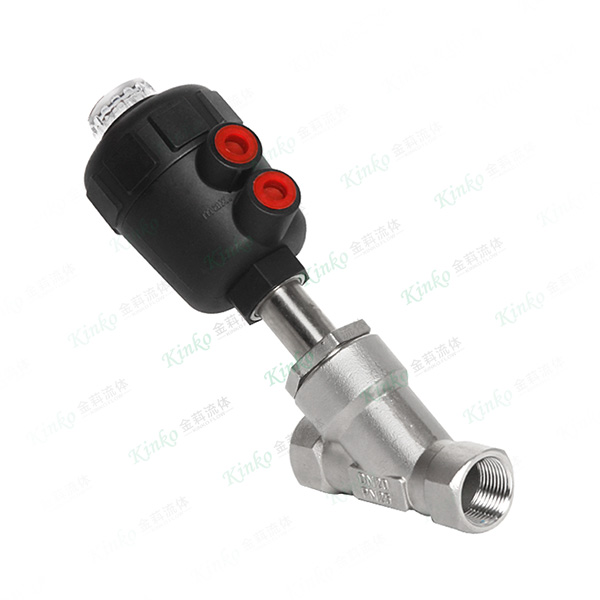
Feature 3: Heat Shield
A heat shield is a physical barrier between the valve body and actuator.
| Heat Shield Type | Temperature Reduction | Best For |
|---|---|---|
| Aluminum radiation shield | 20–30°C | Moderate high-temperature |
| Ceramic fiber blanket | 50–70°C | Extreme high-temperature |
| Stainless steel shield with air gap | 30–40°C | Steam and thermal oil |
Feature 4: Remote Actuator Mounting
For the highest temperatures, mount the actuator away from the valve and connect with an extended stem or linkage.
| Remote Mounting Method | Maximum Valve Temperature | Complexity |
|---|---|---|
| Extended stem (rigid coupling) | 300°C | Moderate |
| Mechanical linkage (levers) | 350°C | High |
| Pneumatic signal (pilot-operated) | Unlimited | Low (use separate pilot valve) |
High-Temperature Seal Materials Compared
| Material | Max Temp | Pressure Rating | Wear Resistance | Cost | Best Application |
|---|---|---|---|---|---|
| PTFE | 180°C | 16 bar | Moderate | Low | Saturated steam |
| Reinforced PTFE | 200°C | 16 bar | Good | Low-Medium | Superheated steam (low pressure) |
| PEEK | 250°C | 16 bar | Excellent | Medium | Thermal oil, high-pressure steam |
| PI | 280°C | 10 bar | Excellent | High | Extreme gas, special applications |
| Metal (SS) | 300°C+ | 25 bar+ | Very high | Very High | Critical high-temp isolation |
Application-Specific Guidelines
Superheated Steam
Superheated steam exceeds 180°C and contains no liquid water. It is more aggressive to seals than saturated steam.
| Steam Temperature | Recommended Seal | Bonnet Requirement |
|---|---|---|
| 180°C – 200°C | Reinforced PTFE | 50mm extension |
| 200°C – 230°C | PEEK | 100mm extension |
| 230°C – 250°C | PEEK or PI | 100mm extension + heat shield |
| Above 250°C | Consult Kinko | Remote actuator |
Special considerations for superheated steam:
| Issue | Solution |
|---|---|
| No lubrication (dry steam) | Use graphite stem seals |
| Thermal shock | Warm up valve slowly before full flow |
| Seal hardening | Replace seals more frequently (every 200k–300k cycles) |
Thermal Oil (Heat Transfer Fluid)
Thermal oil operates at 200°C – 350°C and is used in chemical, plastic, and food processing.
| Oil Temperature | Recommended Seal | Bonnet Requirement |
|---|---|---|
| 200°C – 230°C | Reinforced PTFE or PEEK | 50–100mm extension |
| 230°C – 280°C | PEEK | 100mm extension + heat shield |
| 280°C – 320°C | PI or metal seal | Remote actuator recommended |
Special considerations for thermal oil:
| Issue | Solution |
|---|---|
| Oil coking on stem | Use polished stem; extend bonnet to cool |
| Seal swelling | Use PEEK (resists oil absorption) |
| Fire risk | Use metal seal for highest safety |
Hot Gas (Air, Nitrogen, Exhaust)
Hot gases are less damaging to seals than steam or oil but require similar temperature considerations.
| Gas Temperature | Recommended Seal | Notes |
|---|---|---|
| 180°C – 250°C | PEEK | Dry gas may need external stem lubrication |
| 250°C – 300°C | PI or metal seal | Consider remote actuator |
| Above 300°C | Metal seal | Special order; consult Kinko |
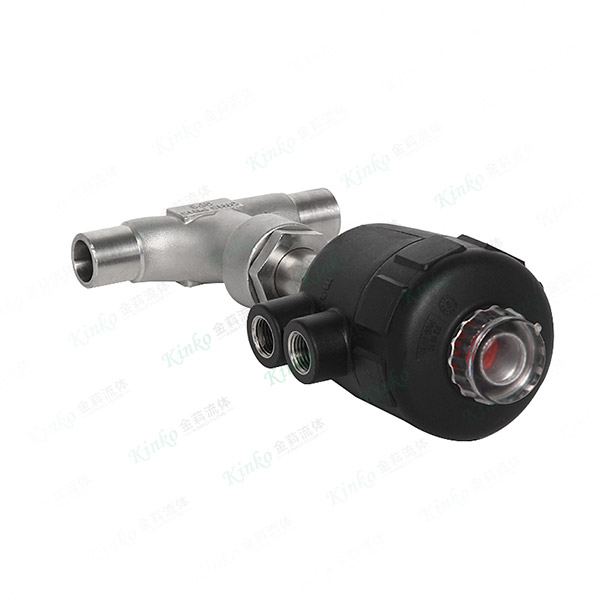
Technical Specifications: Kinko High-Temperature Angle Seat Valves
| Parameter | Standard High-Temp | Extreme High-Temp |
|---|---|---|
| Body material | SS316 | SS316 |
| Seat seal material | Reinforced PTFE or PEEK | PI or metal |
| Maximum temperature | 200°C – 250°C | 250°C – 300°C+ |
| Maximum pressure | 16 bar (DN15–50) | 10–16 bar |
| Bonnet type | Extended (50–100mm) | Extended (100–150mm) + heat shield |
| Stem seal | High-temp PTFE or graphite | Graphite or flexible graphite |
| Actuator | Standard aluminum with heat shield | Remote mounted |
| End connections | Threaded, flanged | Threaded, flanged |
| Sizes available | DN15 – DN80 | DN15 – DN50 |
Selection Guide for High-Temperature Service
| Question | Answer | Recommendation |
|---|---|---|
| What is the maximum media temperature? | 180°C – 200°C | Reinforced PTFE + 50mm bonnet |
| What is the maximum media temperature? | 200°C – 250°C | PEEK + 100mm bonnet + heat shield |
| What is the maximum media temperature? | 250°C – 300°C | PI or metal seal + remote actuator |
| Is the media steam? | Yes | Use graphite stem seals |
| Is the media thermal oil? | Yes | Use PEEK seal; extended bonnet |
| Is the media dry gas? | Yes | Add external stem lubrication port |
| Is cycling frequency high (>10 cycles/min)? | Yes | Choose PEEK or metal seal (more wear resistant) |
| Is fail-safe required? | Yes | Ensure actuator spring is rated for high-temp (special alloy) |
Installation Tips for High-Temperature Valves
| Recommendation | Reason |
|---|---|
| Install with actuator vertical or horizontal (not pointing down) | Prevents heat rising directly into actuator |
| Allow warm-up time (10–15 minutes) | Prevents thermal shock to seals |
| Use thermal paste on stem threads | Improves heat dissipation |
| Install heat shield between body and actuator | Reduces radiant heat transfer |
| Consider remote actuator mounting above 250°C | Protects actuator seals and lubricants |
| Use flexible stainless steel tubing for pilot air | Allows vibration and thermal expansion |
| Insulate valve body only (not bonnet) | Bonnet needs to dissipate heat |
Comparison: Standard vs. High-Temperature Angle Seat Valves
| Feature | Standard Valve | High-Temperature Valve |
|---|---|---|
| Maximum media temperature | 180°C | 250°C – 300°C |
| Seat seal | PTFE | PEEK, PI, or metal |
| Stem seal | PTFE | Graphite or high-temp PTFE |
| Bonnet | Standard | Extended (50–150mm) |
| Heat shield | Not included | Included above 200°C |
| Actuator mounting | Direct | Remote (above 250°C) |
| Cost (relative) | 1.0x | 1.5x – 3.0x |
| Maintenance interval | Standard | 40–50% shorter |
| Typical applications | Saturated steam, hot water | Superheated steam, thermal oil |
Why Kinko for High-Temperature Angle Seat Valves?
Kinko high-temperature angle seat valves are engineered for demanding thermal applications:
-
PEEK and PI seals tested at 250°C continuous
-
Extended bonnets up to 150mm for heat dissipation
-
Graphite stem seals for dry steam and gas
-
Heat shields included for applications above 200°C
-
Material certifications available for high-temperature service
Conclusion
High-temperature angle seat valves extend the range of reliable actuation from 180°C to over 300°C.
| Temperature Range | Recommended Configuration |
|---|---|
| 180°C – 200°C | Reinforced PTFE + 50mm extended bonnet |
| 200°C – 250°C | PEEK seal + 100mm bonnet + heat shield |
| 250°C – 300°C | PI or metal seal + remote actuator |
For superheated steam, thermal oil, or hot gas applications above 180°C, a properly specified high-temperature angle seat valve delivers reliable, long-term service.
Need a valve for high-temperature service? Contact Kinko with your media, temperature, pressure, and cycle rate. We will recommend the optimal seal, bonnet, and actuator configuration.
FAQ: High-Temperature Angle Seat Valves
Q: Can I use a standard PTFE-sealed valve for superheated steam?
A: No. Standard PTFE softens above 180°C. Use reinforced PTFE (200°C) .
Q: How do I know if I need an extended bonnet?
A: If media temperature exceeds 180°C, always use an extended bonnet. Measure actuator body temperature during operation—it should stay below 60°C.
Q: What happens to the actuator at high temperatures?
A: Actuator seals soften, lubricants evaporate, and springs lose force. Above 200°C media temperature, use a heat shield or remote mounting.
Q: Can I use a high-temperature valve for cold media as well?
A: Yes, but PEEK and PI seals are less flexible than PTFE at low temperatures. For media below 0°C, PTFE is preferred.
Q: How long do PEEK seals last in steam service?
A: 500,000 to 1,000,000 cycles typical, depending on steam quality and differential pressure.
Q: Do you offer metal-seated high-temperature angle seat valves?
A: Yes, for applications above 300°C. Contact Kinko for specifications and lead time
Ivan (Mobile:+86-18968769287)
WhatsApp:+86-13579991606
Wechat:+86-18968769287
Website: www.kinko-flow.com
ZHEJIANG KINKO FLUID EQUIPMENT CO.,LTD
