Explosion-Proof Butterfly Valves for Hazardous Areas
Explosion-Proof Butterfly Valves for Hazardous Areas: Ratings, Actuators, and Selection Guide
Standard electric actuators can ignite flammable gases, vapors, or dust. In hazardous areas, explosion-proof butterfly valves are required by law. These valves use specially sealed actuators and anti-static components to prevent ignition.
This guide covers explosion-proof ratings, actuator types, and selection for hazardous locations.
What Makes a Valve Explosion-Proof?
| Feature | Purpose |
|---|---|
| Explosion-proof enclosure | Contains internal explosion without propagating |
| Flame path (flame arrestor) | Cools escaping gases to below ignition temp |
| Anti-static device | Grounds disc and stem to prevent spark |
| Sealed wiring entry | Prevents gas ingress |
| Temperature class rating | Surface temp below auto-ignition of surrounding gas |
Important: Explosion-proof does not mean ignition-proof. The enclosure contains the explosion internally.
Hazardous Area Classification (International)
| Zone (IEC) | Division (NEC) | Definition |
|---|---|---|
| Zone 0 | Division 1 | Explosive atmosphere present continuously |
| Zone 1 | Division 1 | Likely to occur in normal operation |
| Zone 2 | Division 2 | Unlikely to occur, short duration if occurs |
| Zone 20 | Division 1 | Combustible dust present continuously |
| Zone 21 | Division 1 | Dust likely in normal operation |
| Zone 22 | Division 2 | Dust unlikely, short if occurs |
Butterfly valve actuators typically rated for: Zone 1 / Zone 2 (gas) and Zone 21 / Zone 22 (dust).
Explosion-Proof Ratings Comparison
| Standard | Region | Typical Rating | Description |
|---|---|---|---|
| ATEX | Europe | II 2 G Ex db IIB T4 | Flameproof enclosure |
| IECEx | International | Ex db IIB T4 Gb | Flameproof, high protection |
| NEC / CEC | North America | Class I Div 1 Groups C,D | Gas/vapor groups |
| NEC / CEC | North America | Class II Div 1 Groups F,G | Combustible dust |
| CCC Ex | China | Ex d IIB T4 | Flameproof (China mandatory) |
Gas Groups (IEC / ATEX)
| Group | Representative Gas | Required Protection |
|---|---|---|
| IIA | Propane, methane | Standard flameproof |
| IIB | Ethylene, typical industrial gases | Most common |
| IIC | Hydrogen, acetylene | Highest protection (rare for valves) |
Most butterfly valve actuators: IIB rating (covers 95% of hydrocarbon and chemical applications).
Temperature Classes (T-Ratings)
| T-Class | Max Surface Temp | Suitable For |
|---|---|---|
| T1 | 450°C | Most gases |
| T2 | 300°C | Most gases (excl. some solvents) |
| T3 | 200°C | Common for electric actuators |
| T4 | 135°C | Typical for pneumatic actuators |
| T5 | 100°C | Sensitive chemicals |
| T6 | 85°C | Very sensitive (rare) |
Typical actuator T-rating: T4 (135°C) for electric, T4-T6 for pneumatic (lower heat output).
Explosion-Proof vs Purged Enclosures
| Feature | Explosion-Proof (Ex d) | Purged (Ex p) |
|---|---|---|
| Mechanism | Contains explosion | Prevents gas entry with positive pressure |
| Installation complexity | Simple (direct mount) | Complex (requires clean air supply) |
| Cost | Higher | Lower (actuator itself not Ex-rated) |
| Maintenance | Low (sealed) | High (filter, pressure monitoring) |
| Best for | Small to medium valves | Large valves, existing standard actuators |
Actuator Options for Hazardous Areas
| Actuator Type | Explosion-Proof Rating | Best Application |
|---|---|---|
| Pneumatic (standard) | None (intrinsically safe if no spark) | Most hazardous areas (preferred) |
| Pneumatic (Ex-rated solenoid) | Ex d / Ex mb | When solenoid required on valve |
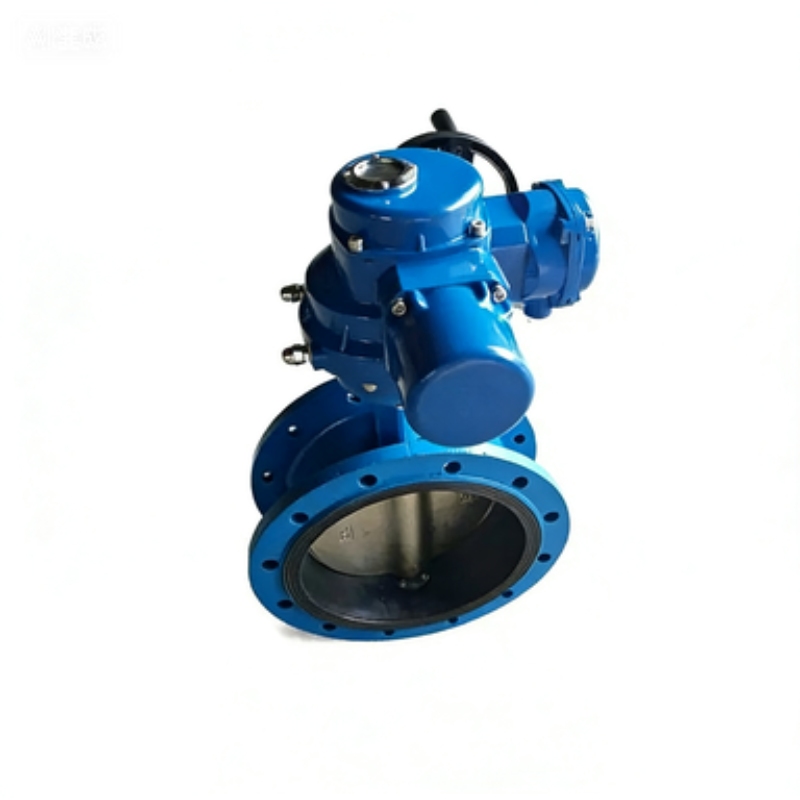
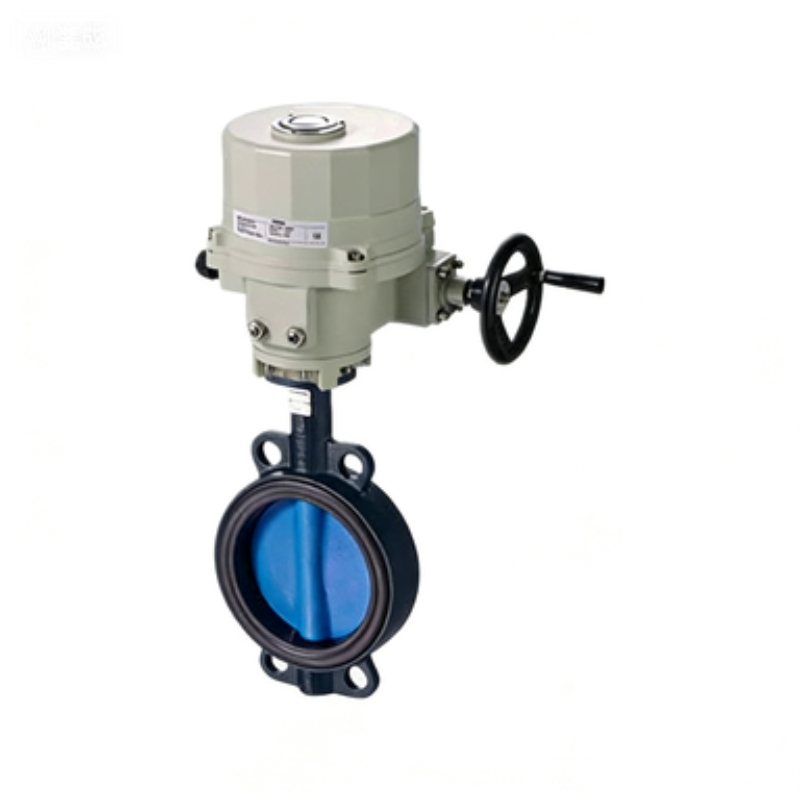
| Electric (Ex d flameproof) | Ex d IIB T4 | Remote operation, BAS integration |
| Electric (Ex e increased safety) | Ex e | Less hazardous (Zone 2 only) |
| Manual (hand lever/gearbox) | No rating required | No electrical components |
Pneumatic advantage: No electrical arcing. Often accepted without Ex rating (check local code).
Anti-Static Requirement
| Component | Anti-Static Feature | Why Needed |
|---|---|---|
| Disc to stem | Continuous contact (no insulation) | Prevents static buildup |
| Stem to body | Grounding spring or direct contact | Discharges static to pipe |
| Body to pipe | Metal-to-metal contact through flanges | Ground path to earth |
| Actuator | Conductive coating or grounding lug | Prevents external spark |
Verification: Measure resistance from disc to ground – should be <10 ohms.
Selection Matrix by Hazardous Area
| Hazardous Area | Recommended Actuator | Required Rating |
|---|---|---|
| Zone 1 / Division 1 (gas) | Pneumatic (no solenoid) | No Ex rating needed (check code) |
| Zone 1 / Division 1 (gas) with automation | Electric Ex d flameproof | Ex d IIB T4 |
| Zone 2 / Division 2 (gas) | Electric Ex e or Ex nA | Ex e IIB T4 |
| Zone 21 / Division 1 (dust) | Pneumatic or Ex tD | Ex tb IIIC |
| Zone 22 / Division 2 (dust) | Standard with dust-tight enclosure | IP6X |
| Any zone, high ambient temp | Pneumatic (preferred) | Lower heat output |
Electric Ex d Actuator Specifications
| Parameter | Typical Value |
|---|---|
| Enclosure rating | IP66 / IP67 / IP68 |
| Ex rating | Ex db IIB T4 Gb |
| Temperature range | -20°C to +55°C |
| Supply voltage | 24V DC / 110V AC / 220V AC |
| Control signal | On/Off or 0-10V / 4-20mA |
| Cable entry | 2 x M20 or 1/2" NPT (Ex d certified) |
| Material | Aluminum or stainless steel |
Pneumatic Actuator in Hazardous Areas
| Feature | Standard Pneumatic | With Ex Solenoid |
|---|---|---|
| Ex rating required? | No (if no electrical parts) | Yes (solenoid needs Ex rating) |
| Solenoid mounting | Remote (safe area) or Ex-rated | Direct with Ex mb / Ex d |
| Position feedback | Mechanical limit switches (Ex rated) | Inductive (Ex rated required) |
| Tubing | Conductive or anti-static | Standard acceptable |
| Best practice | Locate solenoid/valve in safe area | Use pneumatic signal to actuator |
Recommendation: Use pneumatic actuators with solenoid valves located in non-hazardous areas (up to 100m away).
Installation Requirements (Ex d Electric Actuator)
| Requirement | Detail |
|---|---|
| Cable glands | Ex d certified, correctly sized |
| Conduit entry | Sealed with Ex d compound |
| Grounding | Separate ground wire to actuator lug |
| Unused entries | Sealed with Ex d blanking plugs |
| Installation manual | Follow manufacturer's torque for flame path |
| Certification copy | Must remain with actuator |
Common Mistakes
| Mistake | Consequence | Correction |
|---|---|---|
| Standard actuator in Zone 1 | Ignition risk, code violation | Use Ex d or pneumatic |
| Wrong cable gland | Breaks flameproof seal | Use Ex d certified gland |
| No anti-static grounding | Static spark ignition | Verify disc-to-ground continuity |
| Missing T-rating check | Actuator surface may ignite gas | Match T-class to gas auto-ignition temp |
| Improper flame path torque | Enclosure fails to contain explosion | Torque to manufacturer spec |
Cost Comparison (DN100, 24V Electric)
| Actuator Type | Approximate Cost | Multiplier |
|---|---|---|
| Standard electric | $180 | 1x |
| Ex d flameproof electric | 600–600–1,200 | 3-7x |
| Pneumatic (no Ex parts) | $150 | 0.8x |
| Pneumatic + Ex solenoid | $300 | 1.7x |
Cost-saving tip: Use pneumatic actuators with remote solenoids in safe areas.
Application Examples
| Industry | Hazard | Valve Type | Actuator |
|---|---|---|---|
| Oil refinery | Zone 1 (hydrocarbons) | Metal-seated butterfly | Pneumatic + remote solenoid |
| Chemical plant | Zone 1 (solvent vapors) | PTFE-lined butterfly | Ex d electric |
| Paint booth | Zone 2 (atomized solvents) | Stainless steel butterfly | Ex e electric |
| Grain silo | Zone 21 (dust) | Cast iron butterfly | Pneumatic + dust-tight cover |
| Gas terminal | Zone 1 (natural gas) | Fire-safe butterfly | Pneumatic with Ex solenoid |
| Offshore platform | Zone 1 (gas) | Duplex stainless | Ex d electric (SS enclosure) |
Quick Selection Checklist
| Question | Answer Required |
|---|---|
| Hazardous area classification (Zone/Division) | _____ |
| Gas group (IIA/IIB/IIC) | _____ |
| Required T-class | _____ |
| Power available (pneumatic or electric) | _____ |
| Control type (on/off or modulating) | _____ |
| Feedback required (limit switches or positioner) | _____ |
| Local code (ATEX, IECEx, NEC) | _____ |
Summary
| Recommendation | Best Choice |
|---|---|
| Most cost-effective hazardous area solution | Pneumatic actuator (solenoid in safe area) |
| When electric is required | Ex d flameproof (IIB T4 minimum) |
| For dust hazards | Pneumatic + IP6X or Ex tD |
| For hydrogen / acetylene (IIC) | Consult specialist (rare for butterfly) |
| For Zone 2 only | Ex e increased safety (lower cost) |
Primary rule: No standard electrical components in hazardous areas. Use pneumatic or certified Ex d electric.
Contact our team with your area classification and gas group for certified explosion-proof valve packages.
Ivan (Mobile:+86-18968769287)
WhatsApp:+86-13579991606
Wechat:+86-18968769287
Website:www.kinko-flow.com
ZHEJIANG KINKO FLUID EQUIPMENT CO.,LTD